Life-history data
- Dormancy record
- 24 January 2026
- Adult feeding in our collection
- Offer beetle jelly every five days, or apple or banana.
Larvae
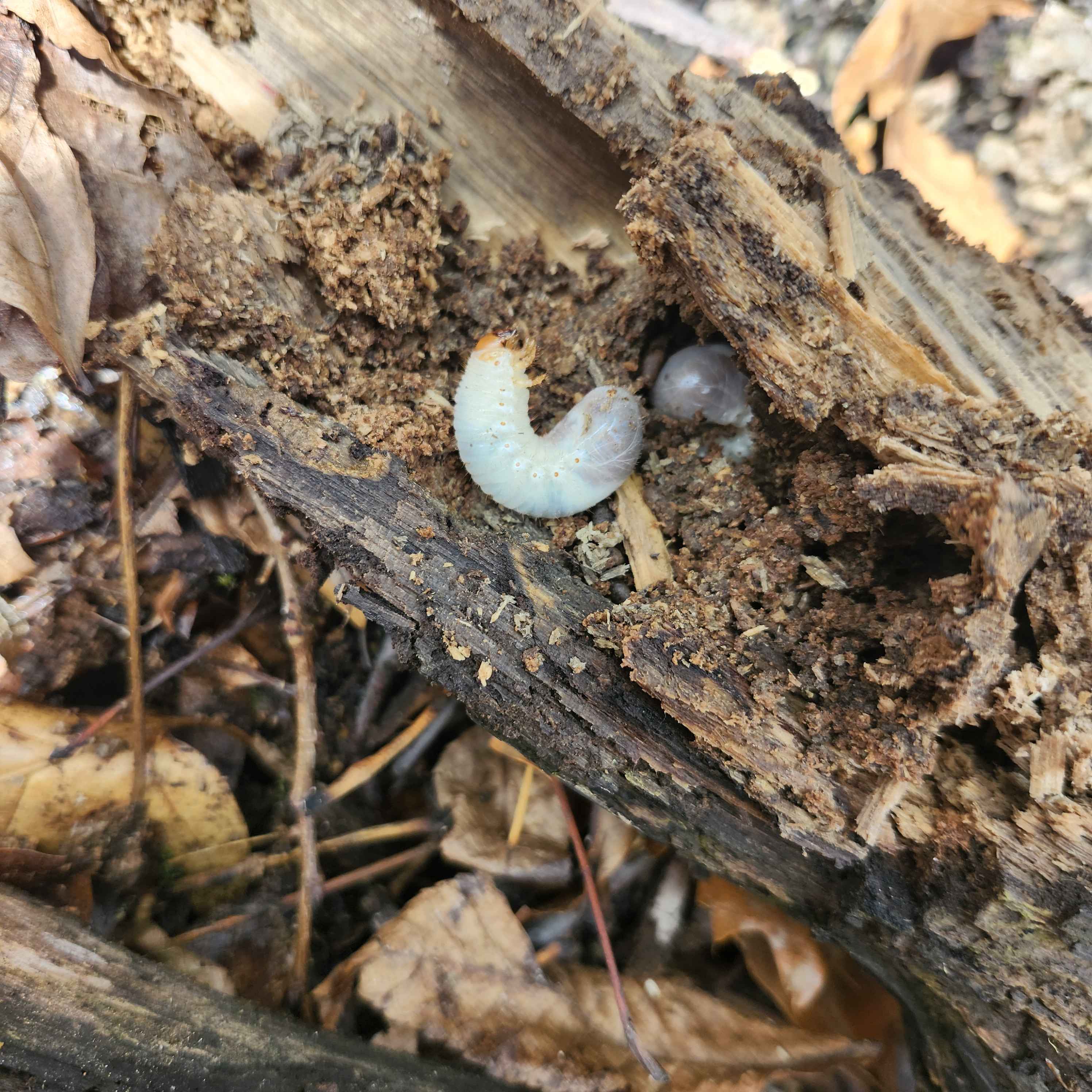
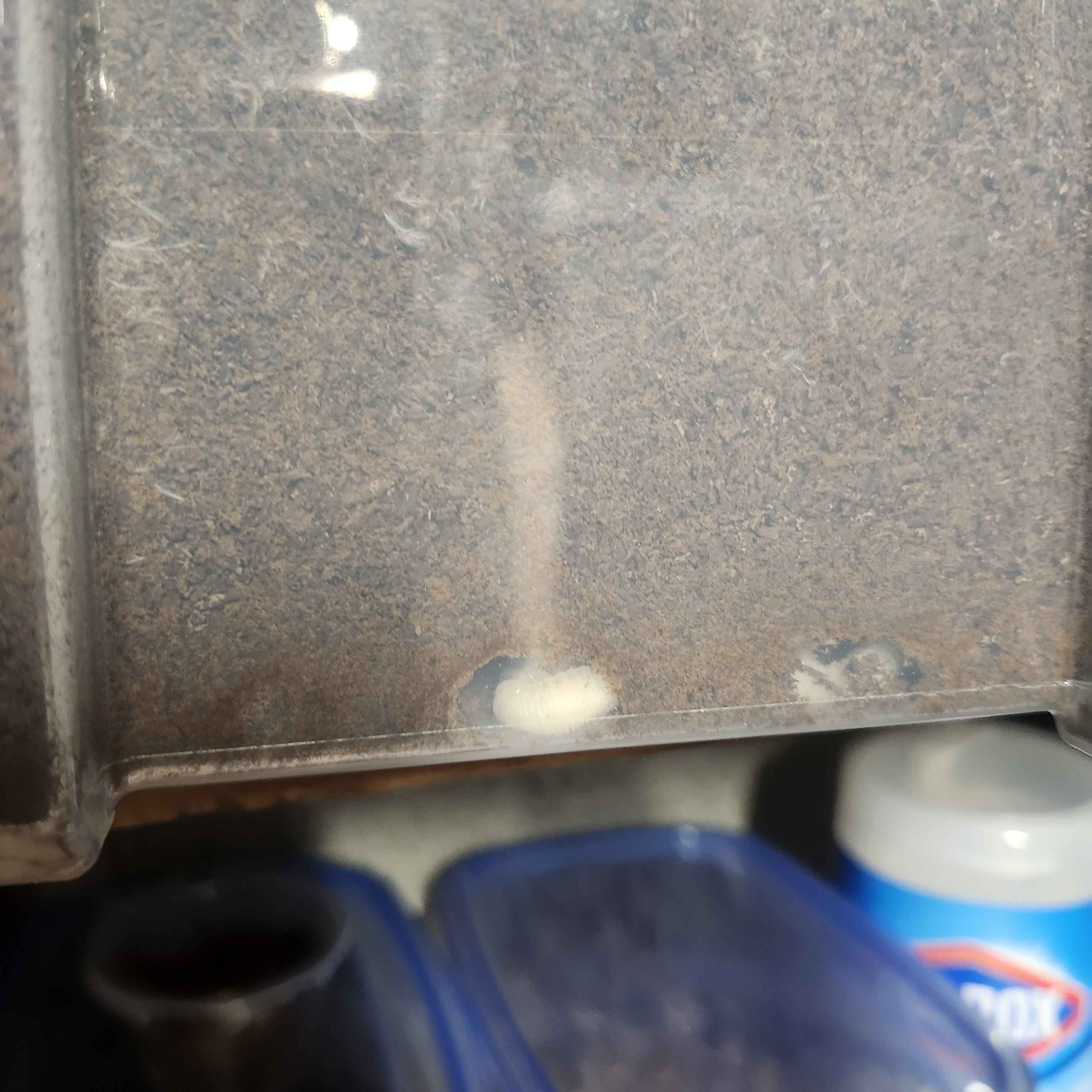
I have seen adults feeding at sap flows in the wild. For a larval enclosure I recommend soft, decayed hardwood with enough texture left for cell construction. William Saunders recorded the white, reddish-headed grubs in rotten portions of apple and cherry trees. A tree can still be alive and have a pocket of suitable decay inside it. The grubs feed within that softened wood. Saunders described mature larvae gathering fragments and binding them together into oval cells in autumn.
Dormancy
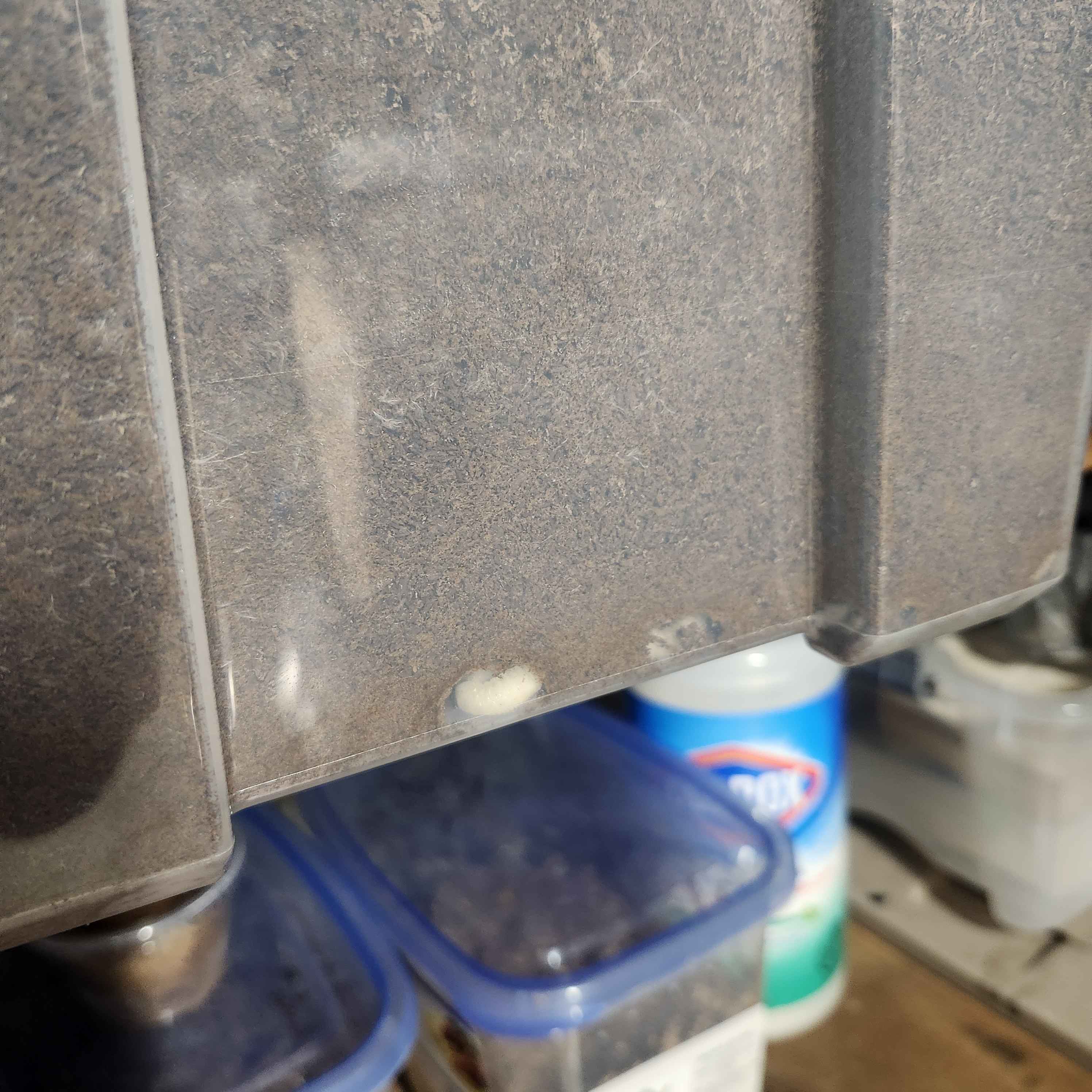
I photographed my beetles in their cells on January 24, 2026. A completed chamber can contain a resting larva before pupation, and I leave the occupant undisturbed through this interval. If you uncover the wall while renewing food elsewhere in the enclosure, keep the material immediately around it in place. Date the first visible cell separately from the day an adult appears at the surface.
Adults
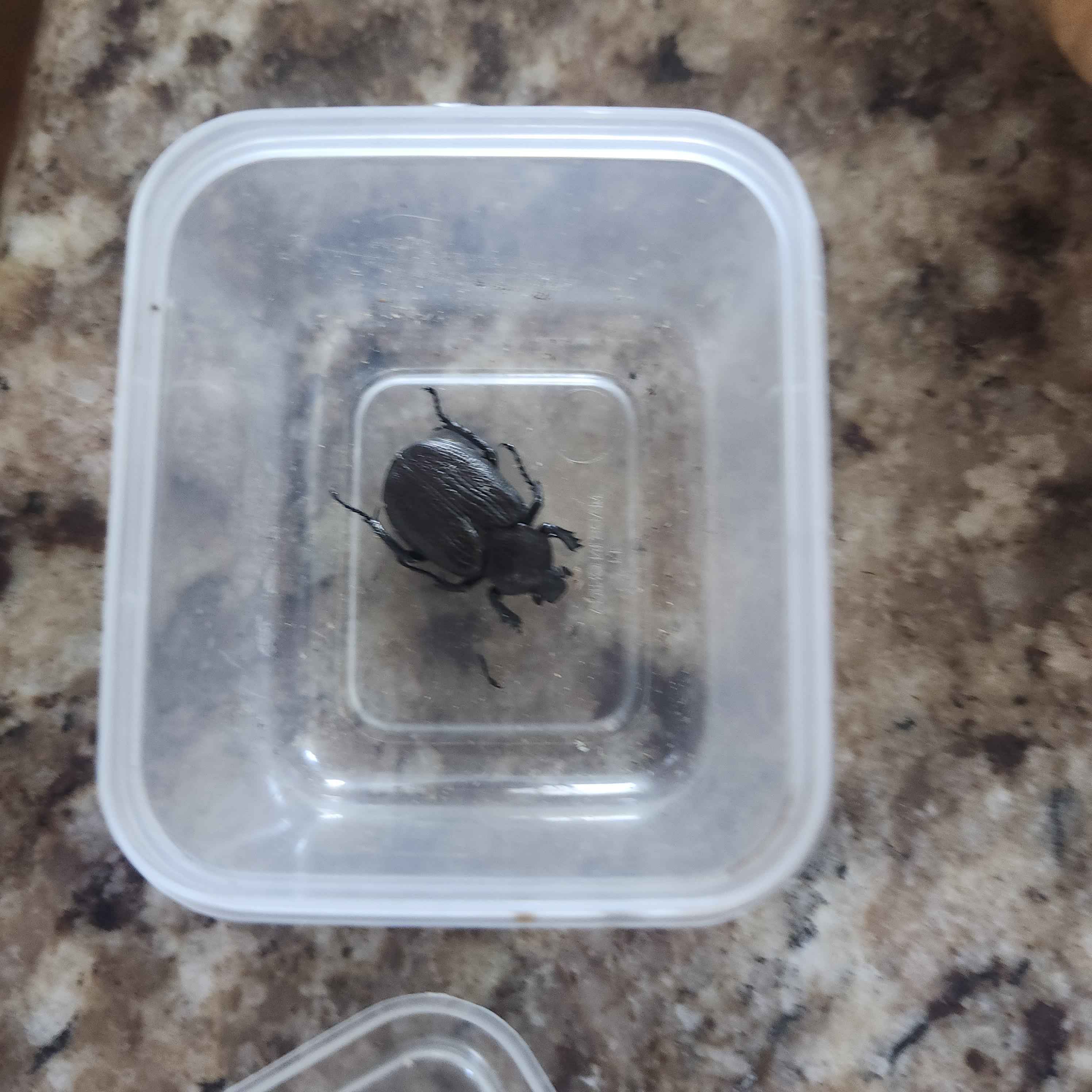
In field observations, adults sheltered during the day and visited sap after dark. Saunders found them active in July. For a captive group, I recommend checking the surface in the evening and waiting until the beetles have left their cells before selecting a pair. The wing covers are distinctly rough, a useful feature for distinguishing them from the smoother Osmoderma eremicola. Males can be recognized by conspicuous depressions on the head and pronotum. Older literature uses the spelling Osmoderma scabra.
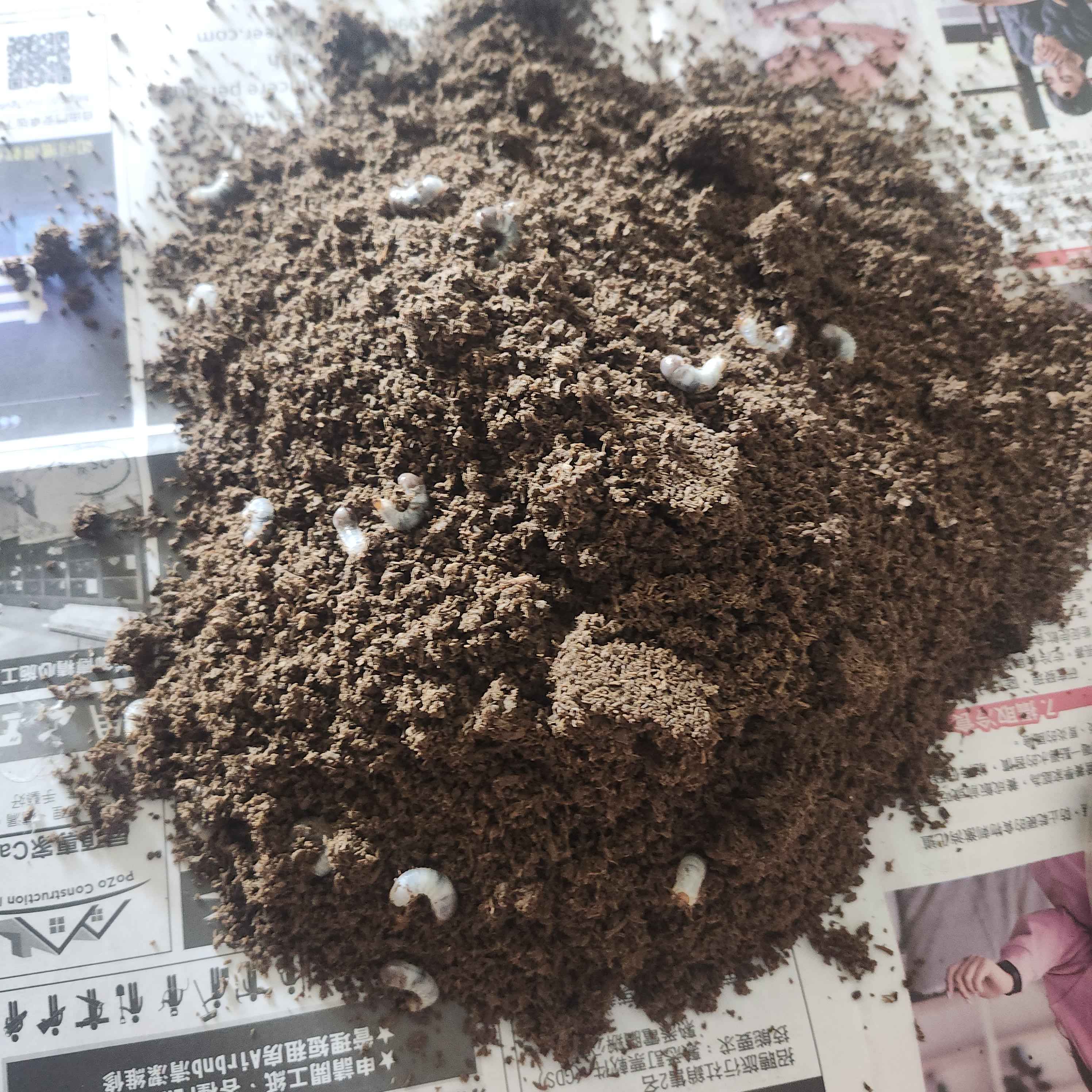
In September 2025 I received an adult female alongside a group of larvae. I photographed her in a clear cup, then spread the larvae on the substrate for a second view. The female came with the group. I use that photograph to show the adult form, while the larval photographs document the stages I actually kept.
Photographs
Larvae
Additional views
Geographic status
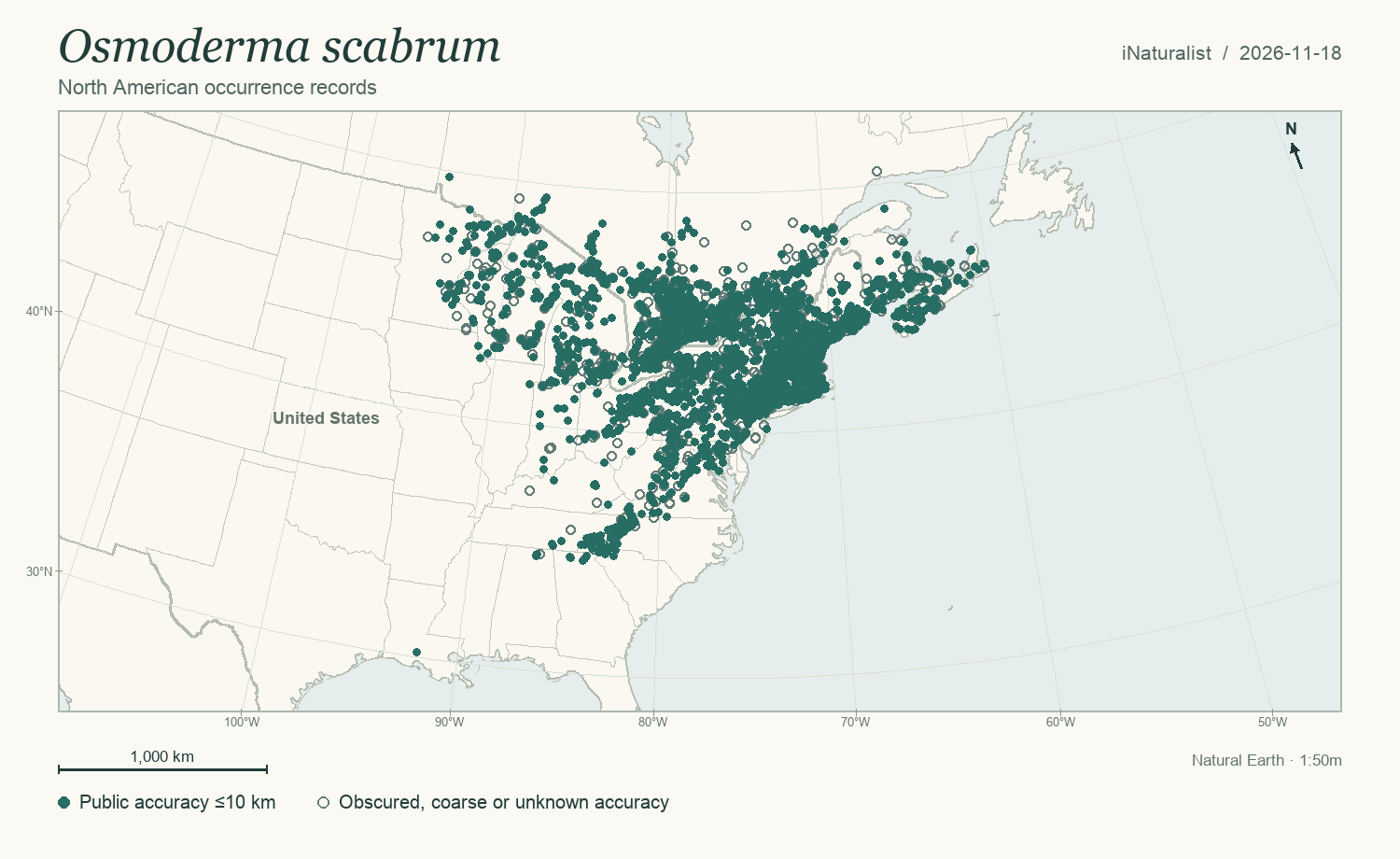
Native to eastern North America, including the eastern United States and southern Canada.
Distribution records