Beetle Substrate Guide
Lets make this as easy as possible
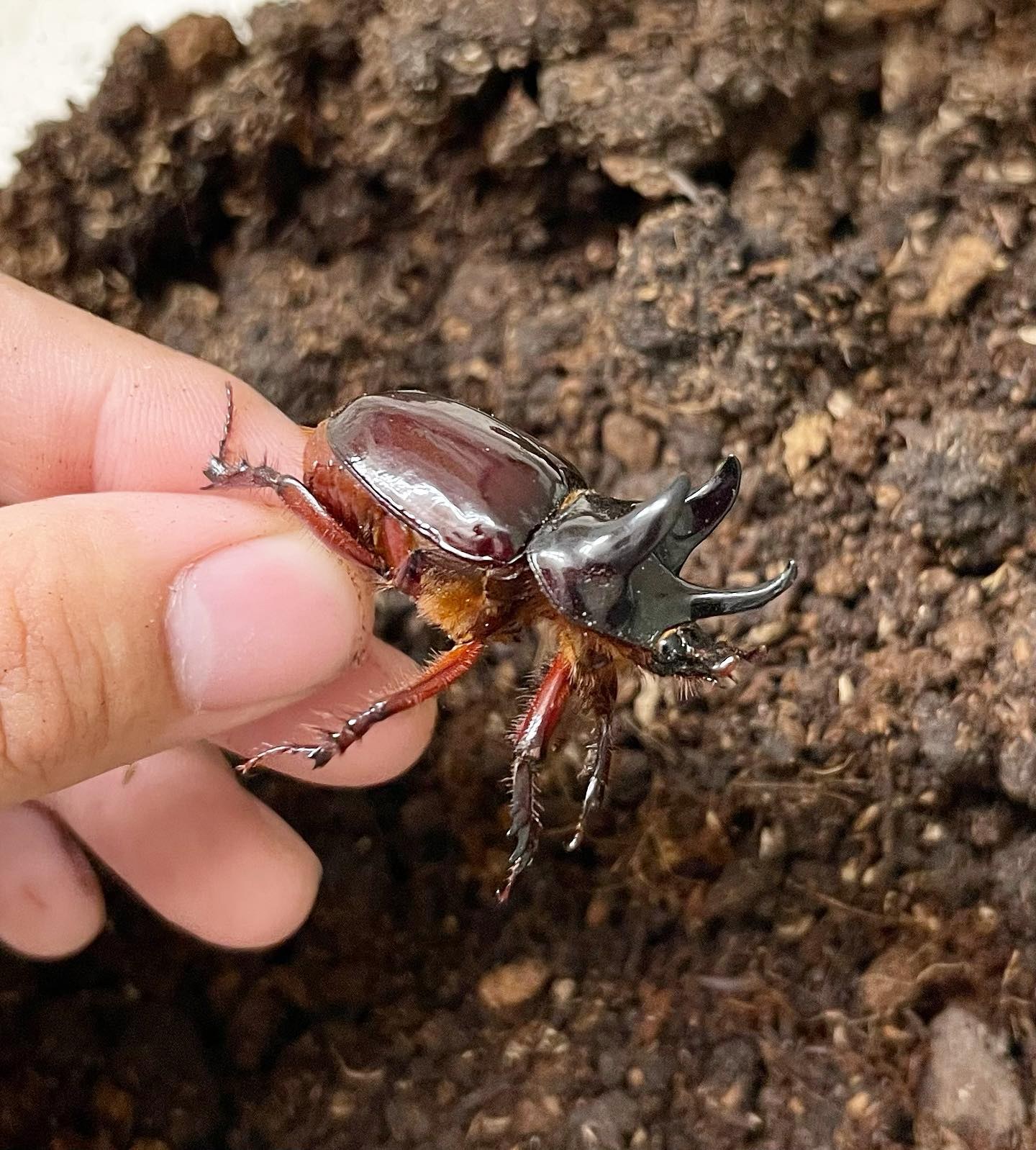
Here are the very basics: in regards to US native species, Dynastes tityus and granti, Strategus aloeus and antaeus, Gymnetis thula and any Cotinis species, Osmoderma species and Euphoria species can be raised on "Organic Raised Bed Soil" alone! If a larger size is desired, simply mix in raw sawdust! This will be explained in the next slide. But without any mixtures, the organic soil alone will achieve average sized adult beetles!
Mixing the Organic Raised Bed Soil
Say goodbye to hard to make flake soil!
So if you decide to go down the dark path of ditching flake soil once and for all, but still want that sweet large major male, know that it is still very doable, and easy! Mix in 3/10th of the substrate mass in raw sawdust, you can use any of the hardwood grilling pellets consisting of Oak or Mesquite wood. I personally opt for Mesquite as it is the most affordable option. Make sure the sawdust expands and stir it with the "Organic Raised Bed Soil" throughly. Leave the mixture for two weeks, and stir it whenever you remember to do so (doesn't have to be often). Once the two weeks is up, it is ready for you to add beetles!
A few words of caution:
A. make sure the organic soil you use do not compose of cow manure. Cow manure contains a bacteria that can cause leg rot with a lot of beetle larvae species and can kill your larvae quickly. That said, most "Organic Raised Bed Soil" purchased from Walmart or Home Depot does not contain cow manure and can be used without issues.
B. This substrate mix is not meant for: any US Lucanid (stag beetles), and any of them Phileurus or Hemiphileurus species.
C. If the intent is to raise large cetoniids (flower beetles), adding a large portion of rotting leaves will also yield desirable results, although raw sawdust works perfectly fine.
Making Flake Soil
You gotta do it sometime
You really don't have to stress about making flake soil - things ferment in the wild all without human intervention after all. But sometimes, we just gotta speed it up!
How to Make Flake Soil
Can't be that hard can it?
First up - if you leave raw sawdust by itself in a moist state long enough, certain lucanids will eat it. Yes, you heard me right, the more hardy species will do just fine on aged sawdust. But this might cost you 6 months - a year's time.
So, how do you make flake soil?
Well, you will need ingredients first. 20lbs of hardwood grilling pellets of just about any brand will do the trick for the wood part, but oak and mesquite are your best choices. Then, you need to add 7.5lbs of unbleached flour, and some dry yeast.
15 lb of unbleached flour per 40 lb of sawdust. Leg and Leaf developed this flour-to-sawdust ratio.
The first step is to pour out and expand the pellets with water, and then turn it into sawdust. Warm water works best with this step, but cold will do just fine.
Then you pour the flour into the expanded pellets, along with a table spoon of yeast. You want to mix throughly here, so there isn't huge clumps of flour - an occasional small piece here and there is fine.
The end result should be damp, but not wet. You can check it by squeezing the substrate. It should form a clump and not fall apart when released, all the while having no water come out. If you made it too wet, leave it in somewhere sunny for a few days and stir more often, you will be fine.
Now the waiting game begins. In this stage, you want to mix up the substrate at least once in 2 days (once a day is better). You should notice the substrate heating up, if it does not heat up, simply add more yeast.
It will be about 3 weeks to a month before the soil is ready. Be sure to wait till the substrate is fully cooled down.
Yay, now you have flake soil! The rest of beetle keeping will be a breeze!