Life-history data
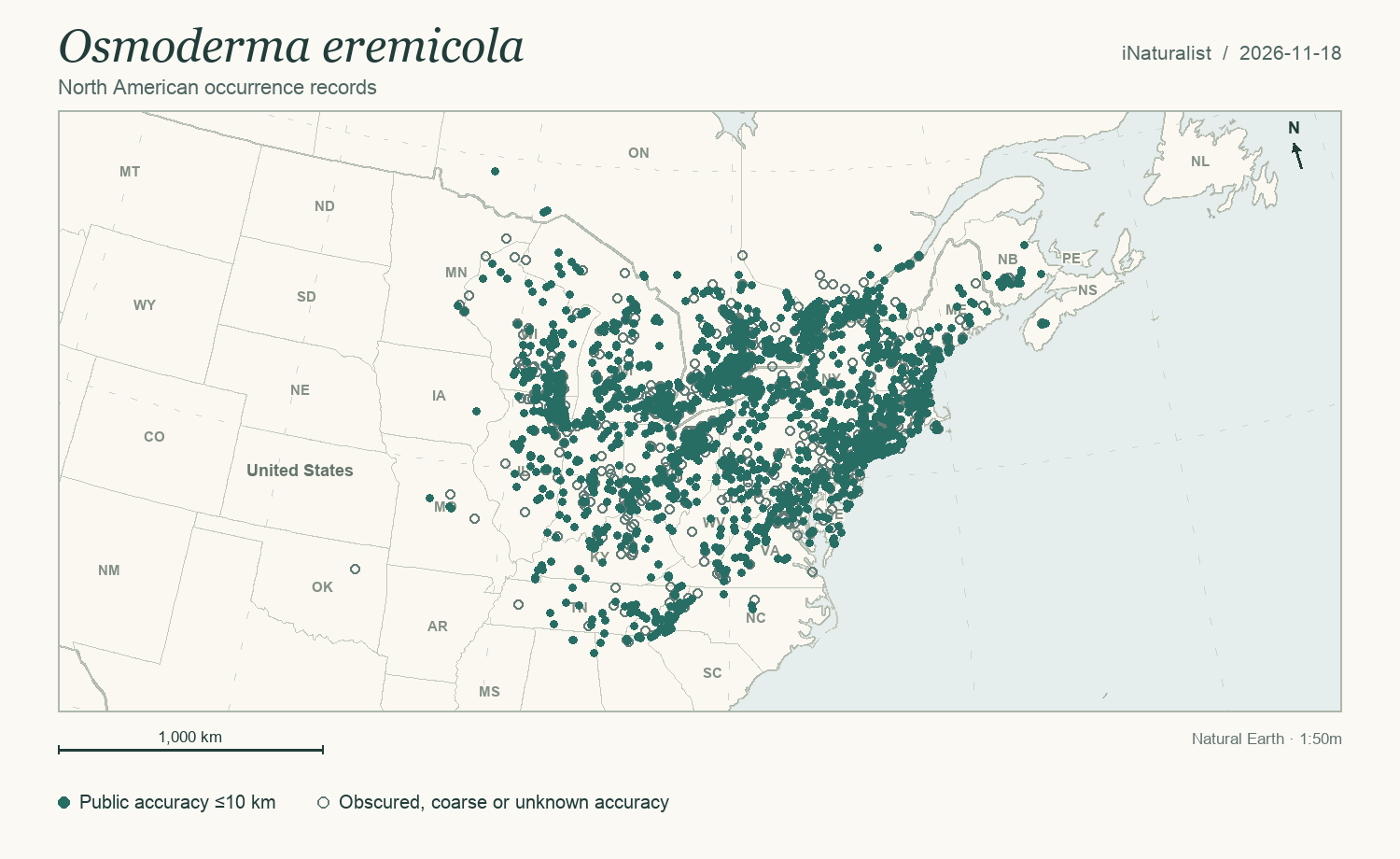
- Range
- Eastern United States
- Adult length
- 25–30 mm
- Adult lifespan
- 1–3 months
- Larval period
- About two years or longer
- Pupal period
- About one month
- Egg count
- 30 or more
- Adult feeding in our collection
- Offer beetle jelly every five days, or apple or banana.
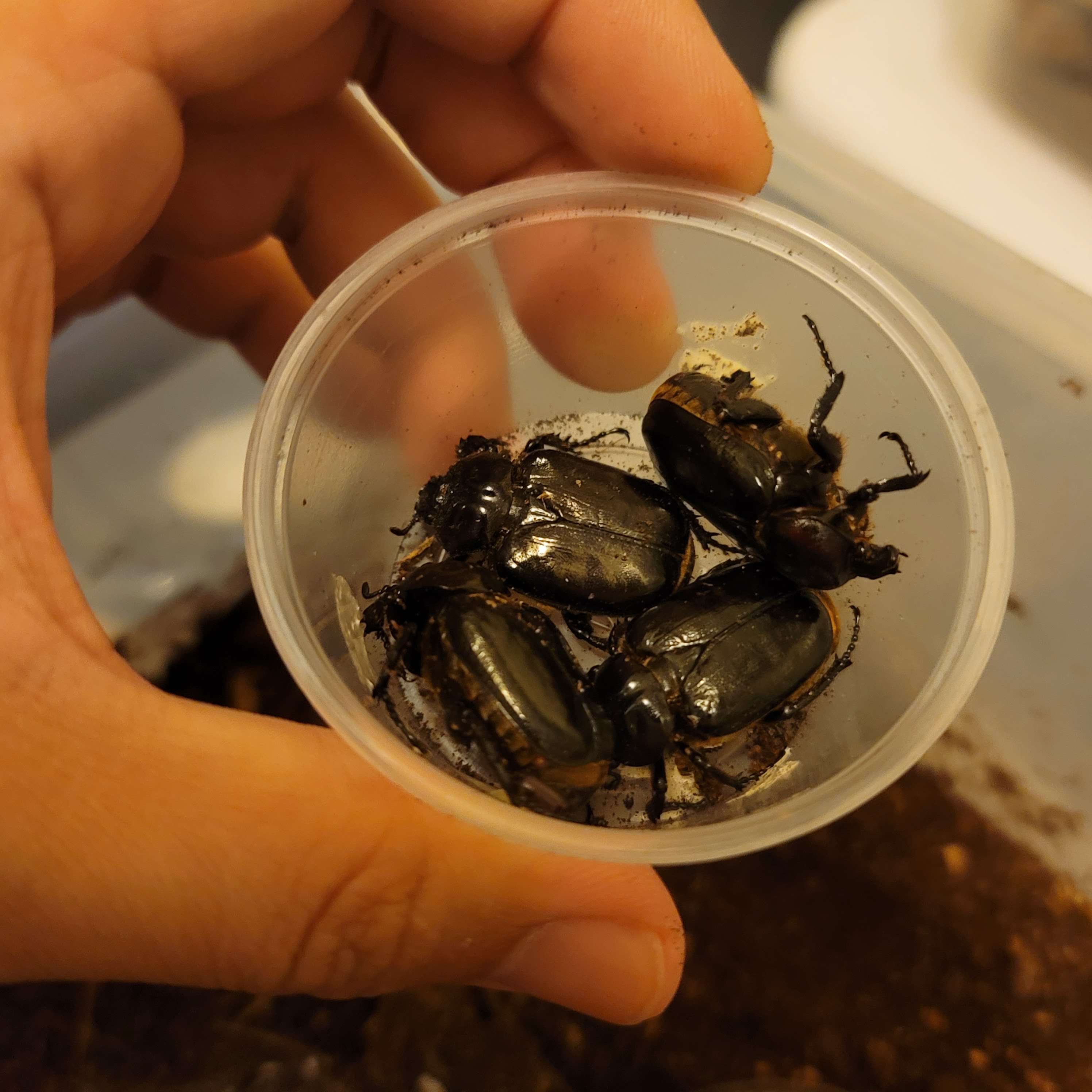
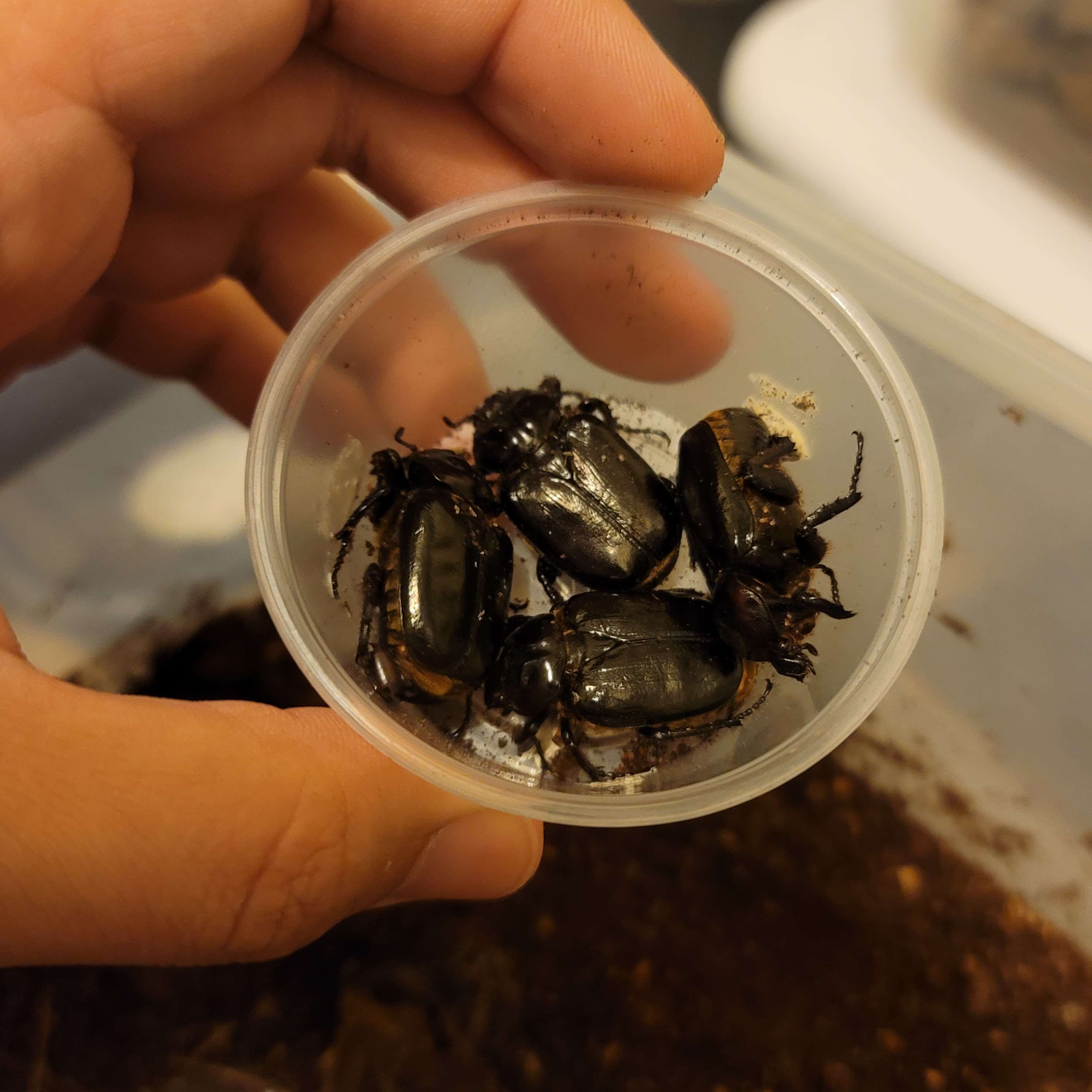
Adults
Adults measure roughly 25–30 mm and live for about one to three months. They fly in the canopy and visit sap flows in the wild. I recommend a breeding container of at least 1.75 US gallons (6.6 L). In captivity I offer fruit or beetle jelly when they become active. Even unfed females laid eggs for me, but they lived for less time and produced fewer eggs than females with access to food. Egg counts can reach 30 or more. To select a pair, look at the head and the plate directly behind it, the pronotum. Steffek and colleagues used the conspicuous depressions in both structures to recognize males.
Larvae
The grubs live in pockets of decayed hardwood inside tree cavities. One Wisconsin beetle was reared from rotting silver maple. I use flake soil, decayed wood, or a mixture with thoroughly decomposed hardwood leaves. Once the grubs have reduced their food to a pile of frass, give them fresh substrate. In summer or autumn my second instars made small chambers and remained inside for several weeks, sometimes a month. Leave these chambers alone. The grubs came back out, resumed feeding and quickly reached the third instar. They overwintered as third instars and reached full size by the end of the following year.
I once accidentally broke the same larva’s chamber three times. It rebuilt each time and pupated in its fourth chamber. By the third attempt it was down to about two-thirds of its earlier size. The damp material held together like clay. Seeing the larva lose that much bulk is why I leave an intact cell supported by the surrounding substrate.
Overwintering
Once my third instars were fully grown, I moved them into a garage for about three months. Winter temperatures there were in the low 50s °F (roughly 10–12 °C). Overlapping emergence matters because the adults are relatively short-lived. The pupal stage lasts about a month, and the dormancy period is roughly three weeks. I leave each cell supported by its surrounding substrate. The wall can break simply from lifting it. When the adults emerge, move them into a fresh breeding bin and provide food for the next pairing.
Photographs
Adults
Geographic status
Native to eastern North America, including the eastern United States and southern Canada.
Distribution records