Life-history data
- Breeding result
- Three broods by September 2025
- Rearing material
- Breeding logs buried in homemade flake soil
- Brood size in my checks
- About four larvae per brood
- Winter treatment
- No deliberate cooling period in this culture
Host wood
I buried breeding logs in my homemade flake soil. This was the setup in which I saw the first brood in March 2025. I keep the wood in one piece so the adults can establish galleries and the young have somewhere to feed alongside them. When starting another enclosure, I would use softened hardwood with enough structure to keep those tunnels intact. I keep the wood and the material the adults have worked together when checking the culture.
Broods
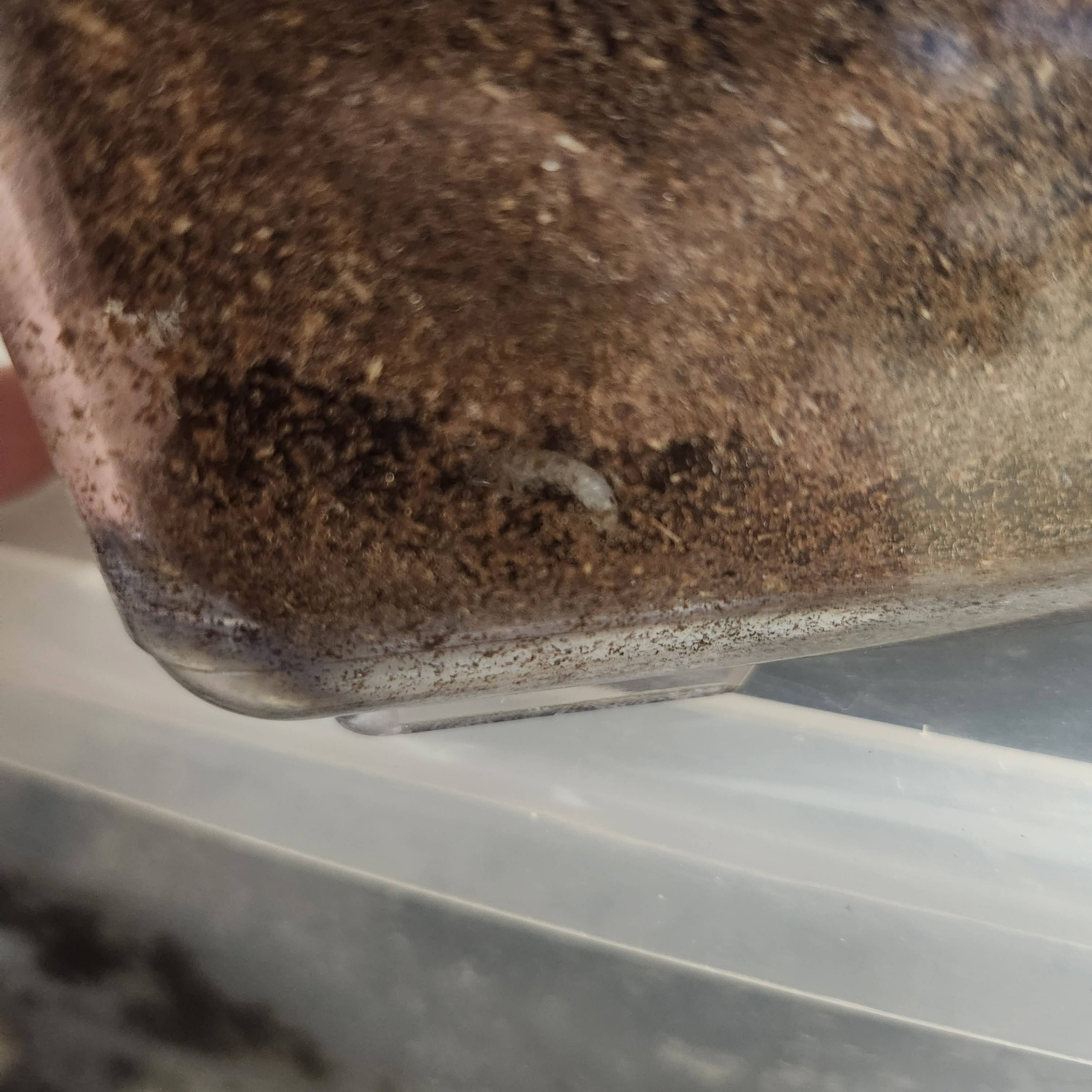
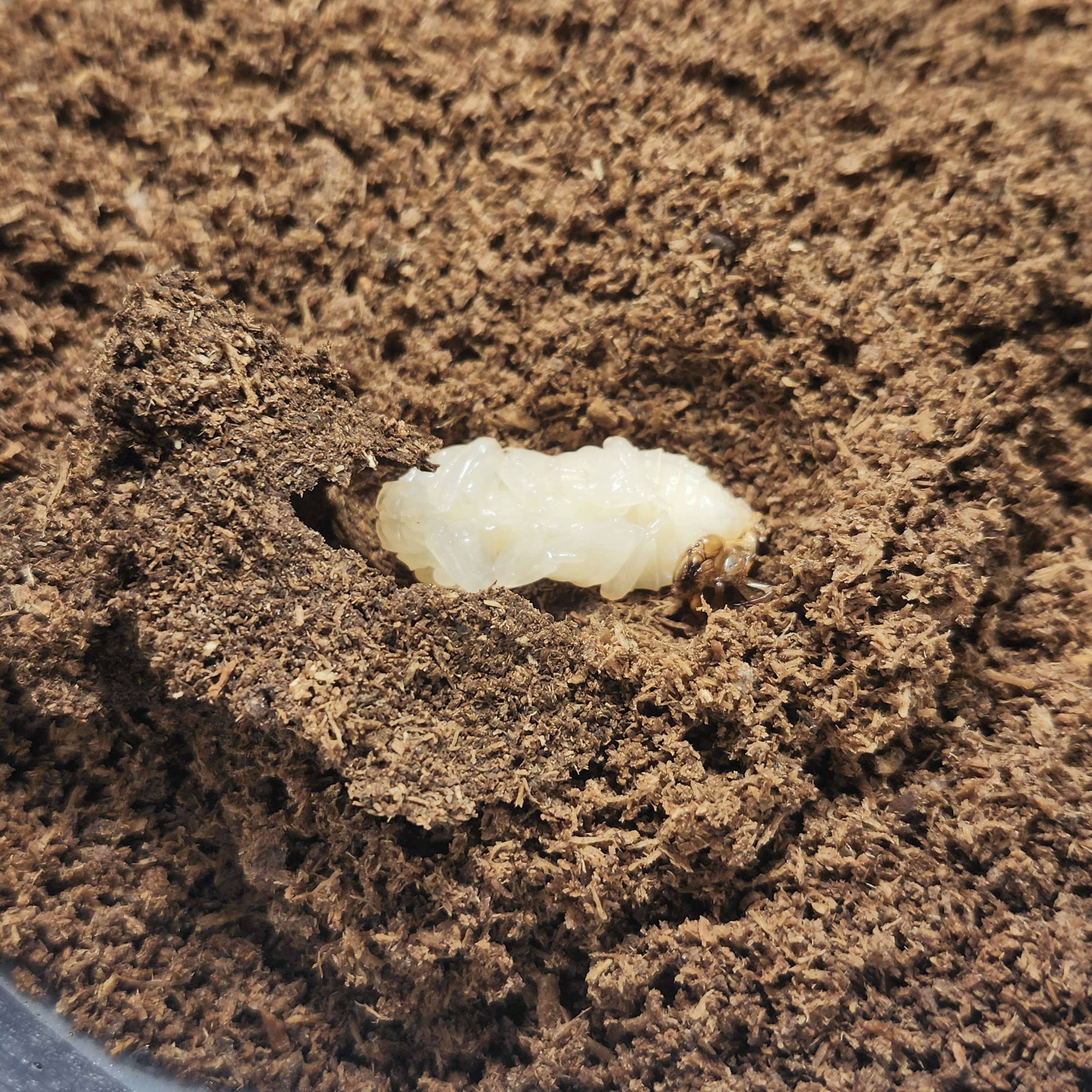
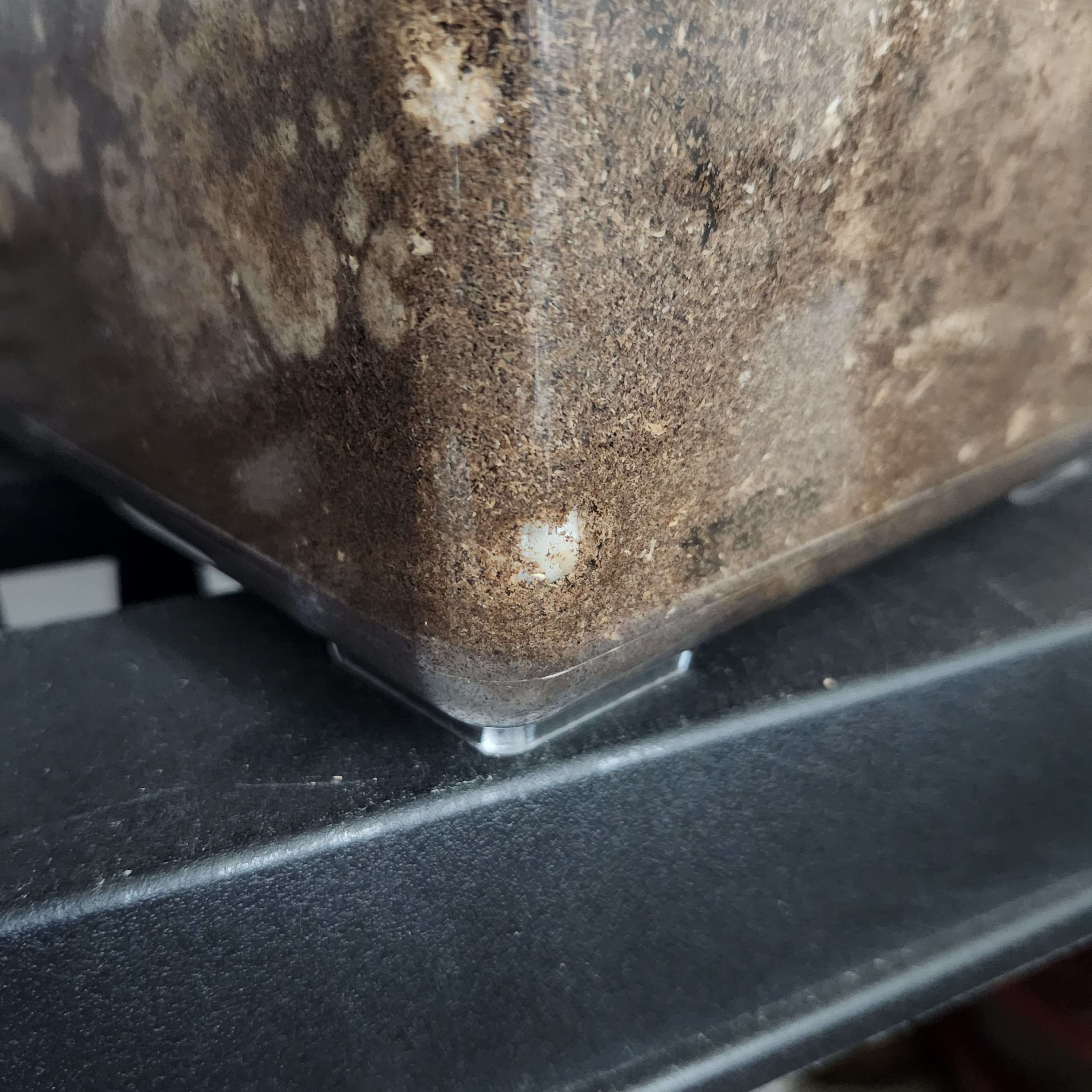
I found a newly hatched first instar on April 14, 2025, and photographed a pupa on May 16. By June 7 the second brood was building pupal cells against the enclosure wall. I generally found around four larvae per brood. The April and May dates are separate checks rather than a measured developmental interval for one animal. In a bess beetle enclosure the parents and young share the wood, so I leave the family together. When I check on them, I look along an existing opening and preserve the chewed material around the gallery. For counting broods I use positive sightings of young. The adults can remain alive for a long time without producing offspring.
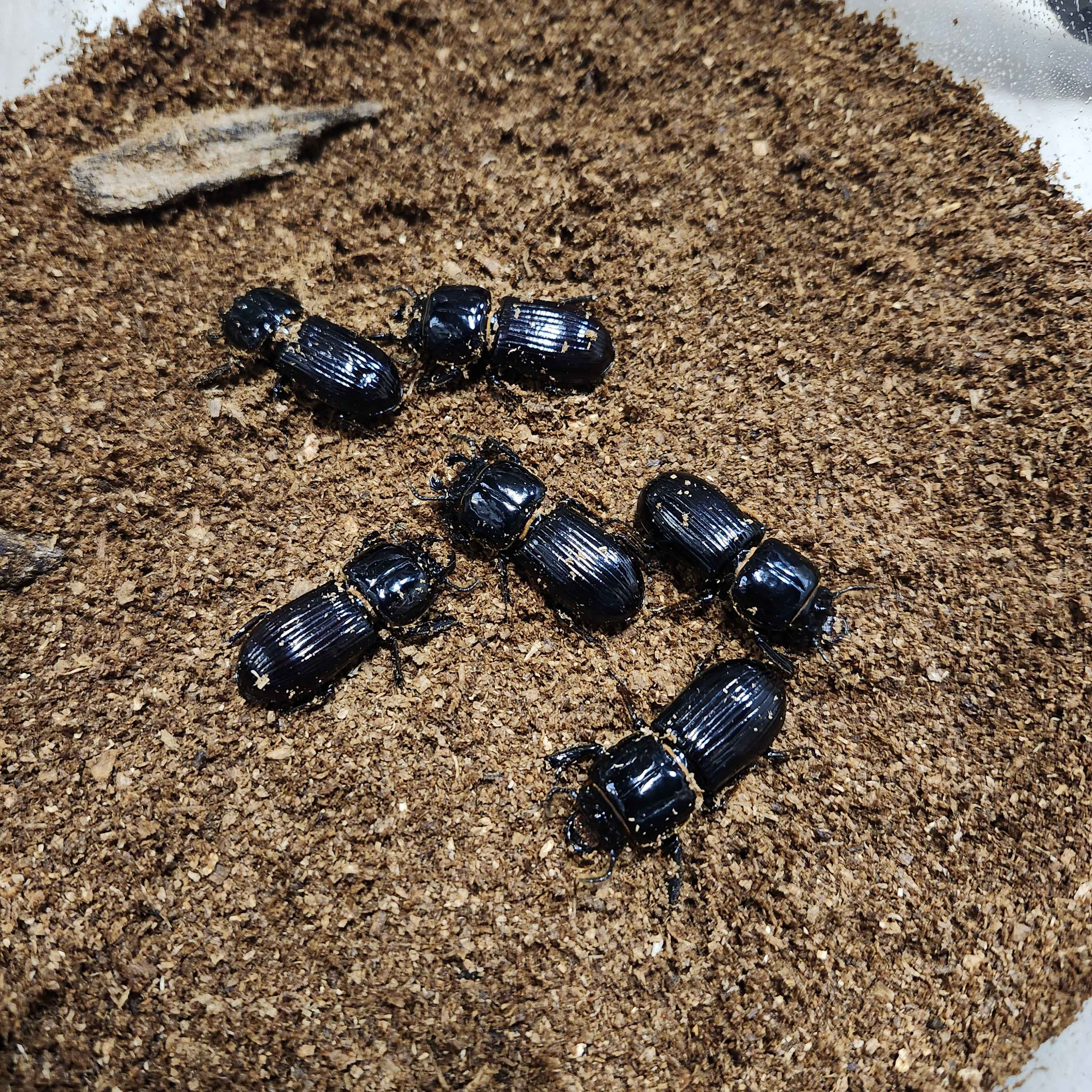
By September 2025 the colony had given me a third brood. I had given it no deliberate winter cooling period between broods. I keep wood available whenever the beetles have hollowed out much of the original piece, and I would place fresh wood alongside the occupied material. In April 2026 my first-generation adults were still alive, although I had yet to see them start a brood of their own. My result with this Florida species is quite different from the compacted-sawdust setup I tried with Odontotaenius disjunctus, in which the adults lived but I recovered no young. In November I estimated that the original adults usually gave me about two broods a year, with four or five larvae per brood. After I found that the parents had eaten a soft, newly emerged adult, I began separating teneral adults from the parents. I still leave feeding larvae with them in the wood.
Photographs
Larvae
Prepupae and pupae
Geographic status
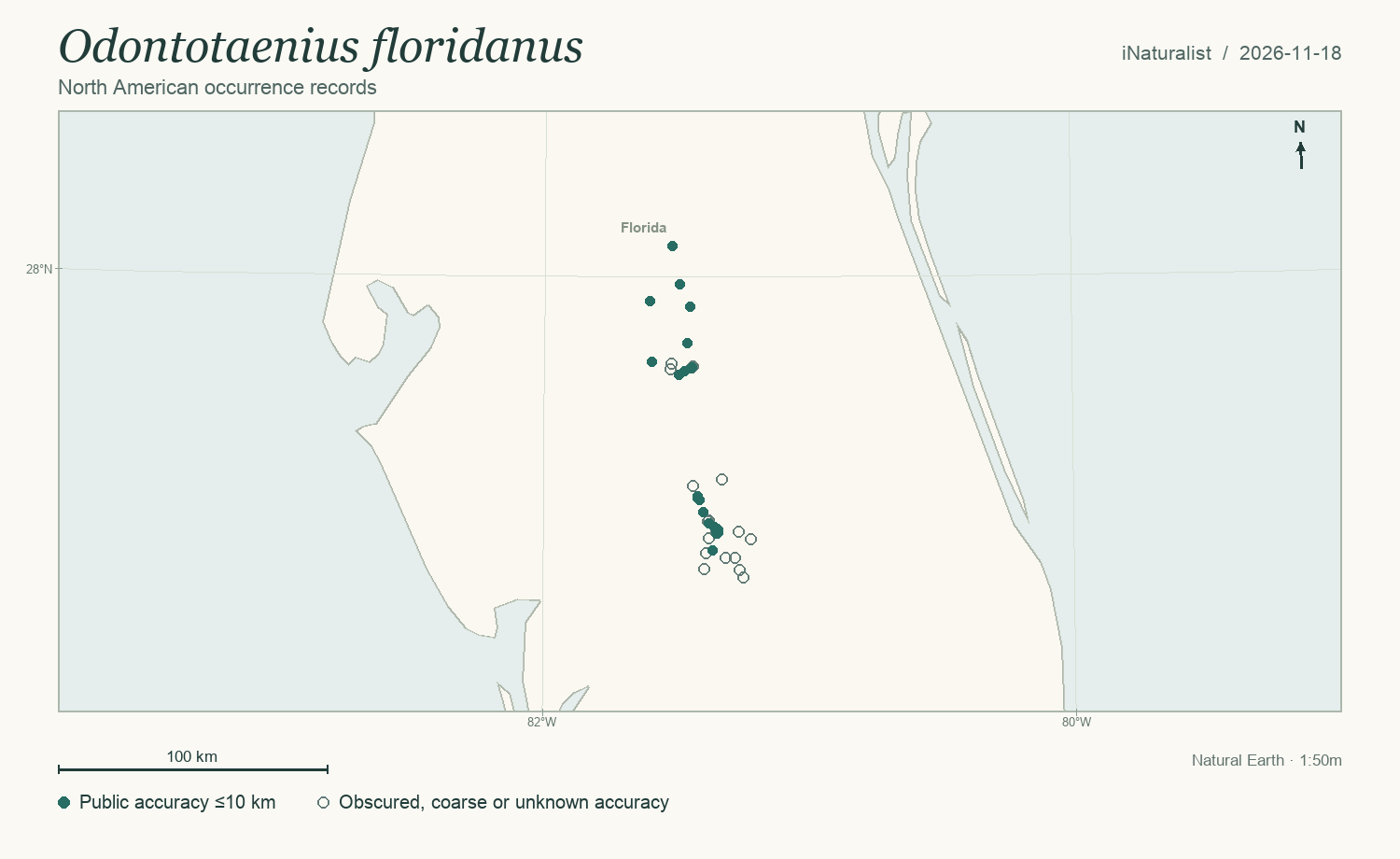
Endemic to the Lake Wales Ridge in central Florida. The Florida Natural Areas Inventory reports its range from Marion County south to Highlands County.
Distribution records