Life-history data
- Adult maintenance
- Adults survived in compacted raw sawdust
- Outcome of my sawdust trial
- No offspring
- Breeding enclosure I would try
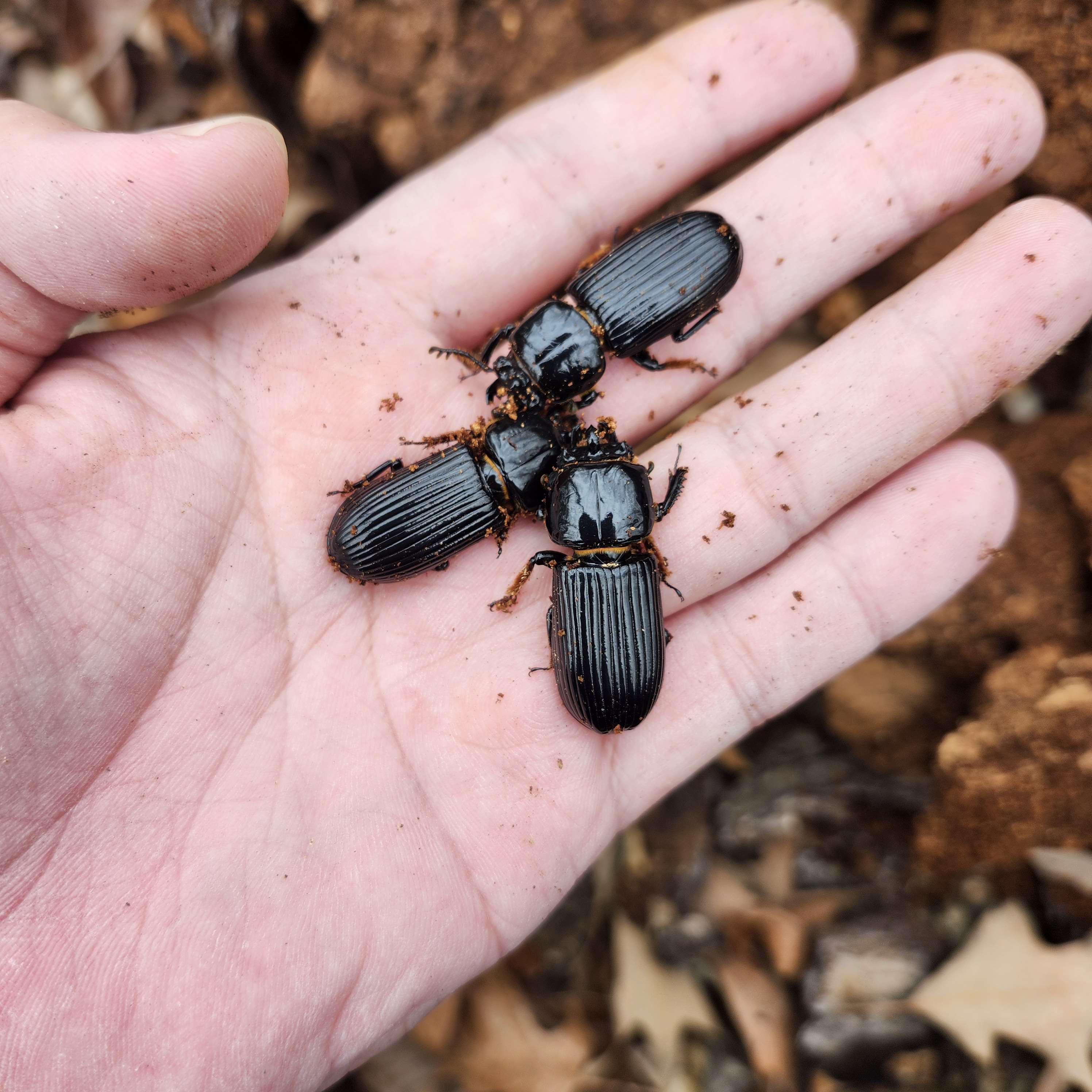
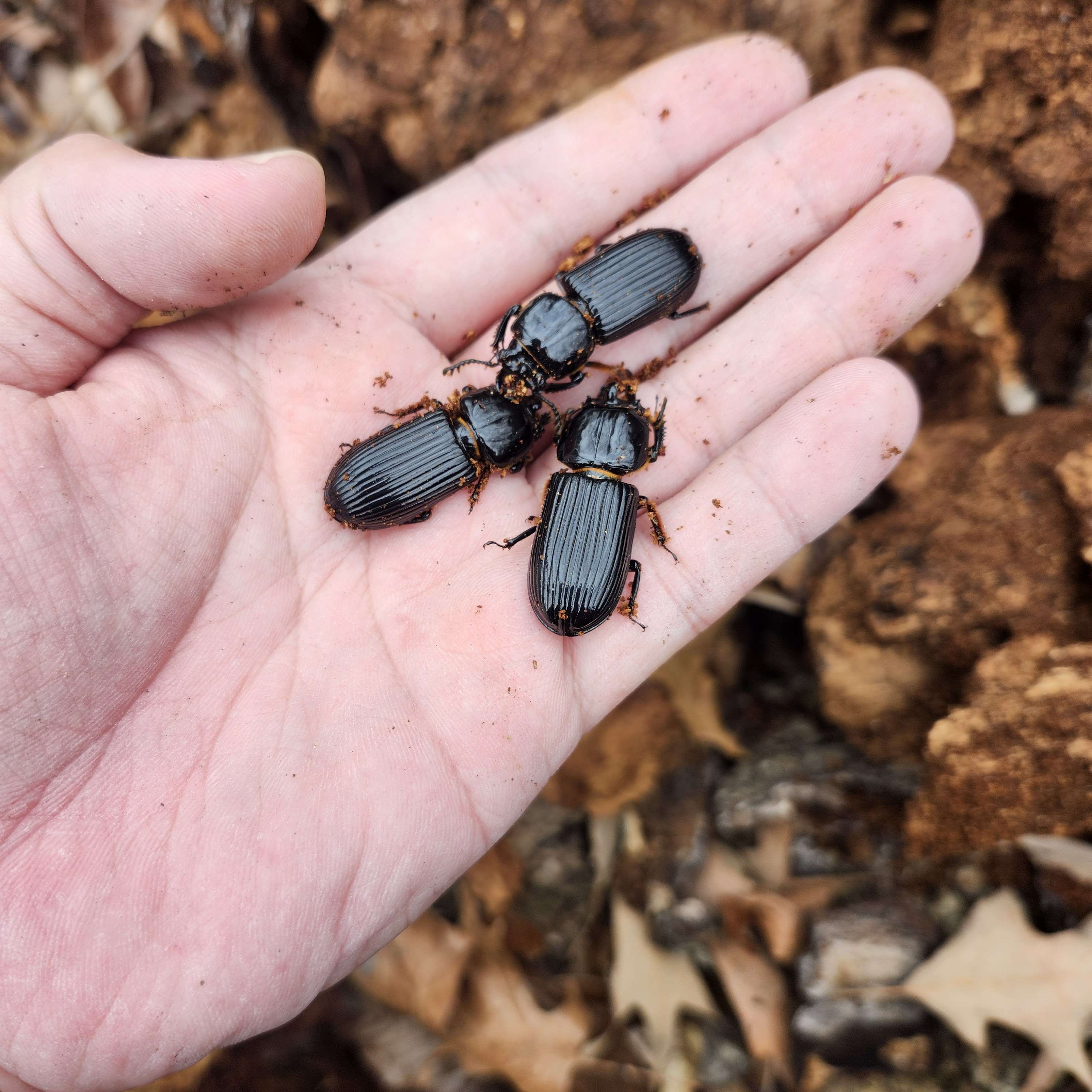
- A family group in its occupied piece of decayed hardwood
Host wood
For a breeding attempt I recommend starting with a section of the log the beetles already occupy. I look for decayed hardwood soft enough for feeding but firm enough that the gallery walls stay intact. I would preserve the material inside those galleries as well as the beetles themselves. My sawdust trial was useful for keeping adults alive. It did not give me a reason to substitute compacted sawdust for an occupied log when my goal is reproduction.
Brood care
I treat a passalus gallery differently from a jar of solitary stag beetle larvae. Here, adults and young occupy the same wood. The parents chew wood, accumulate frass and prepare food that the larvae can eat. I recommend leaving the fine material along the walls in place when adding a fresh piece of softened wood. If I find eggs or young, I keep the occupied section with its adults instead of transferring each grub to a clean cup.
Pupation
I avoid splitting a section of wood that contains a brood to look for pupae. Adults build and repair chambers around the pupae, and older siblings can help maintain them. A newly emerged adult can be reddish before its cuticle darkens. I would leave it with the family, especially when there are still younger larvae and intact chambers in the same log. For this species my own trial establishes what supported adult survival. I have yet to obtain offspring in compacted raw sawdust.
Photographs
Adults
Geographic status
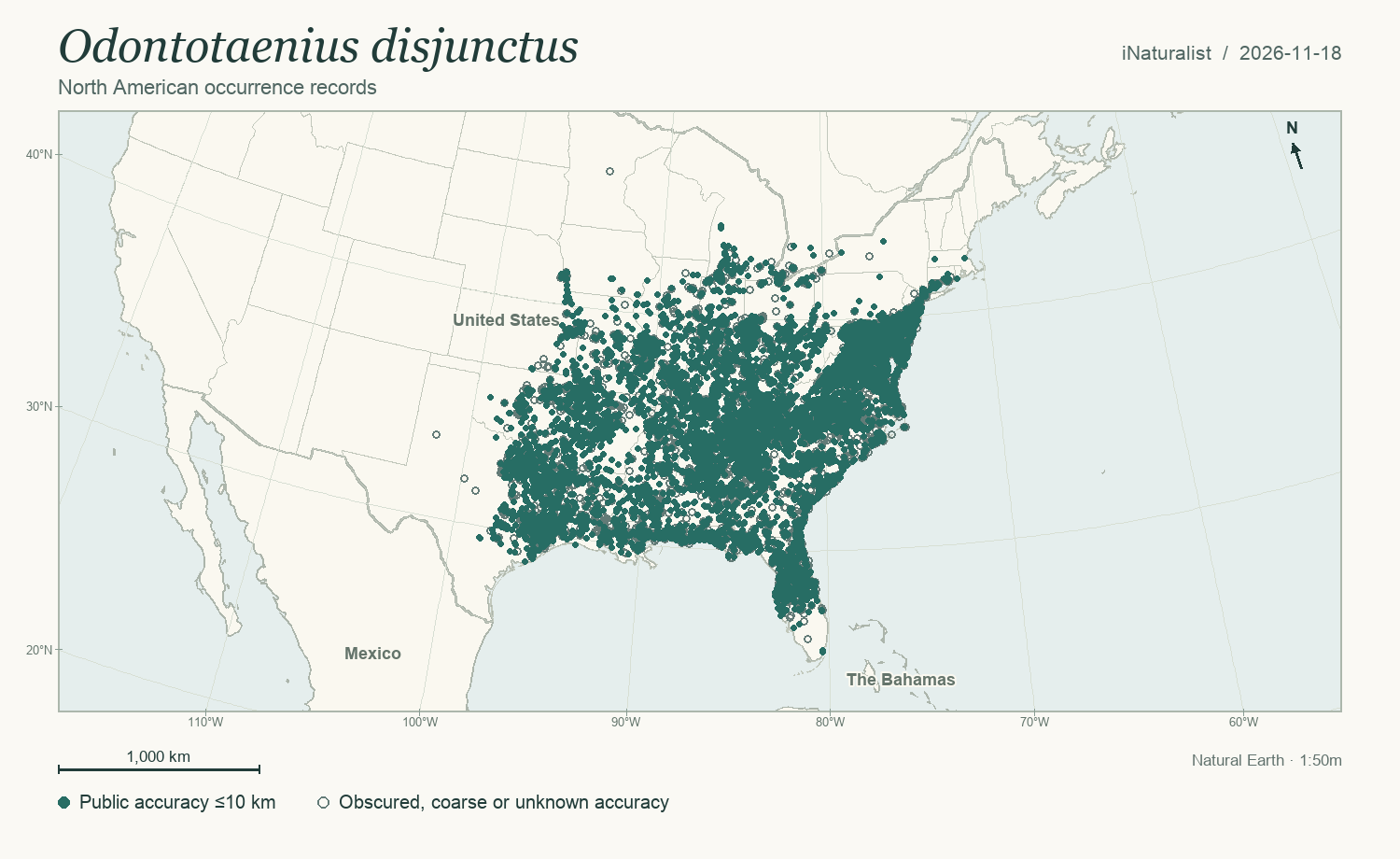
Native to eastern North America, including the eastern United States and southern Canada. Its range extends west to eastern Texas and the central Great Plains.
Distribution records