Life-history data
- Larval development
- Less than 1 year to adulthood in my culture
- Adult male longevity
- Up to 2 years in my culture
- Adult female longevity
- About 9 months for my longest-lived female
- Adult size
- 53 mm in one captive-bred male
- Pupation layer
- Firmly packed, clay-like soil beneath the larval feeding substrate
Adults
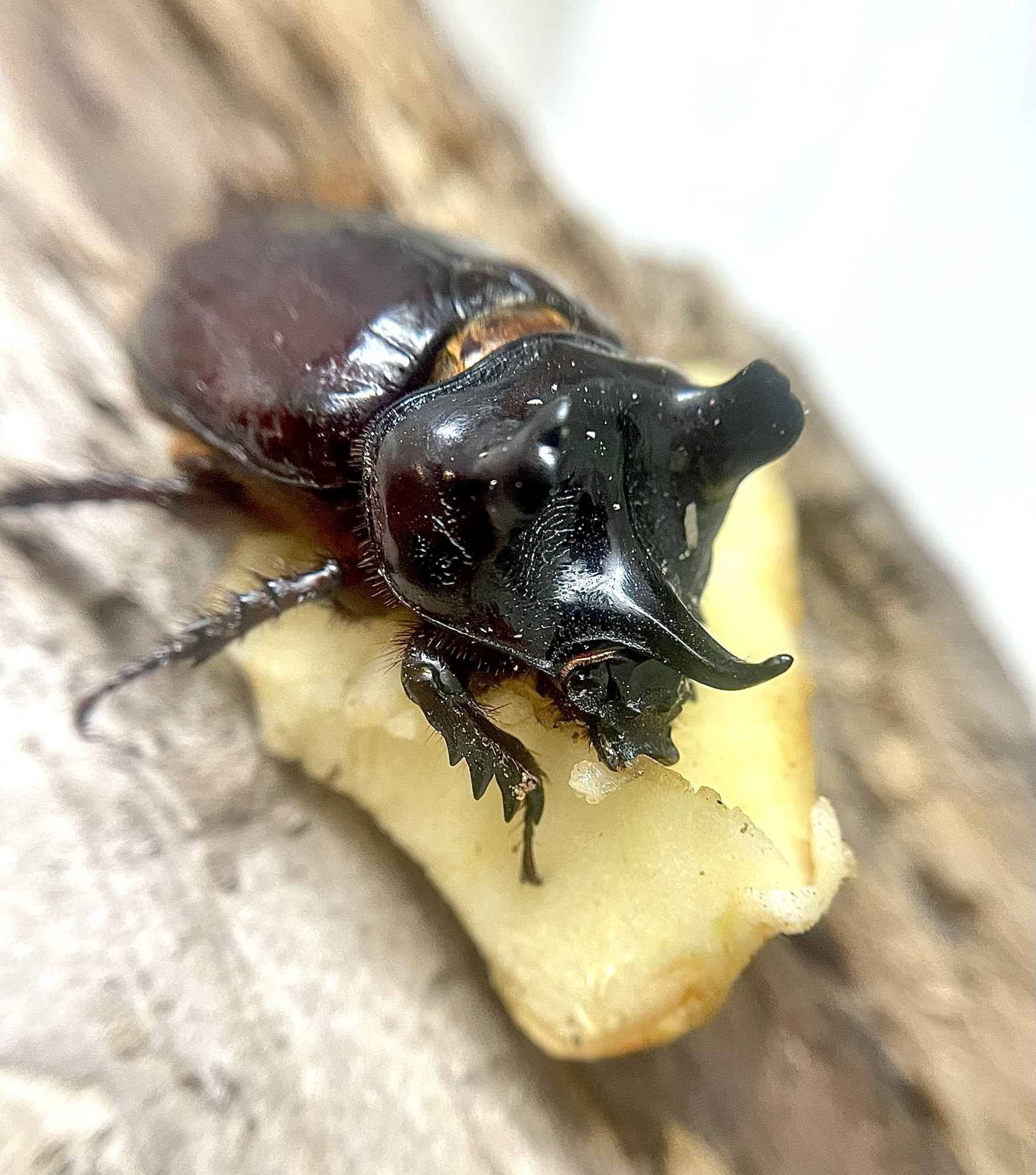
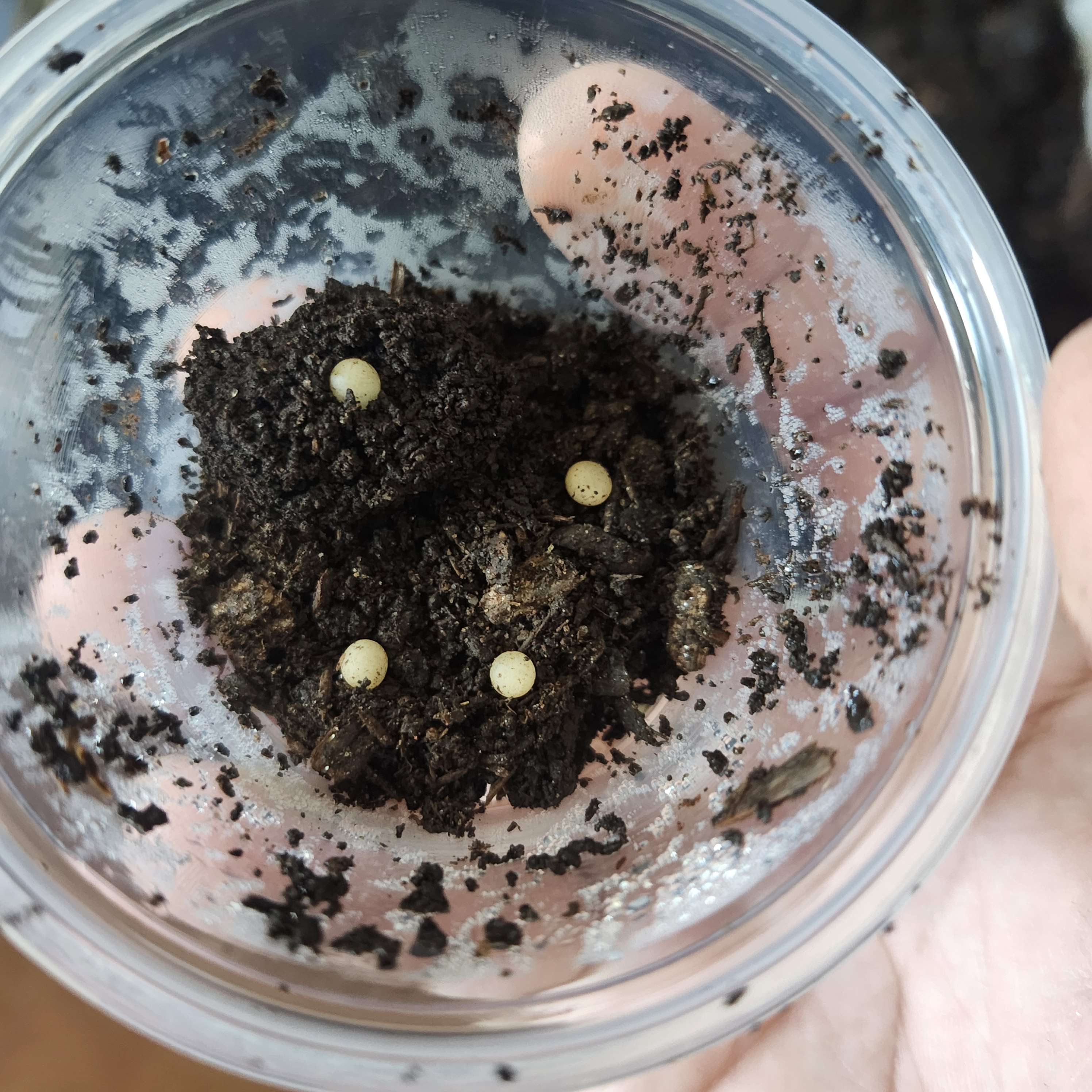
My adults ate heavily, so I supplied fresh food every three days. Beetle jelly, apple and banana are my usual choices for fruit-feeding adults. Adult males can live as long as two years. The longest-lived female in my own colony survived about nine months. My females accepted several organic substrates for laying, so I was able to use a simple setup. In one July laying box I could see eggs from a wild-caught female through the clear wall. One male I had photographed as a pupa in January 2022 was still alive and well the following January.
Larvae and pupae
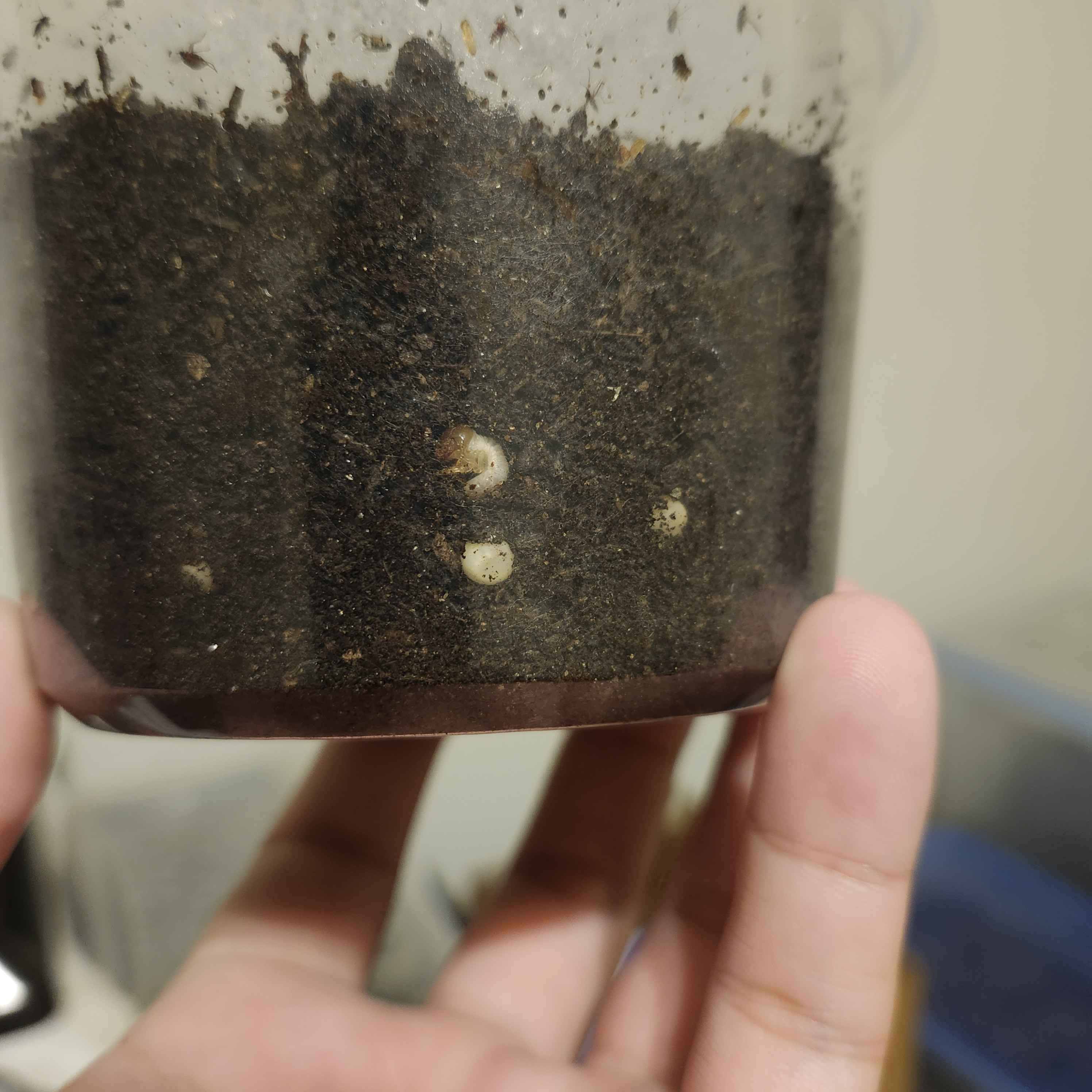
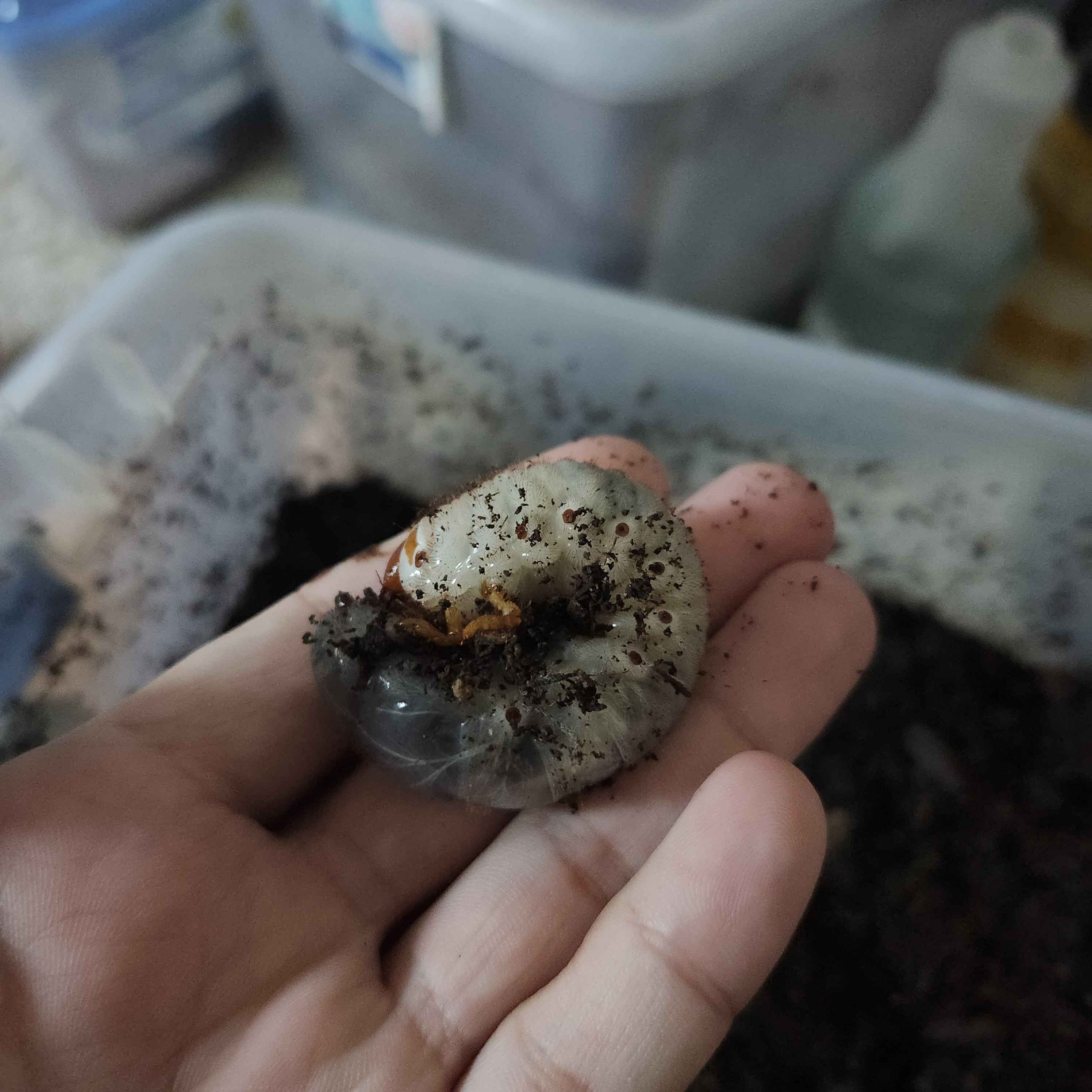
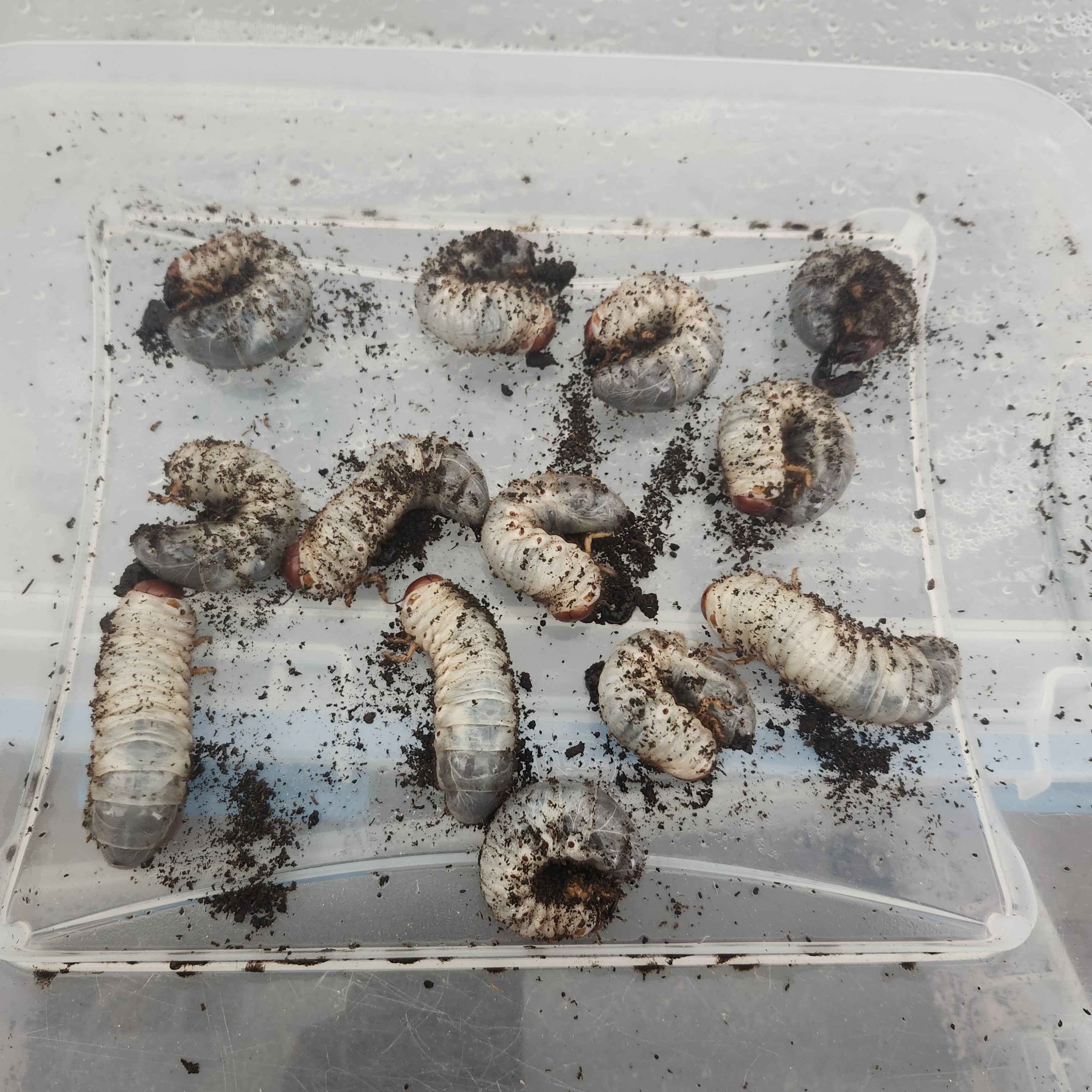
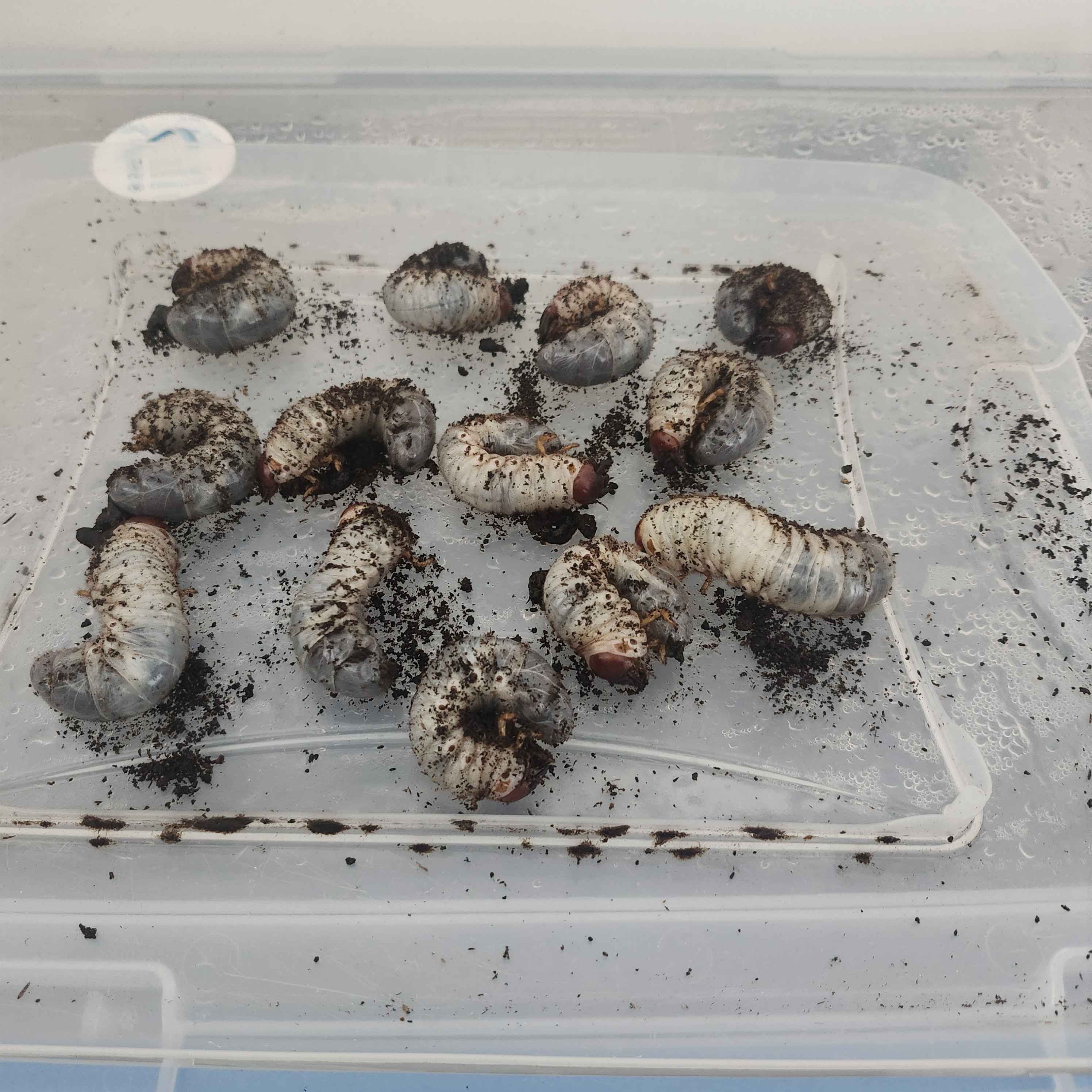
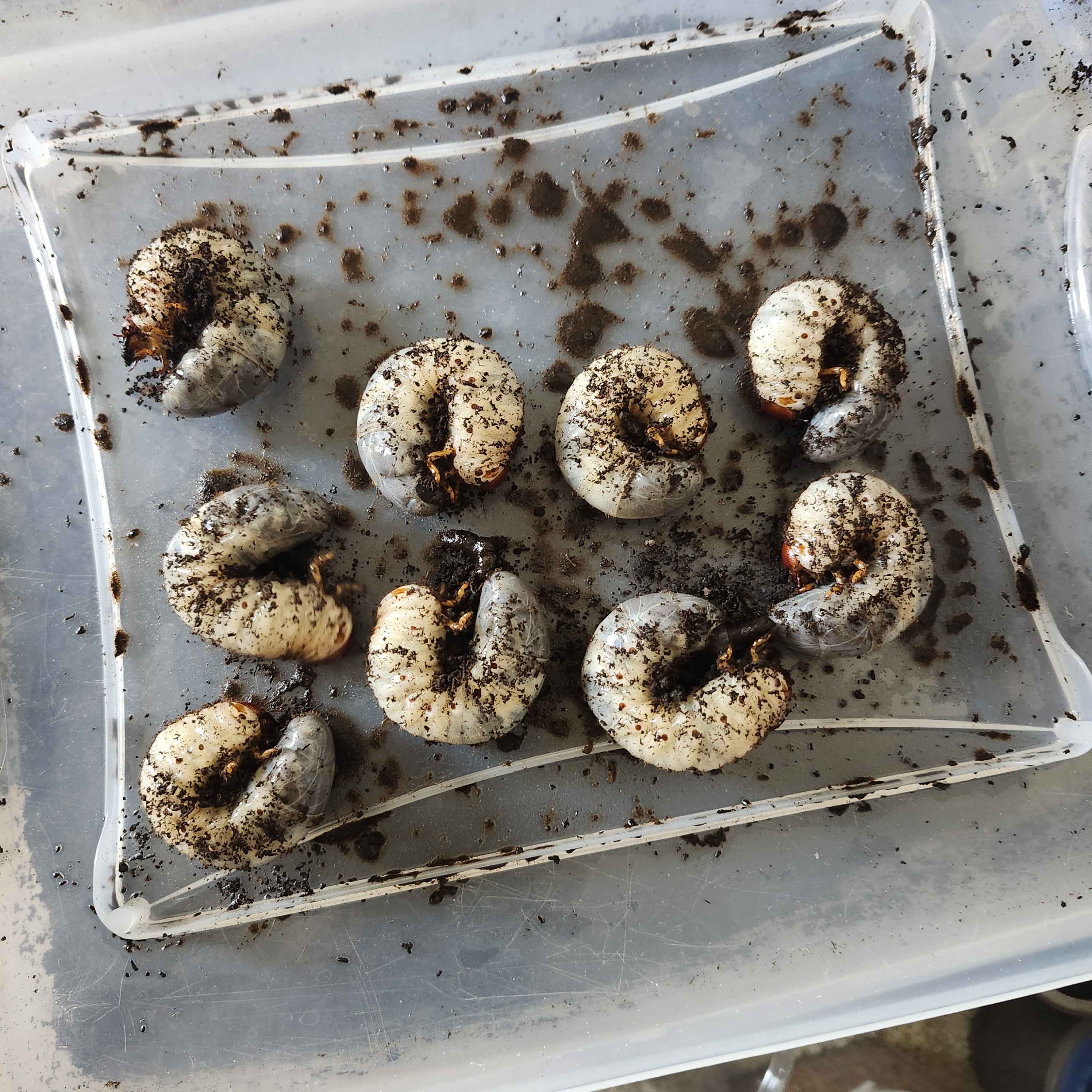
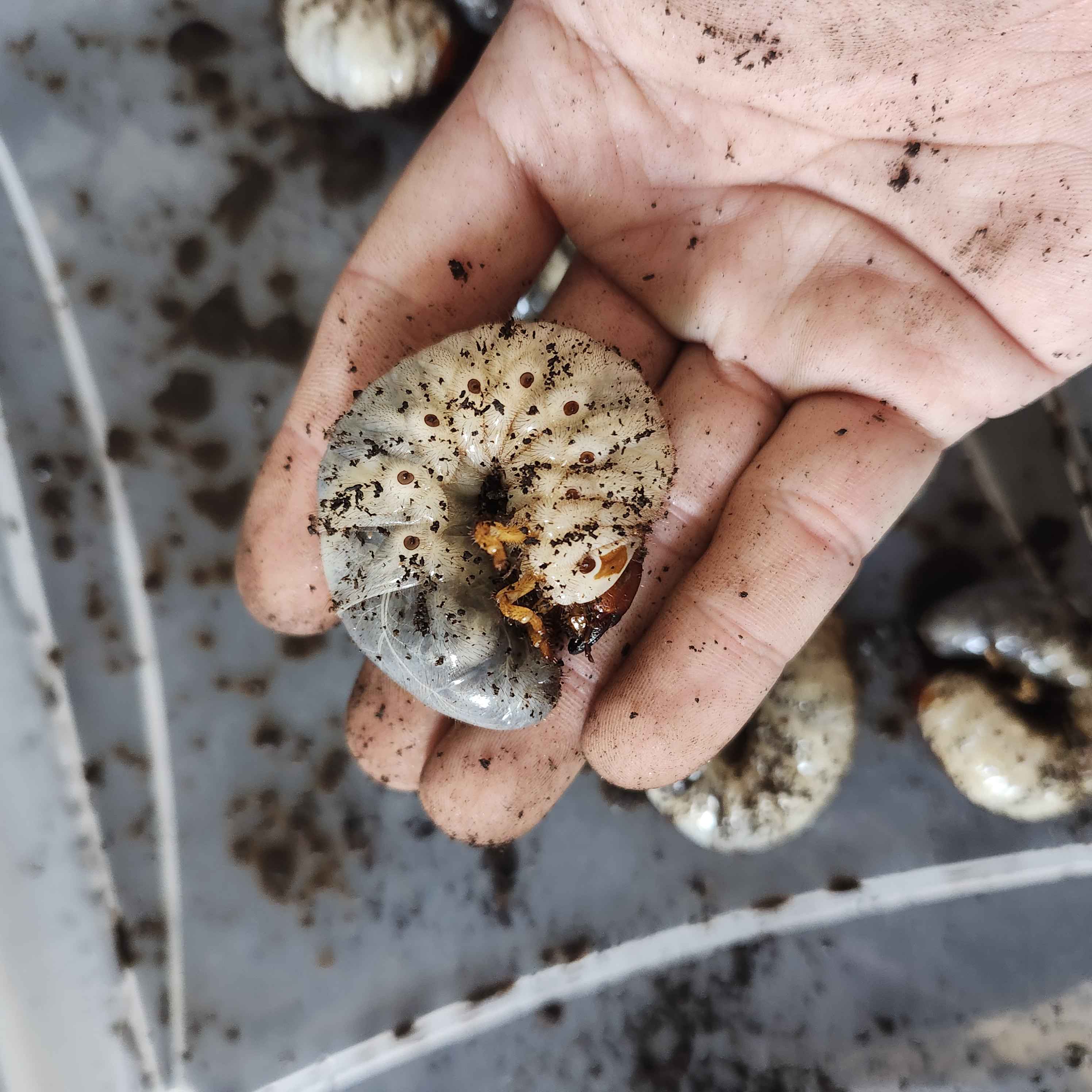
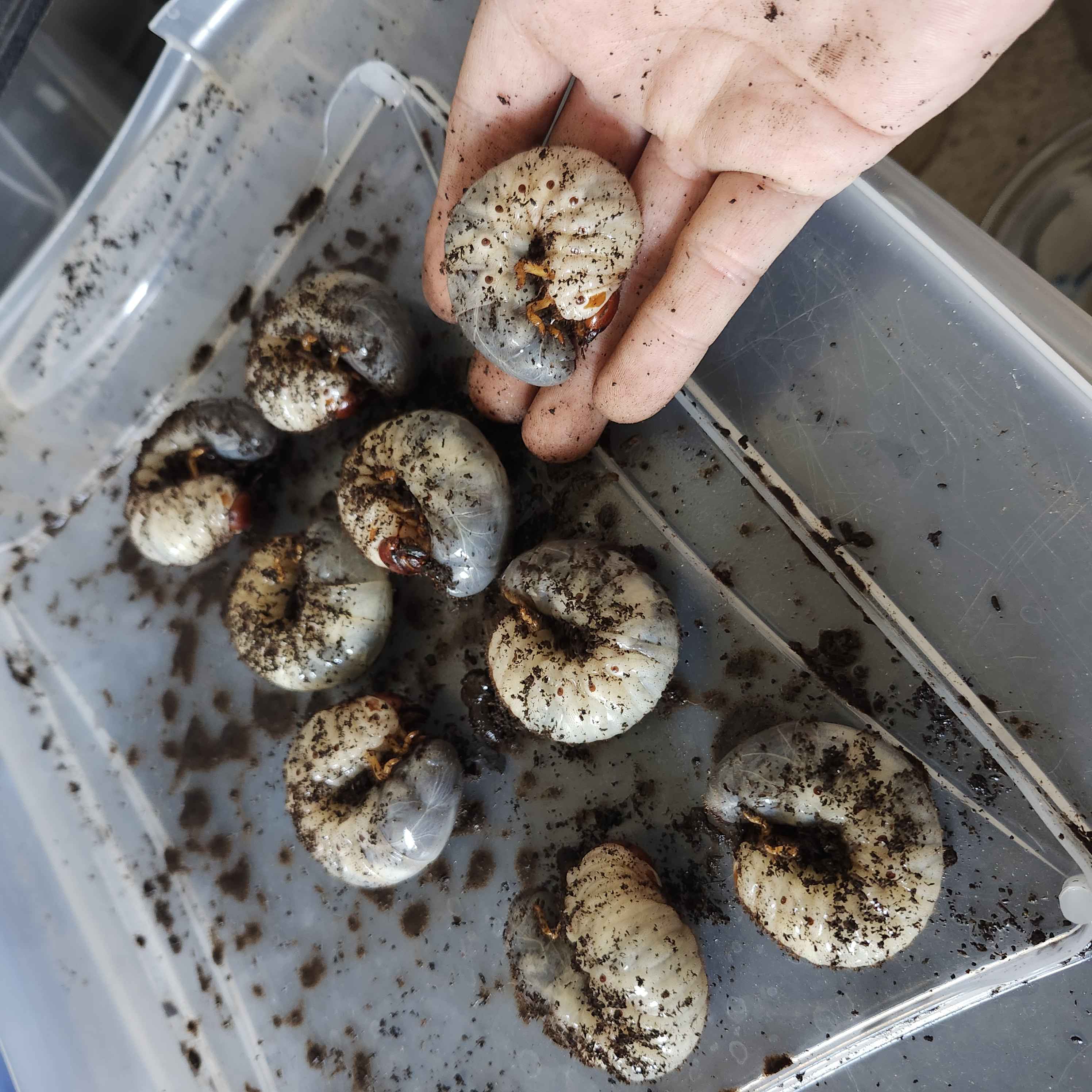
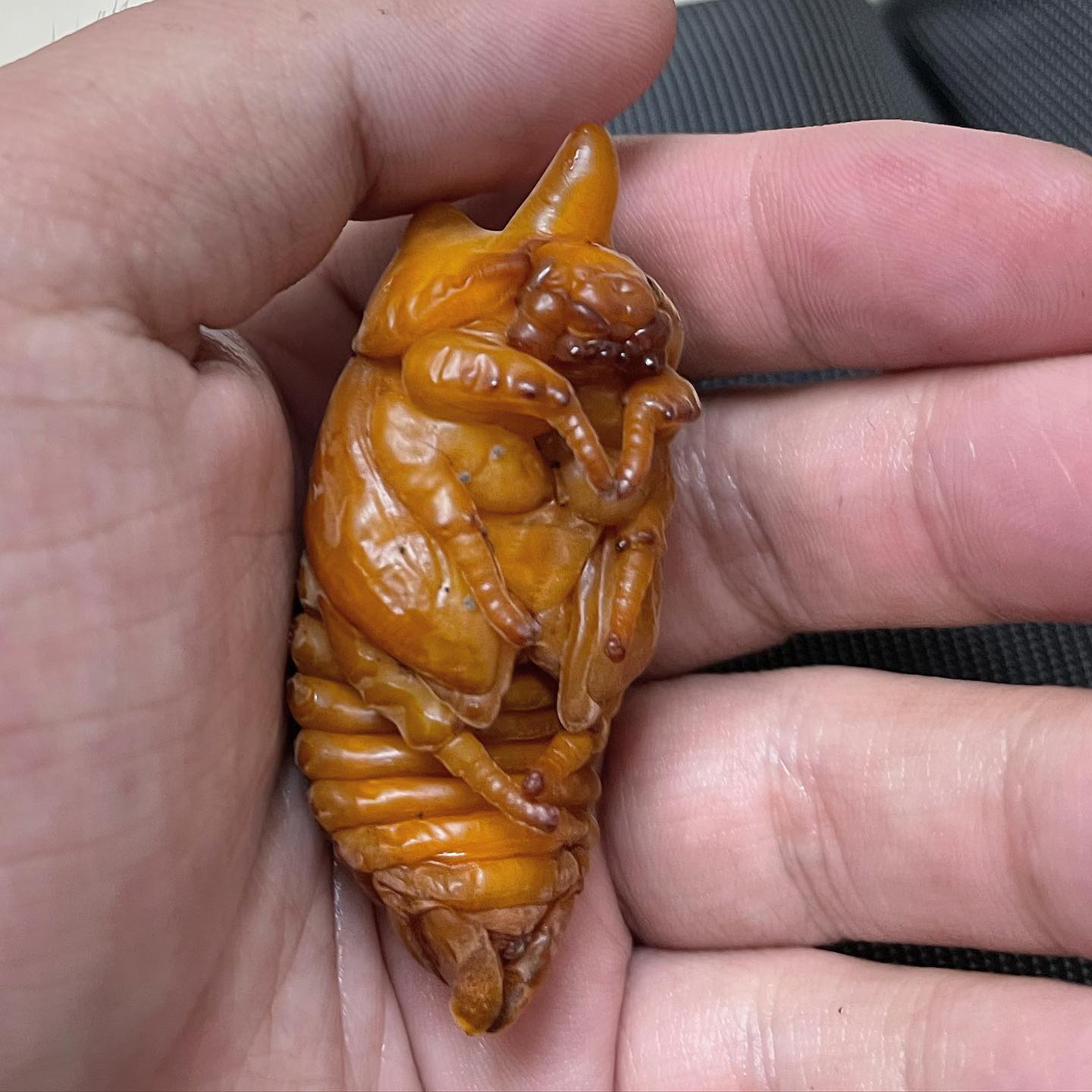
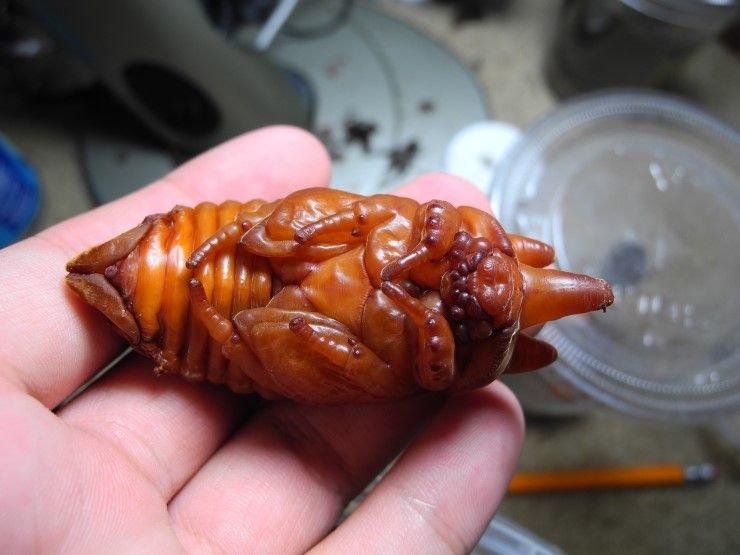
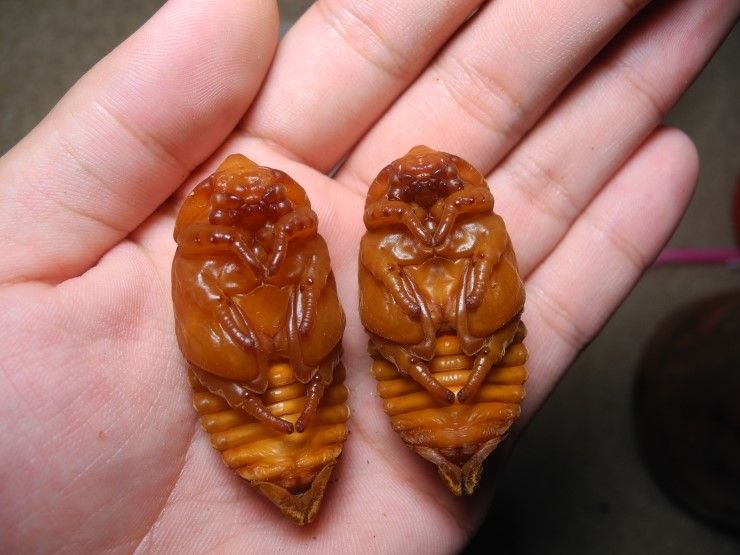
I have reared grubs to adulthood on organic raised-bed soil and on flake soil. For growing rhinoceros beetle larvae, I choose thoroughly fermented hardwood flake soil. As they approach full size, I give every Strategus species I rear a firmly packed layer of clay-like soil for pupation. I put the clay beneath the feeding substrate, where the grub can reach it and shape a chamber that holds together. This is the same arrangement I use for my Chrysina. Once I see the outline of a pupal cell, I leave the soil around it in place until the adult emerges. In an earlier raised-bed-soil trial, adults also emerged without my adding a separate layer of topsoil.
I have seen full-grown grubs walk repeatedly across the surface looking for a place to settle. In my culture they stopped wandering when I moved them onto clay that held together under pressure. Surface wandering at this stage is my cue to check that the pupation layer is accessible.
Development
Ahumada and colleagues measured each stage in beetles from Puerto Wilches, Colombia, reared at 29–32 °C. Eggs averaged about 15 days to hatch. Of the three larval instars, the first averaged 24 days, the second 42 days and the third about 201 days. Pupation averaged another 27 days, bringing the egg-to-adult interval to about 308 days. That long final instar accounts for much of the wait after a grub has become conspicuously large. For comparison, my own larvae completed development in raised-bed soil in less than a year.
Stock origin
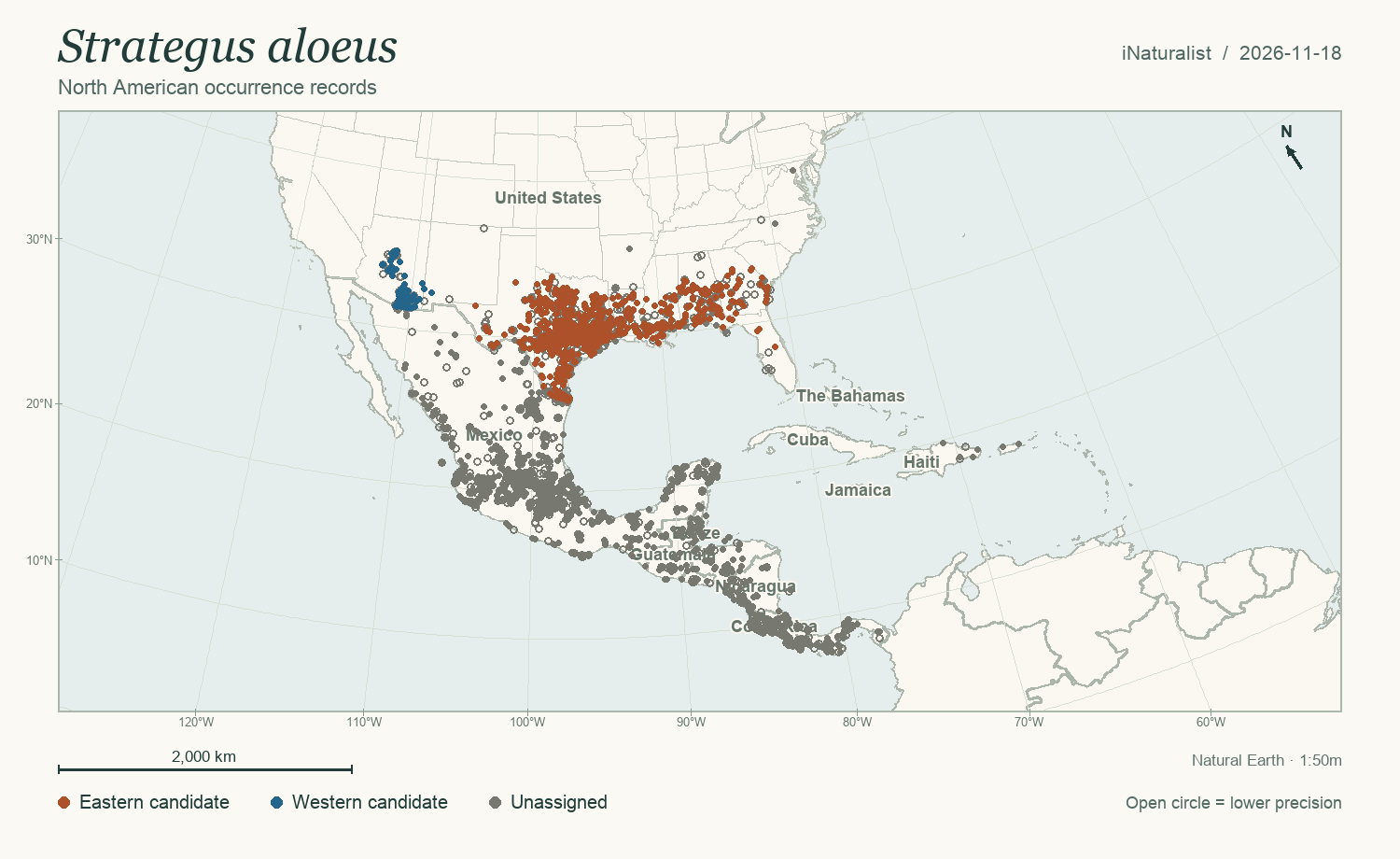
I keep locality labels with each line and pair beetles from the same regional stock. I treat the eastern and western populations as two putative species within the Strategus aloeus complex. I group Arizona and New Mexico with the western stock, and western Texas eastward with the eastern stock. I cannot assign my 2022 captive series to either group from its locality data.
Photographs
Eggs
Larvae
Prepupae and pupae
Geographic status
Native across the southern United States, including the Southwest and Southeast. Its range continues through Mexico and Central America into South America.
Distribution records