Life-history data
- Adult lifespan
- About one month in my care
- Adult food
- Beetle jelly, renewed every five days
- Laying material
- A decayed hardwood log on the surface of the substrate
- Larval food
- The interior of the breeding log
Adults
I prepare the breeding enclosure before I introduce the pair because the adults live only about a month. Mine accept beetle jelly, which I renew on my usual five-day schedule. I put it on an accessible part of the surface so I can replace it while leaving the log in position. At Key Largo I have found adults in numbers, yet even an active group in captivity gave me no offspring when I offered only my usual flake soil.
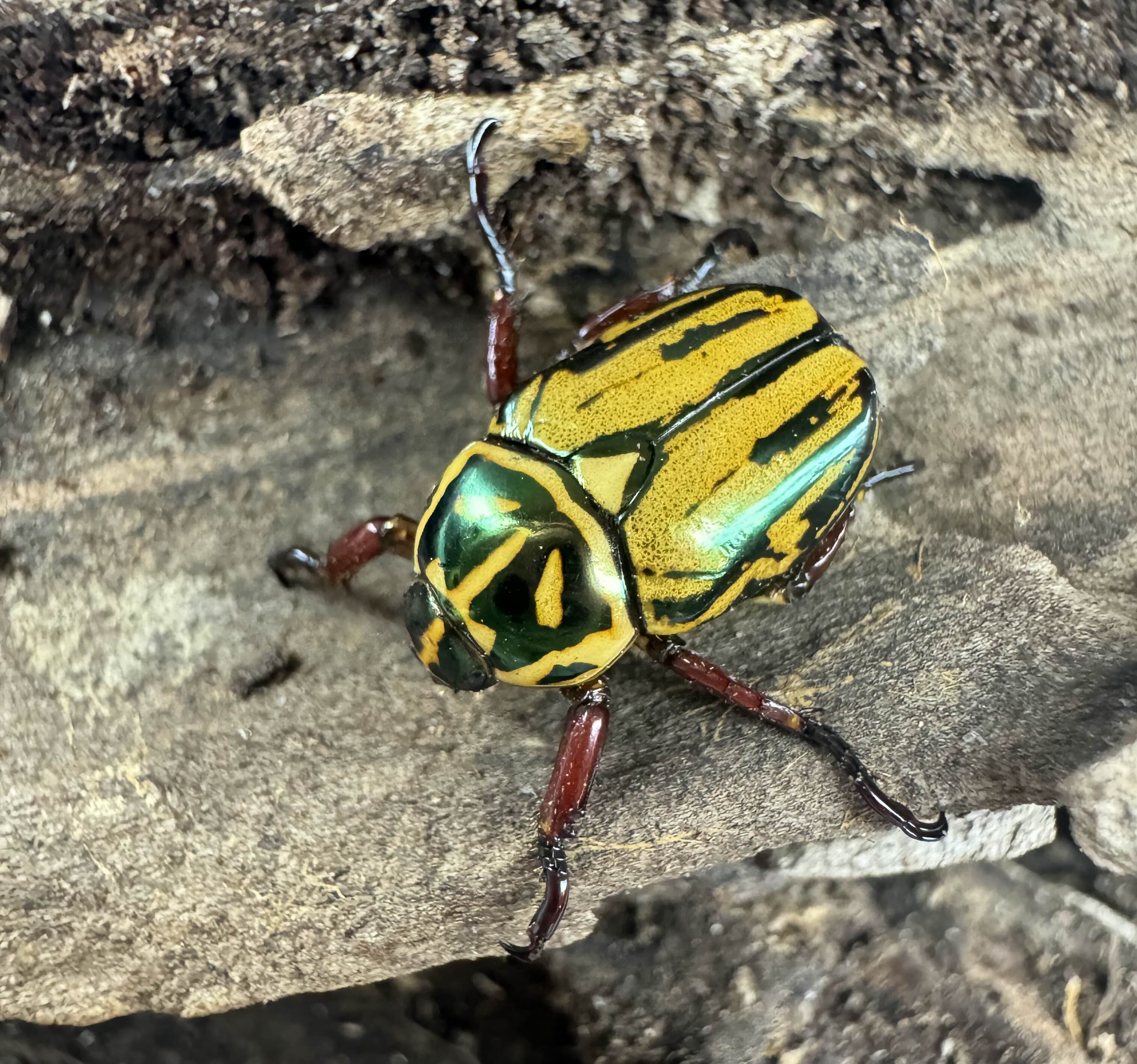
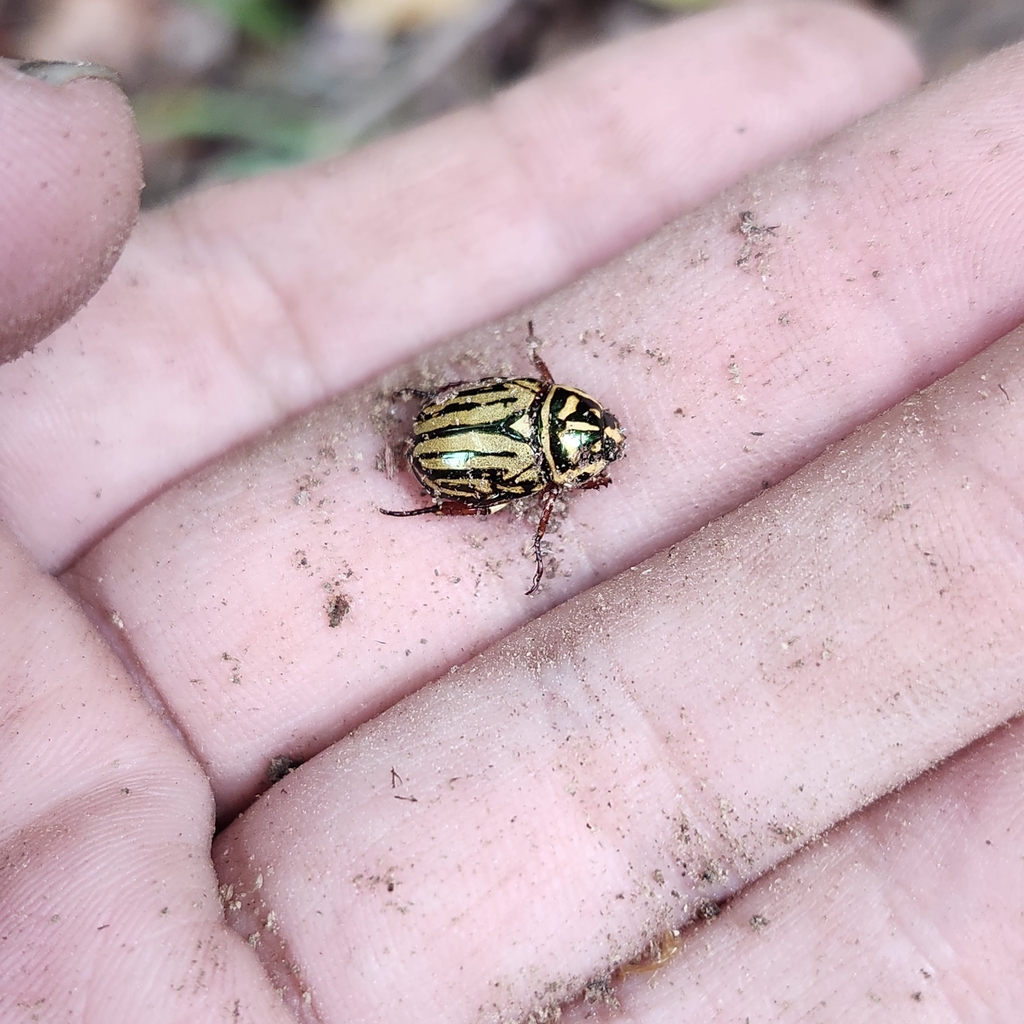
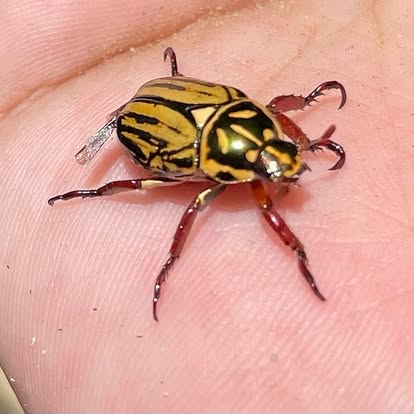
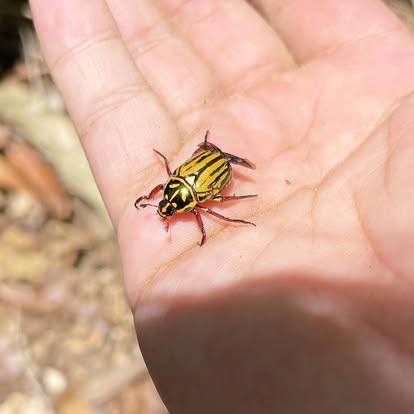
The striped adult on bark is from my collection in September 2025. The Florida field photograph in the gallery is from December 2024. It shows the markings in natural light and gives a sense of the beetle’s size on a hand. I keep these field dates separate from the time an adult spends active in a breeding box.
Breeding logs
In 2021, my standard flake-soil setup failed to produce a brood. By May 2022 I had at least four pairs on hand. I keep that count separate from my later breeding results. In my later culture I used the same basic arrangement I use for Dorcus: a breeding log resting on the surface of the substrate. I choose decaying hardwood that still holds together as a log. The solid piece matters throughout the brood’s development. Once the female has had access to it, I leave it in the enclosure, even if I cannot see any young at the surface.
Larvae
My grubs fed through the log and hollowed it from within. I never saw them leave it, even in captivity. I would keep occupied wood intact when refreshing the surrounding material. An empty-looking layer of flake soil tells me very little about what is happening inside the log. In Florida, larvae, pupae and adults have also been found in the decayed heartwood of Bursera and Metopium logs. That field observation fits the way my grubs used the wood.
Photographs
Adults
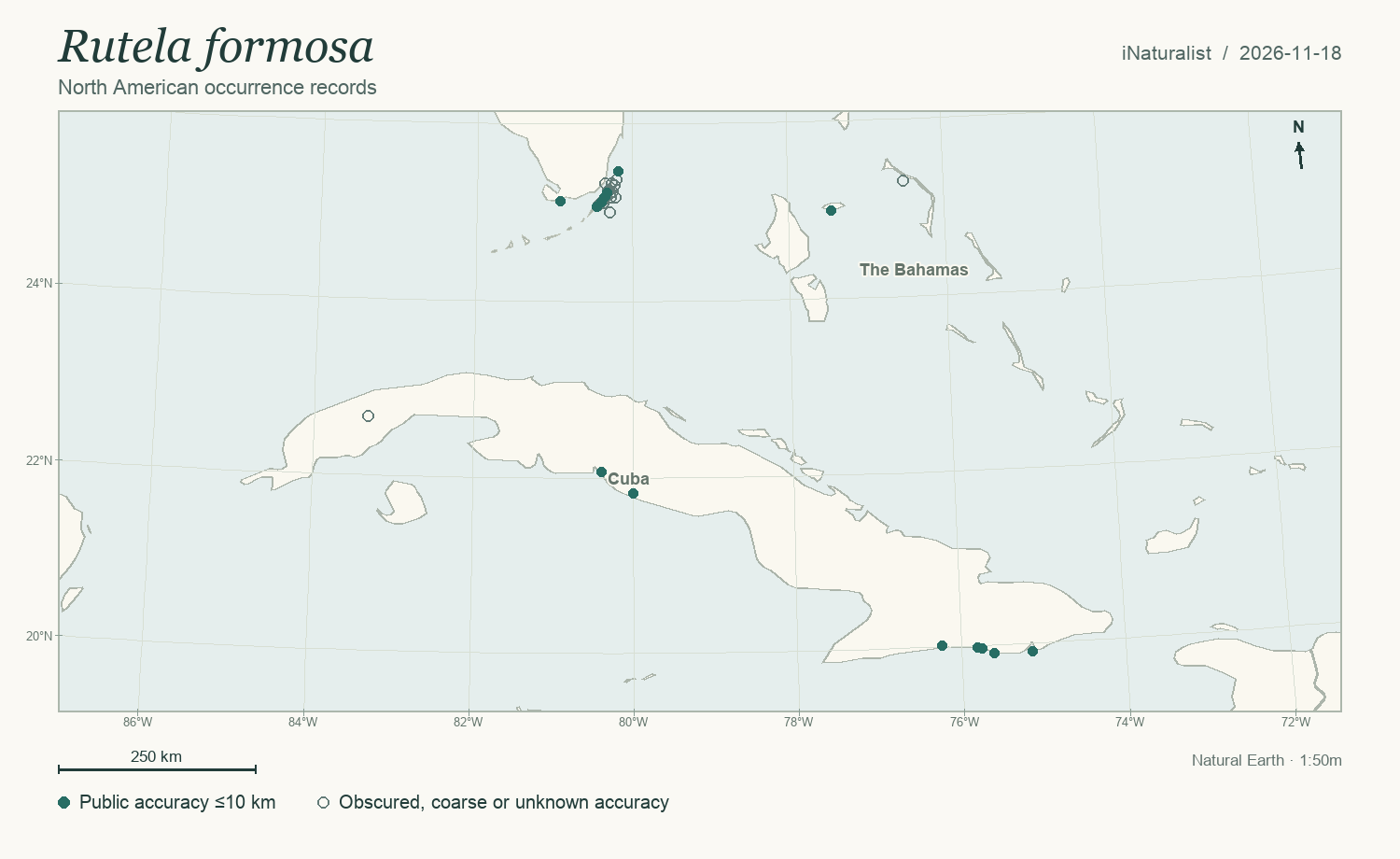
Distribution records