Life-history data
- Adult sexing
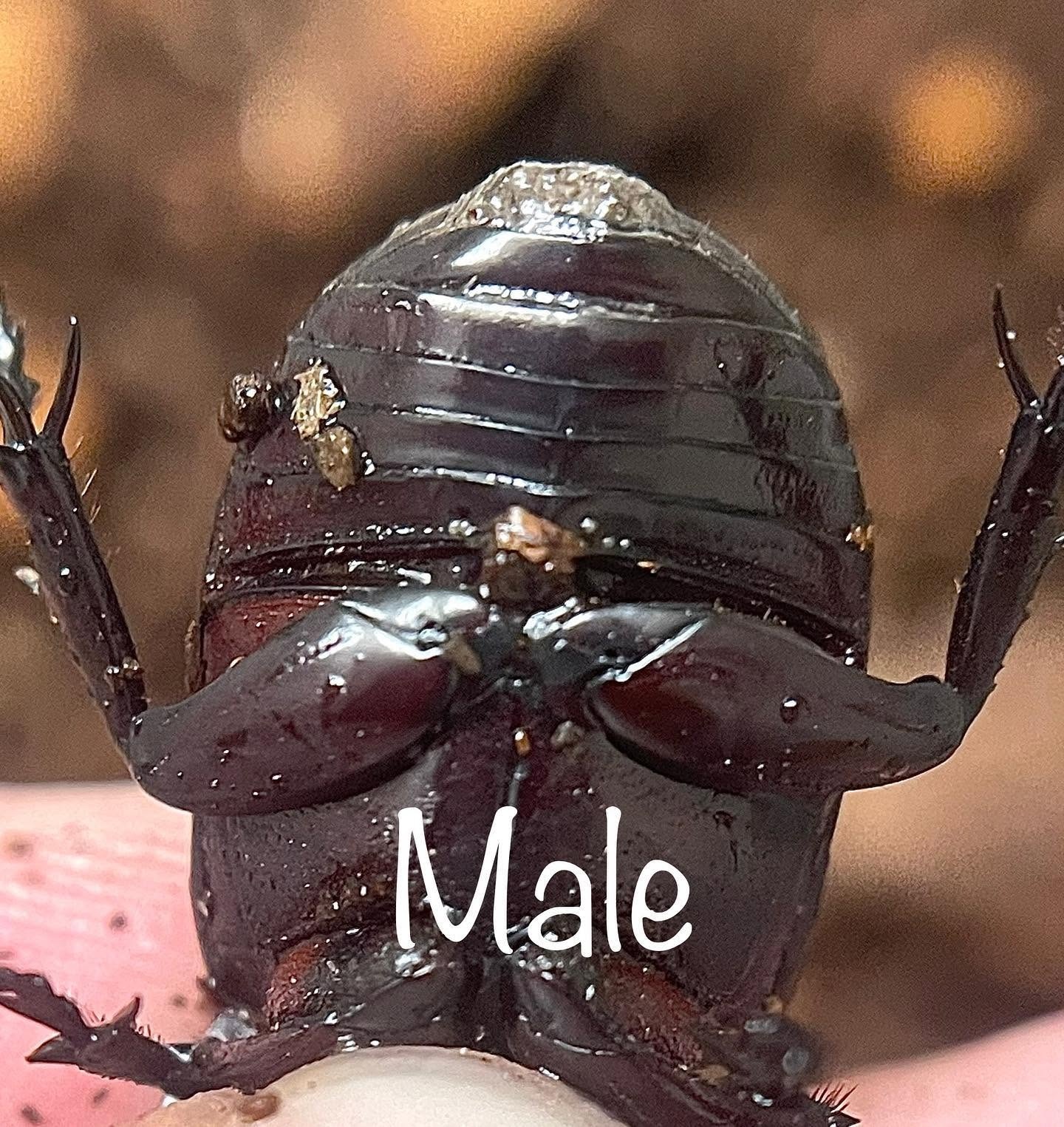
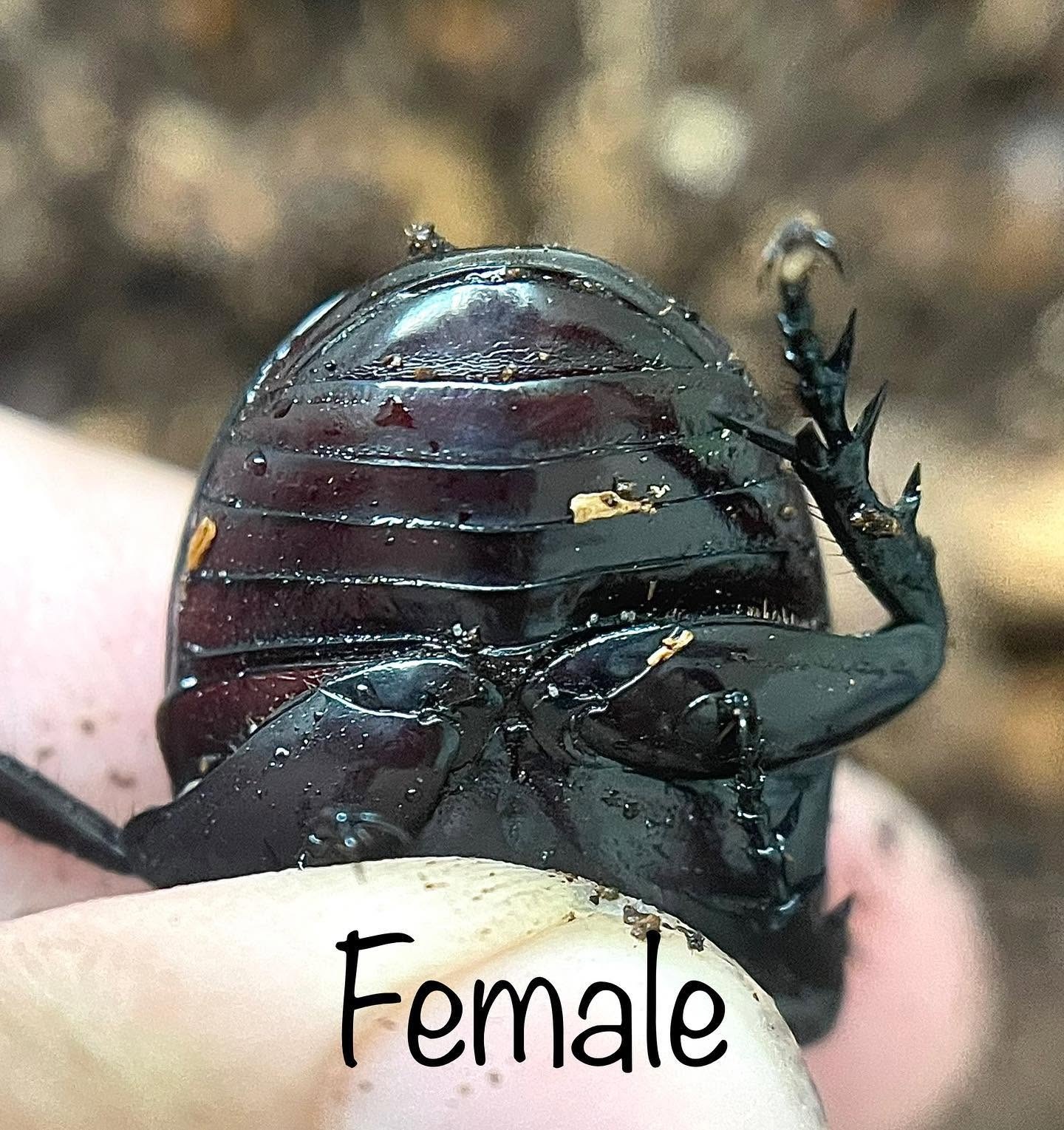
- Compare the last visible abdominal segment
- Successful laying substrate
- Decayed white oak from a tree cavity
- Pairing interval
- Two weeks together in Alan’s successful trial
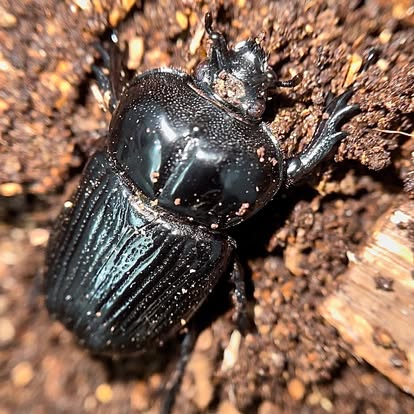
Adults
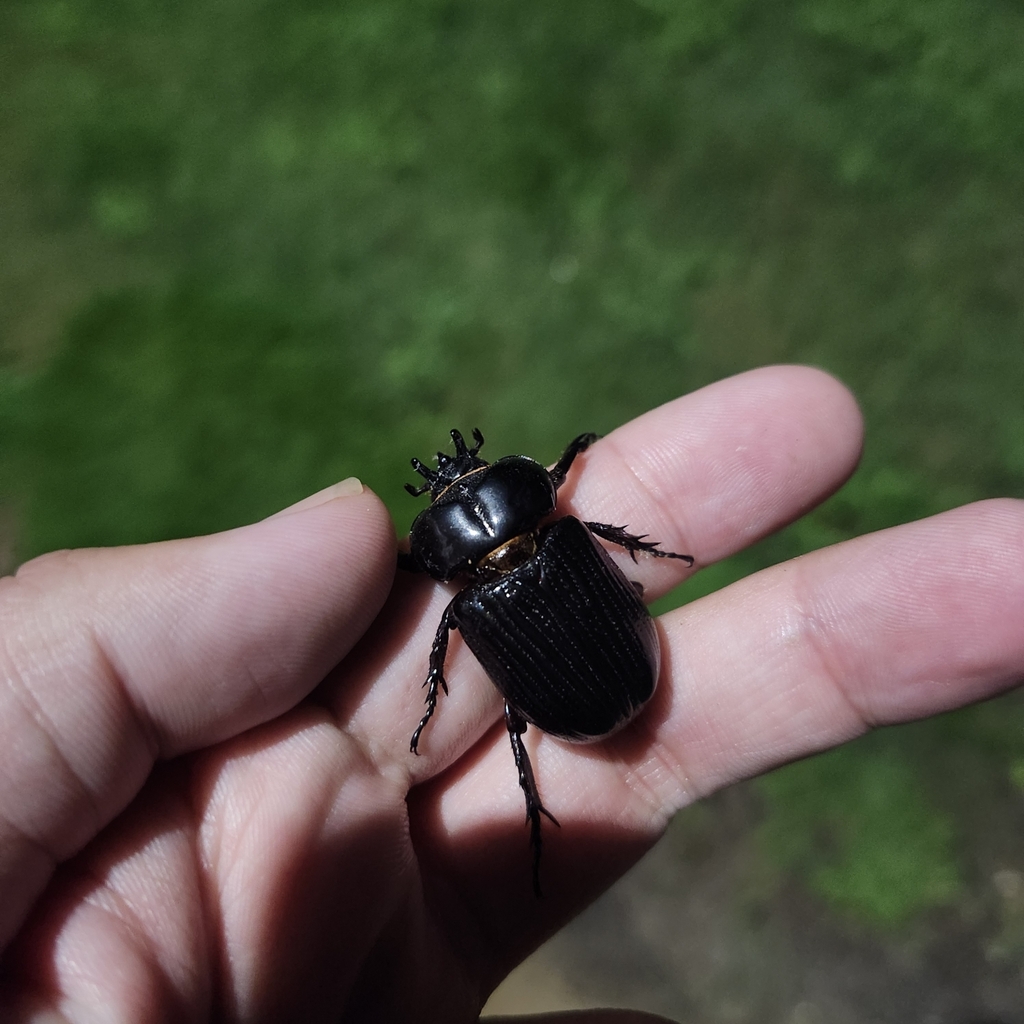
I feed active adults moist, protein-rich food. They chew pre-killed insects and also take moistened dog food. For one breeding attempt I fed my female bess beetle pupae for several weeks before introducing the male. Mealworm or superworm pupae are practical alternatives I would offer if those are the feeders on hand.
Sexing adults
Turn the adult underside up, with the abdominal tip pointing away from you. Follow the plates behind the hind legs to the last visible ventrite. Compare its depth at the midline and the outline of its rear edge. In the male pictured here the plate is shorter at the middle, with a relatively straight rear edge. The female’s plate is deeper at the middle, with a broadly rounded rear edge. The photographs are oriented alike so you can compare the same structure on each beetle.
Host wood
I repeatedly tried finely ground fermented sawdust and never found eggs in it. The setup that finally worked used material from a hollow white oak. I mixed the fine, reddish-brown decayed wood with the larger wood fragments and leaves from the same cavity. I would keep those coarse pieces when preparing another laying box.
Breeding
Once the female had fed for several weeks, I put the pair in the breeding enclosure. After two weeks I removed the male. I left the female in place and began finding eggs a couple of weeks later. For feeding larvae I use rotten hardwood soft enough to break apart by hand. They can also be reared in organic potting soil. I favor a wood-rich diet and reserve the mix of cavity wood and larger fragments for the laying female.
Photographs
Adults
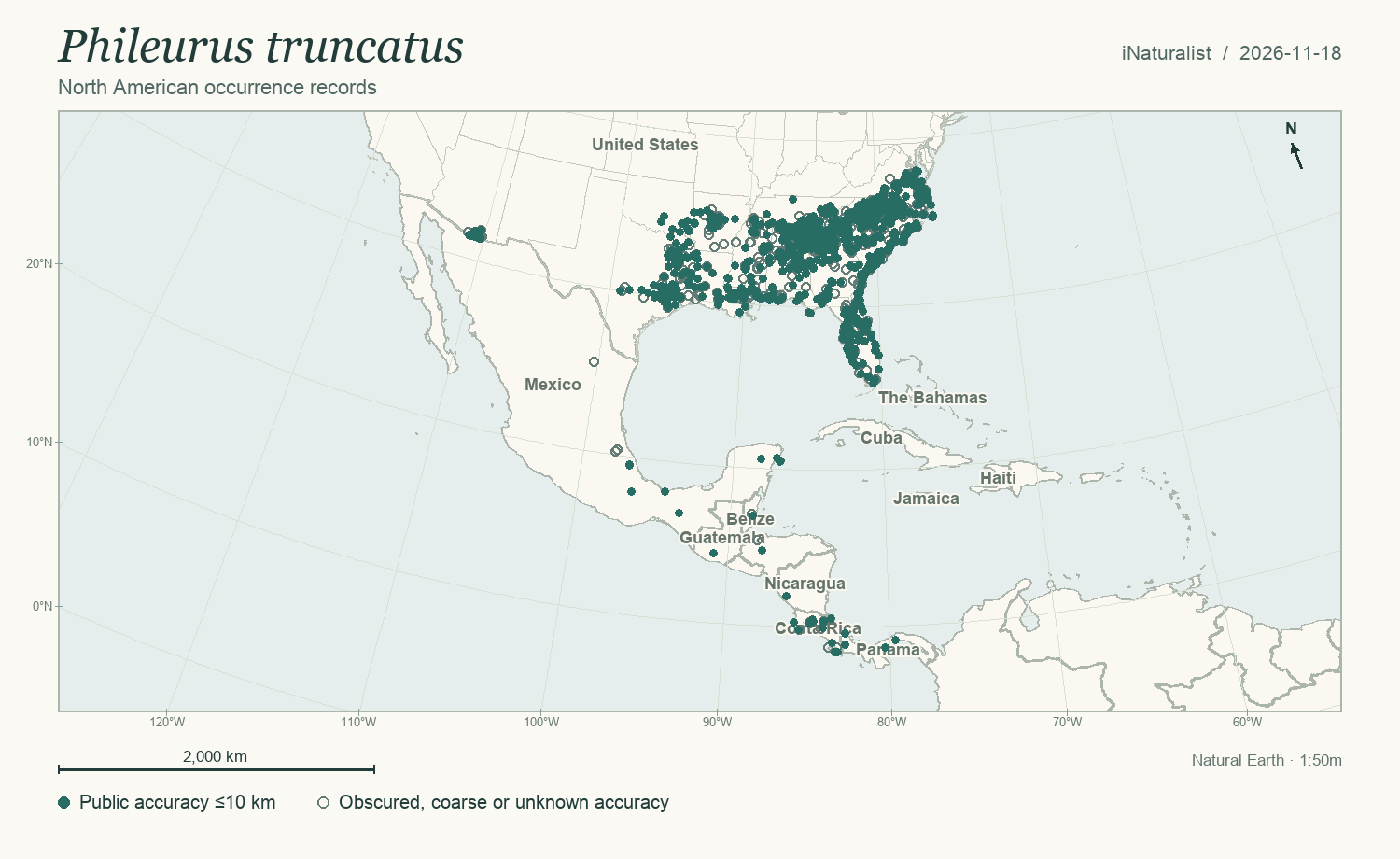
Distribution records