Life-history data
- Oviposition layer
- Approximately 1.3 cm (0.5 in) of damp sawdust
- Egg appearance
- Hard-shelled and seed-like
- Larval duration
- 1–3 years, depending on rearing conditions
Adults
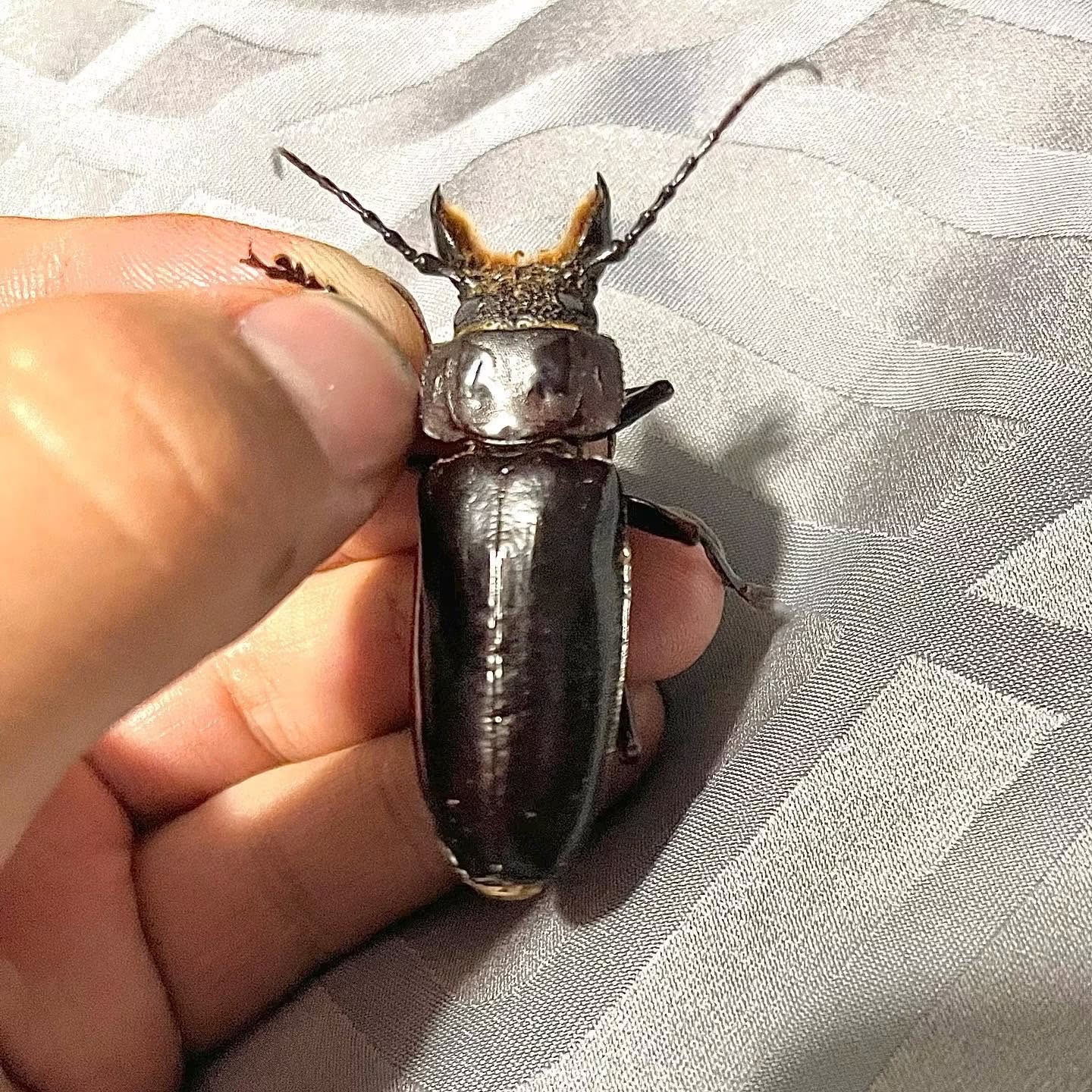
I keep this hardwood stump borer and Stenodontes chevrolati, and the difference in build is especially apparent when I have males of both side by side. A major male Mallodon has a broad head and substantial mandibles. When I introduce the adults I stay nearby to watch them together. For the female, the most useful feature of my setup is how little material the laying box needs. I can provide the egg-laying surface with hardwood sawdust alone.
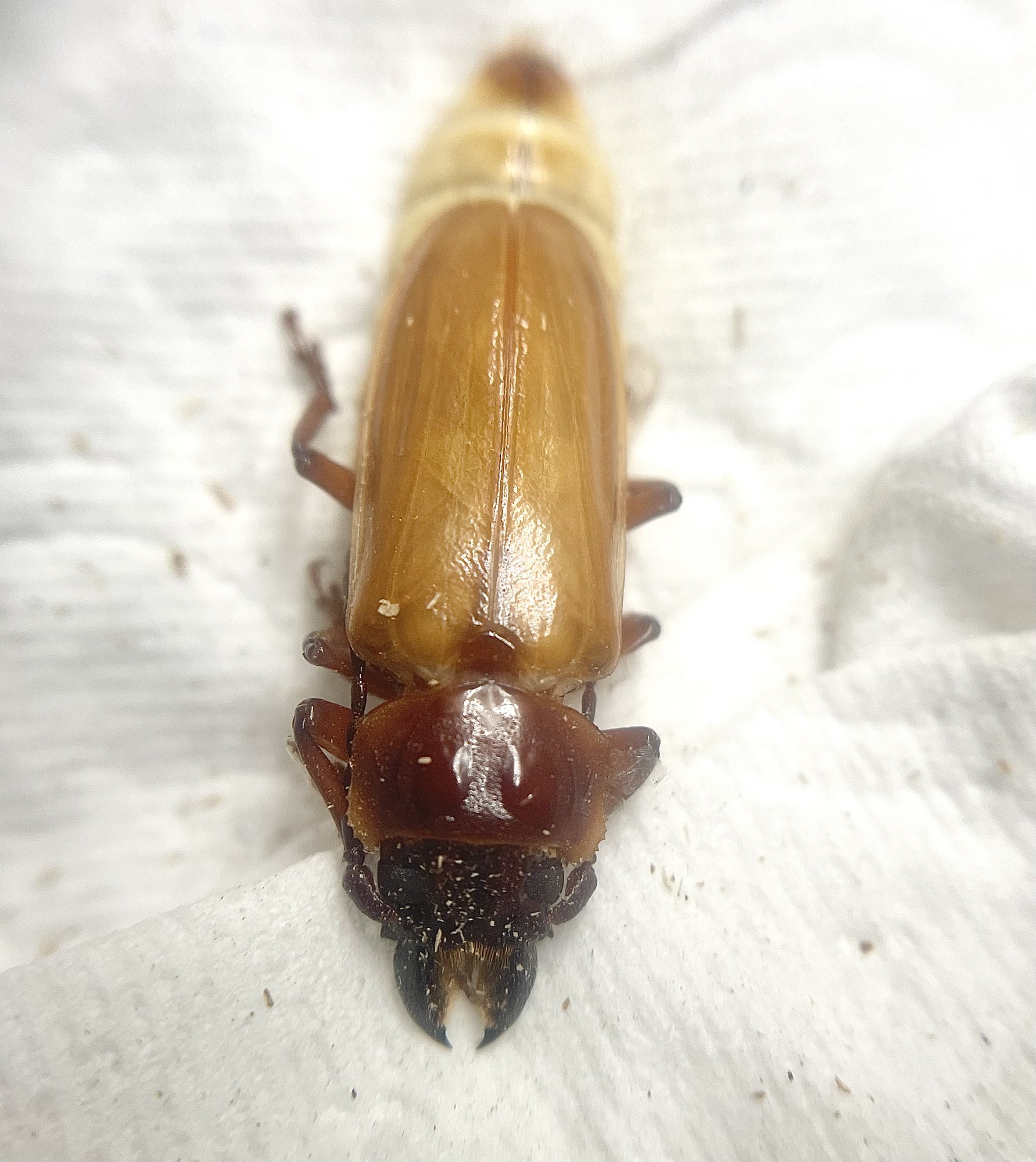
When both sexes are available, I also compare the pronotum, the shield just behind the head. In my males it looks rectangular from above. In females the outline is rounder. This gives me a second feature to check alongside the head and mandibles.
Eggs
I spread about half an inch (1.3 cm) of damp hardwood sawdust in the laying container. My females laid in that shallow layer without an intact log. When I check the substrate, I look carefully at any particle that resembles a seed. The eggs are surprisingly hard-shelled and easy to overlook among coarse pieces of wood. The half-inch depth is what I use to find eggs in the female’s box. I set up the feeding larvae separately with their own supply of wood.
Larvae
I start with plain hardwood pellets and expand them into sawdust. The larvae eat the wood itself, so I treat it as their food supply when I check the container. Kinshi, hardwood sawdust colonized by fungal mycelium, is another larval food this species will accept. My larvae also accepted supplementary protein and grew rapidly when it was available. I can rear them on hardwood sawdust without having to supply a whole stump.
I allow about one to three years for the larval stage, depending on the rearing conditions. A small grub with fresh sawdust still available and a nearly full-grown one that has consumed most of its food need attention at different times. I check what remains in each container before deciding when to replenish it. I keep the food type with the date I set up each larva so I can compare growth within the same brood.
Photographs
Adults
Geographic status
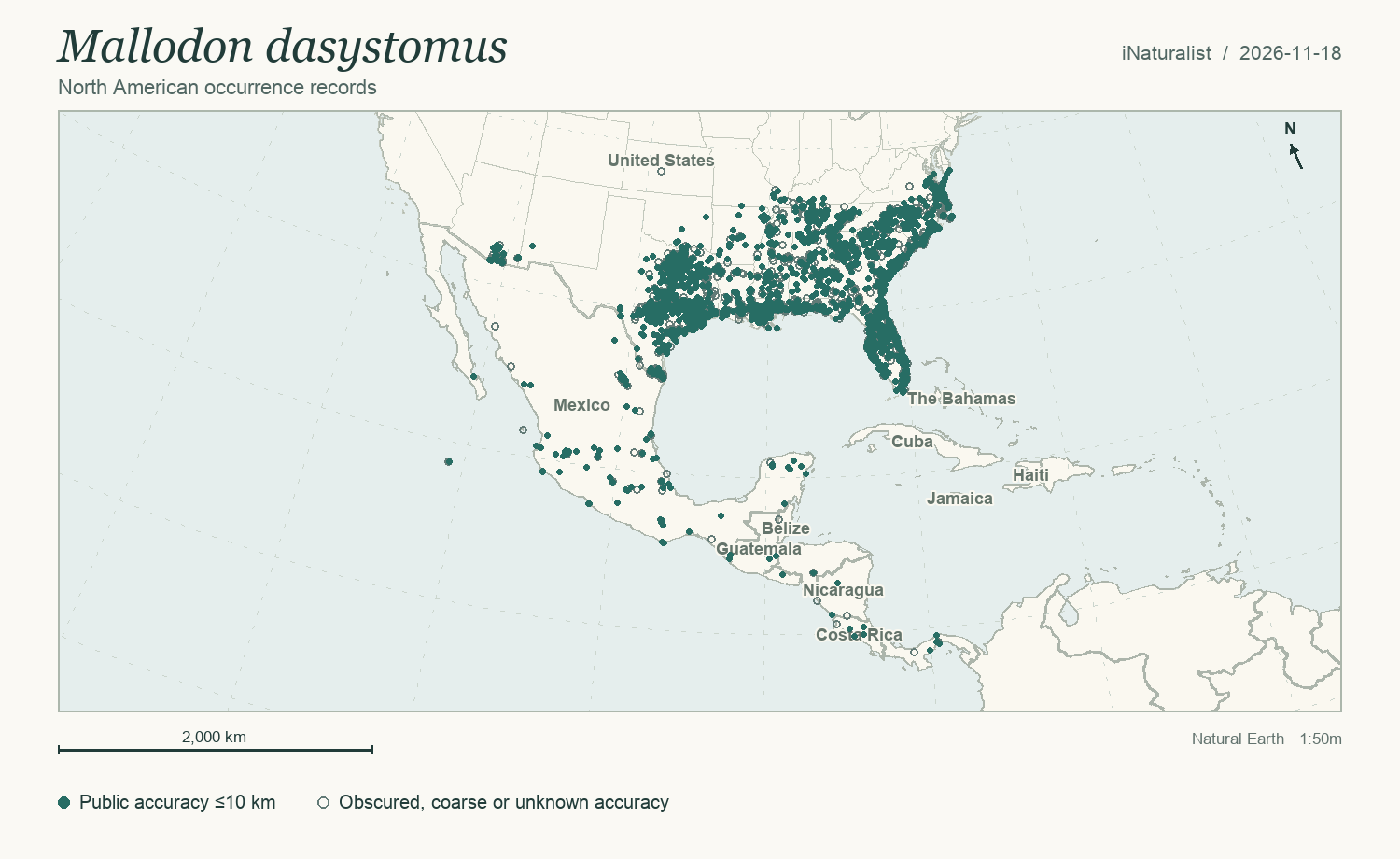
Native to the southern United States and Mexico, including Florida.
Distribution records