Life-history data
- Brood recovered
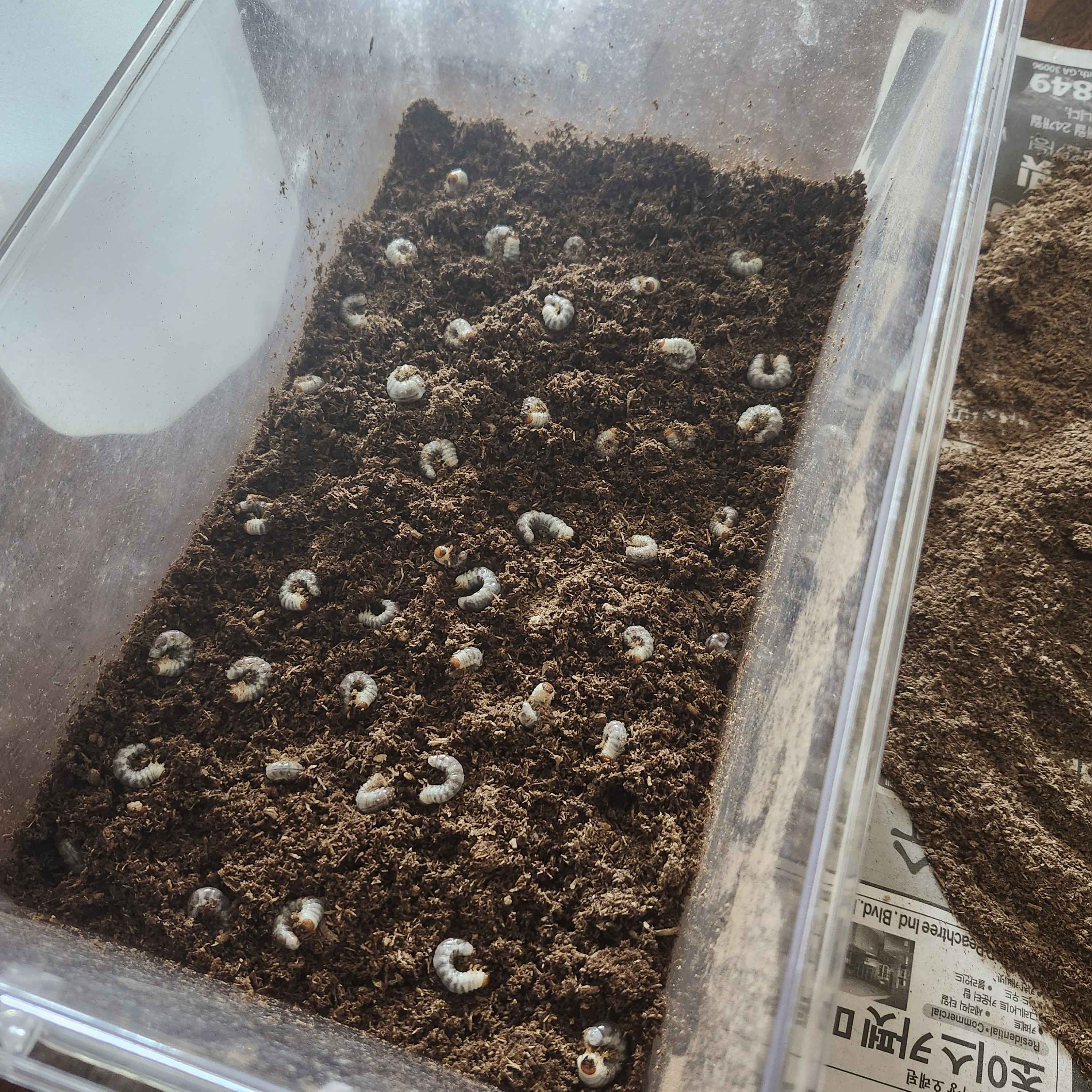
- 46 larvae from one female
- Laying substrate
- Hardwood flake soil
- Published pupal duration
- 31–35 days in seven individuals
Adults
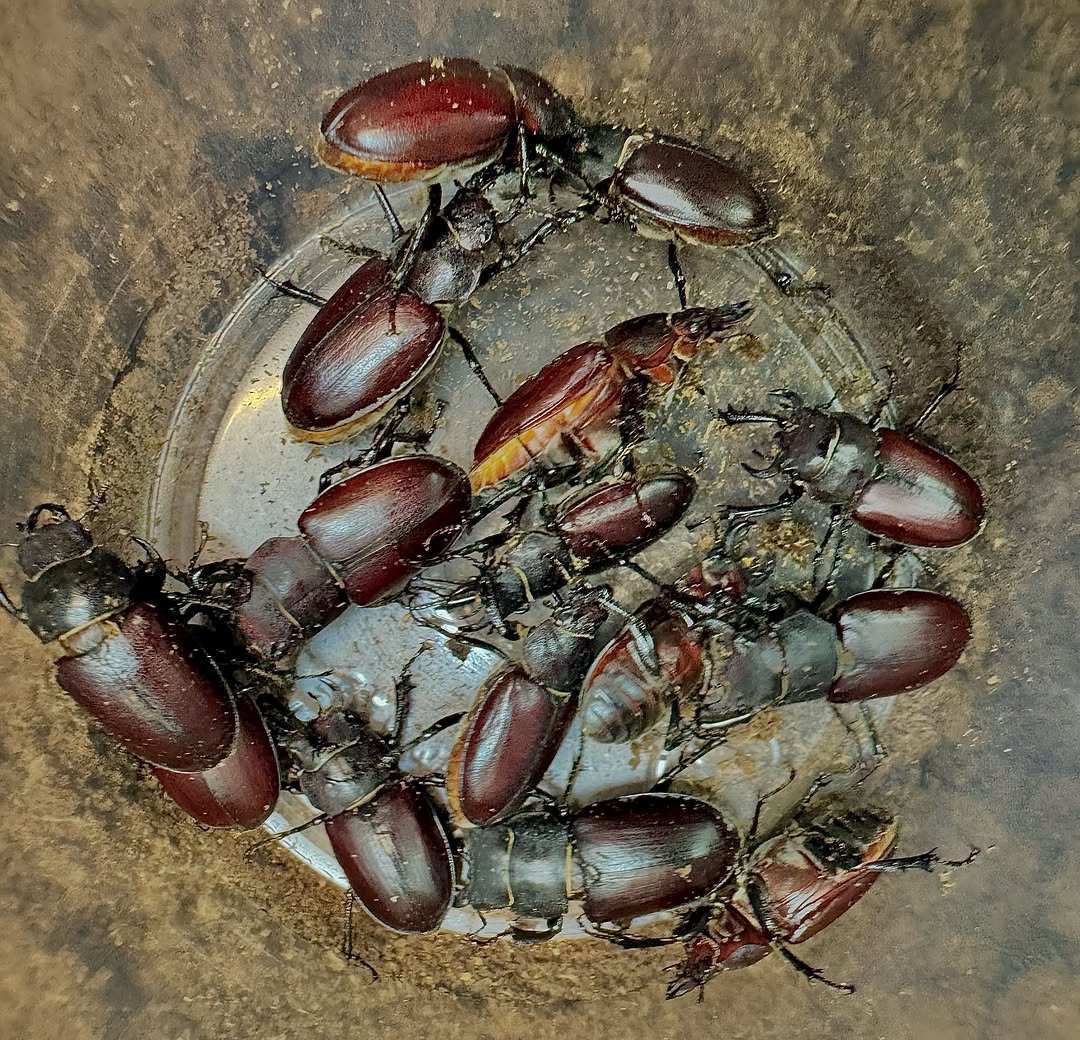
The male’s inward-curving mandibles are larger than the female’s. I set up the laying substrate before introducing an active pair. I use aged hardwood sawdust with this species, and it has bred on flake soil. For a new box I recommend the less-fermented hardwood mix described on the Substrate page. My longstanding flake recipe uses sawdust, flour, yeast and a little oatmeal, stirred over one to two months. Offer active adults beetle jelly every five days, or a piece of apple or banana.
Larvae
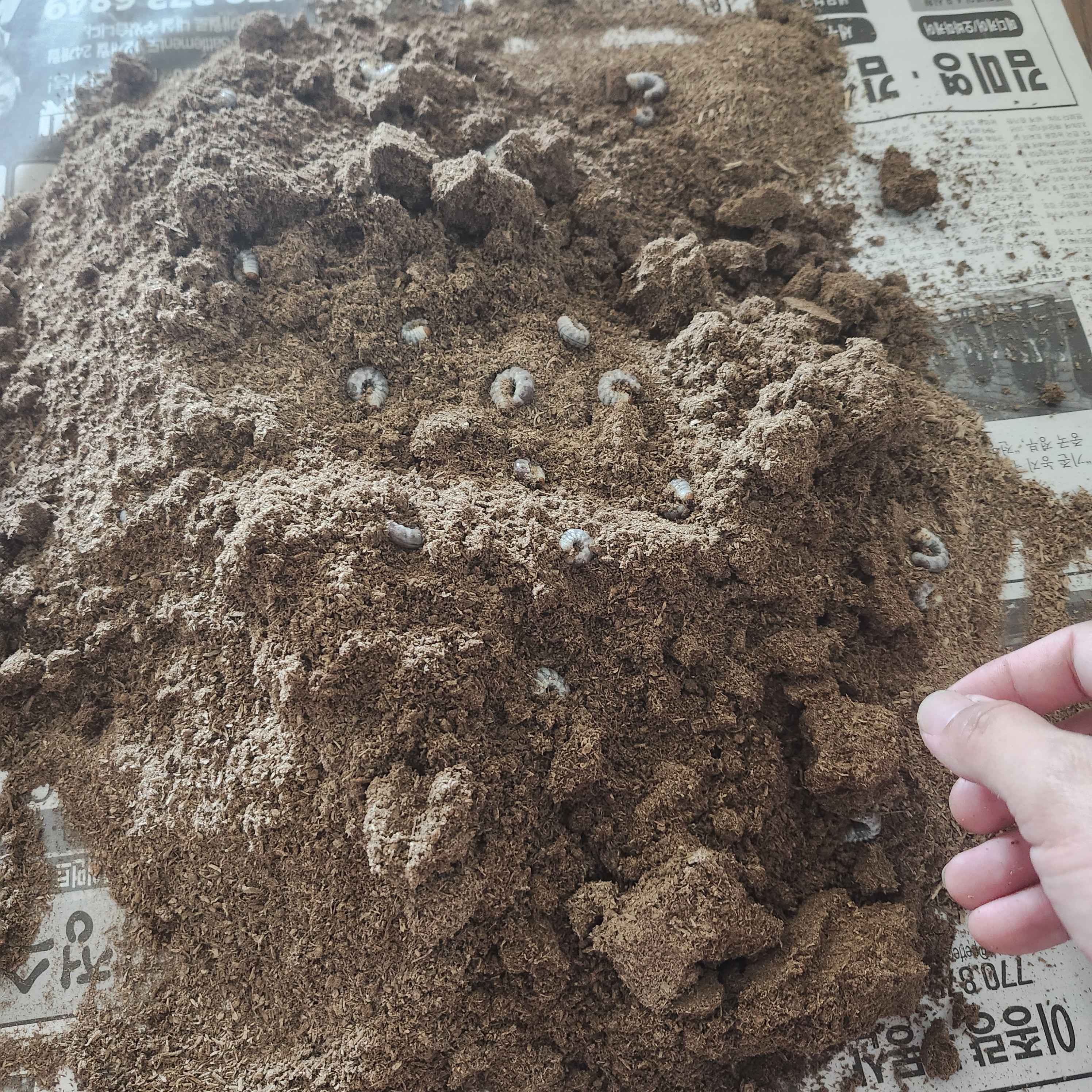
Have the larval containers ready before you open the laying box. I found animals throughout the substrate, so I work through the full depth in small portions. The September brood of 46 was the number I recovered from one female at that check. Return feeding larvae to aged hardwood or flake soil, with enough substrate to burrow. Cottonwood is the common name, but oak is also a natural food. Reyes-Castillo and colleagues found late-stage grubs in a decaying oak stump in Chihuahua.
Pupation
As a grub matures, check the sides and base of its enclosure before loosening the substrate. The Mexican study followed third instars through the rest of development. They pupated in wood debris. Five individuals took five to eight days to pass from prepupa to pupa, and seven took another 31–35 days from pupa to adult. Some adults spent much of their time below a log even after completing the molt. I wait for my beetles to become active on their own before moving them to a pairing enclosure.
In earlier broods I lost pupae, and some newly emerged adults had enlarged abdomens that extended beyond the wing covers. Those adults later died following infection. In my 2026 brood I kept the substrate drier as larvae began to pupate. Most of the adults emerged without those deformities.
Photographs
Larvae
Additional views
Geographic status
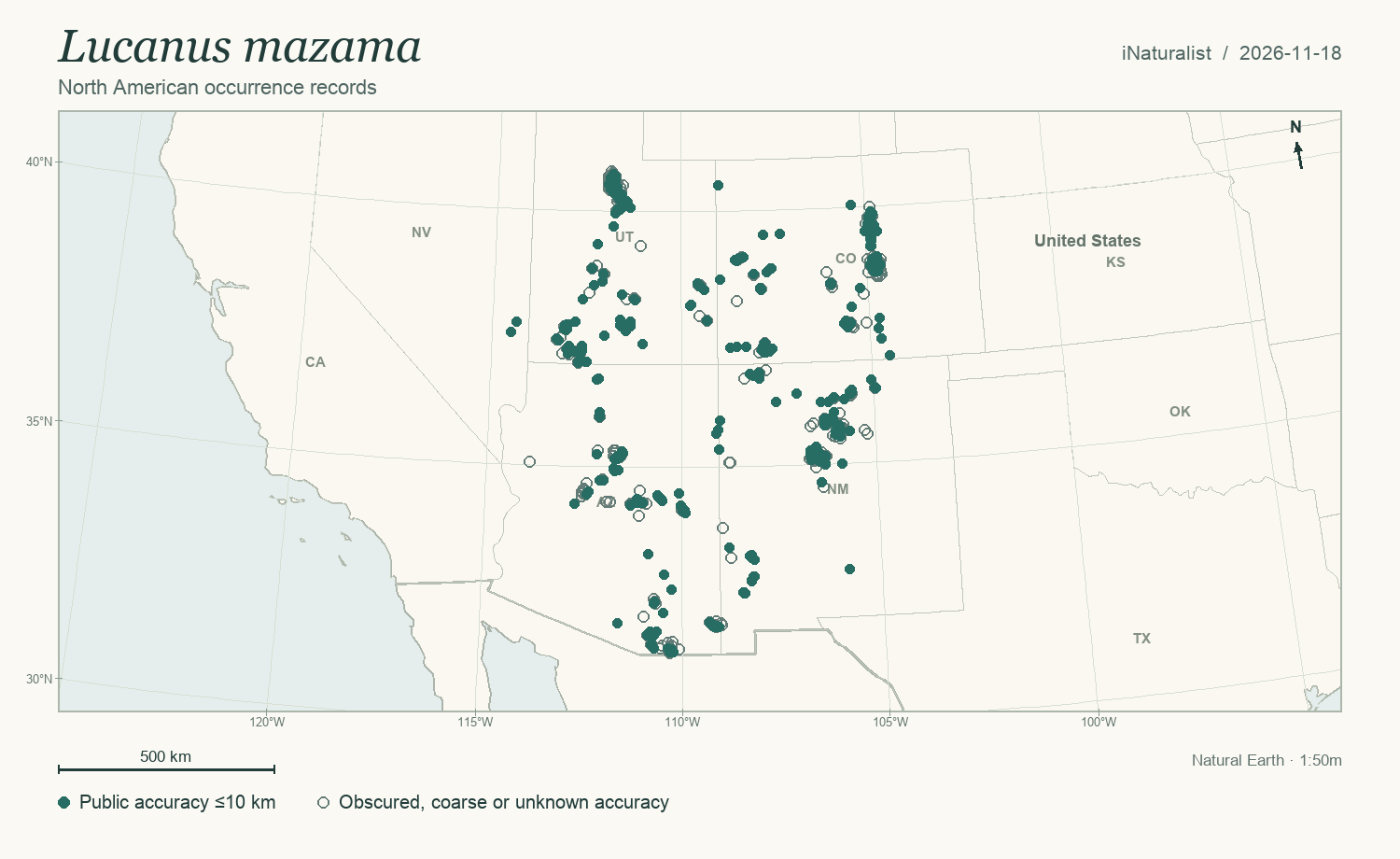
Native to the southwestern United States and Mexico, including the mountains of Arizona and New Mexico.
Distribution records