Life-history data
- My adult cool rest
- Eight months at 55 °F (about 13 °C)
- My North Carolina line
- Second-generation larvae after the cool rest
- Published developmental estimate
- Approximately one to two years
Adults
Females I collected at Auburn, Alabama, helped me work out how dry to keep the laying box. I had tried logs, ordinary flake soil and potting soil with little success. When I offered these females much drier sawdust, about as dry as I use for my longhorn beetles, they laid readily and I recovered enough larvae for another generation. My L. placidus and L. capreolus laid well in my usual flake soil.
For active adults I offer beetle jelly every five days, or apple or banana. A piece of bark on the surface gives the adults footing. Once the female buries herself, I leave her time to lay. In the wild, the larvae have also been found in decaying logs and underneath them at the wood–soil interface.
Larvae
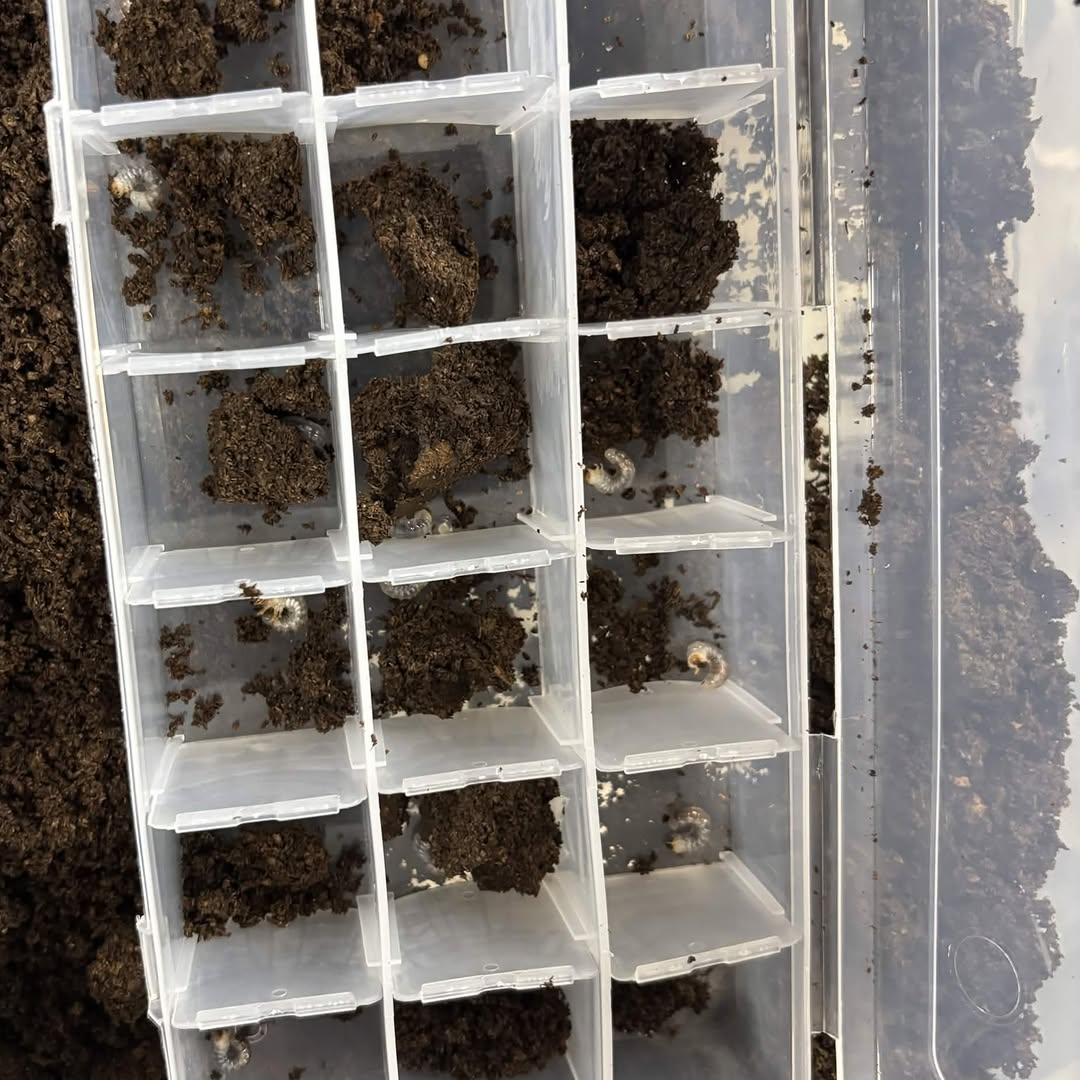
When I check a laying box, I lift each piece of wood over the container so that loose substrate and any grubs stay together. Keep enough of the original feeding wood with the brood to avoid losing larvae still inside it. This is a long-lived grub. Ulyshen and colleagues estimated one to two years for development, and 16 males in their study waited an additional year to pupate. Look against the bottom of a clear container for pupal cells before replacing food. Among individuals that pupated within a year of collection, females spent about 29 days as pupae and males about 31.
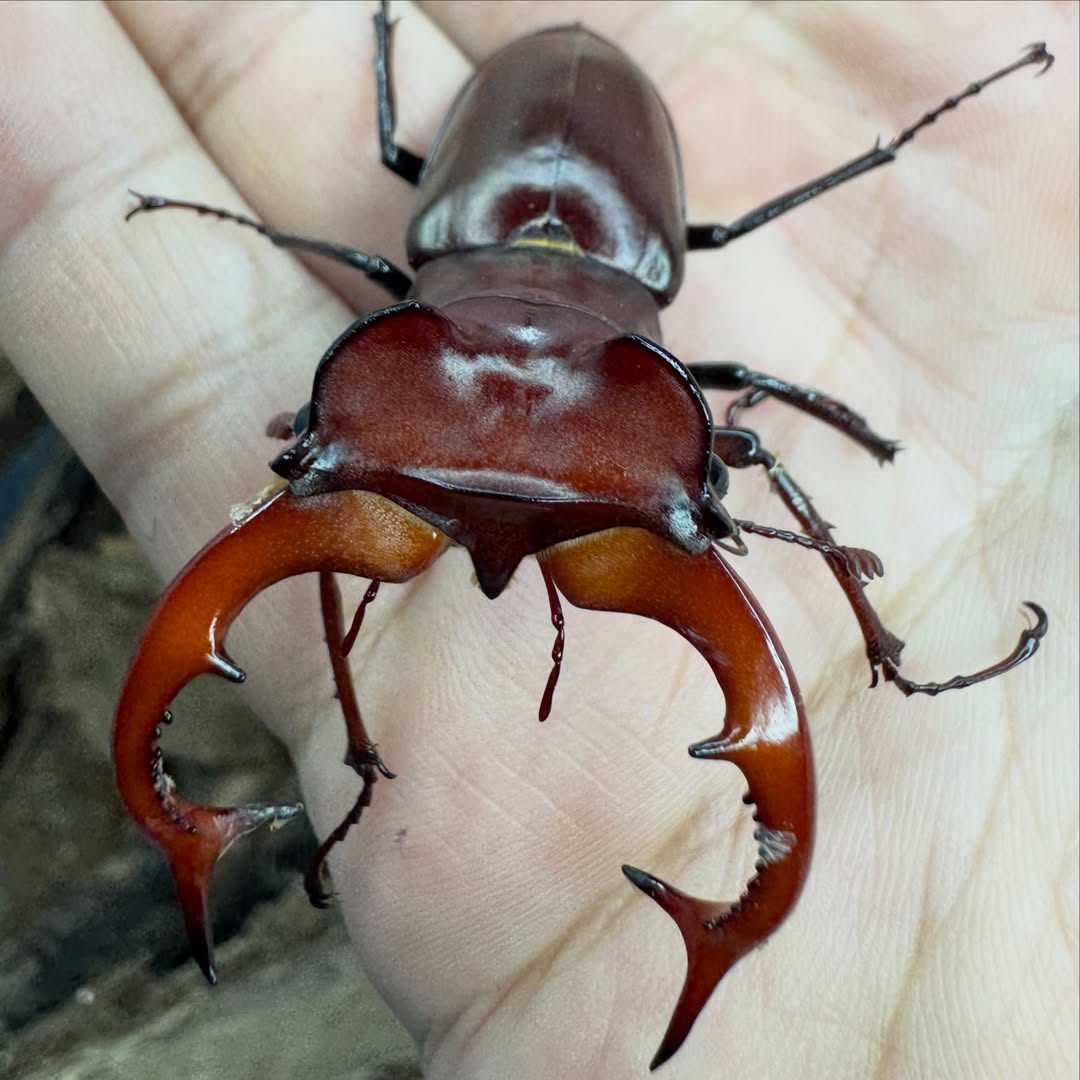
I have seen quite different schedules at different temperatures. At ordinary room temperature, one group stayed in its cells for about two years before emerging. One of the males was about 55 mm long. In a separate laboratory group kept around 78–80 °F (26–27 °C), the larvae pupated within nine months. I record cell construction, pupation and adult emergence separately when I follow a brood.
Overwintering
I once had larvae that remained at the same stage for months. After a faulty air conditioner kept the room unusually cool for several July days, my stalled grubs became prepupae. For the adults of my North Carolina line I gave them eight months in a wine cooler at 55 °F (about 13 °C). The adults then laid eggs over the following two months. Once I could see young grubs again, I knew I had carried the line through another generation.
Photographs
Larvae
Geographic status
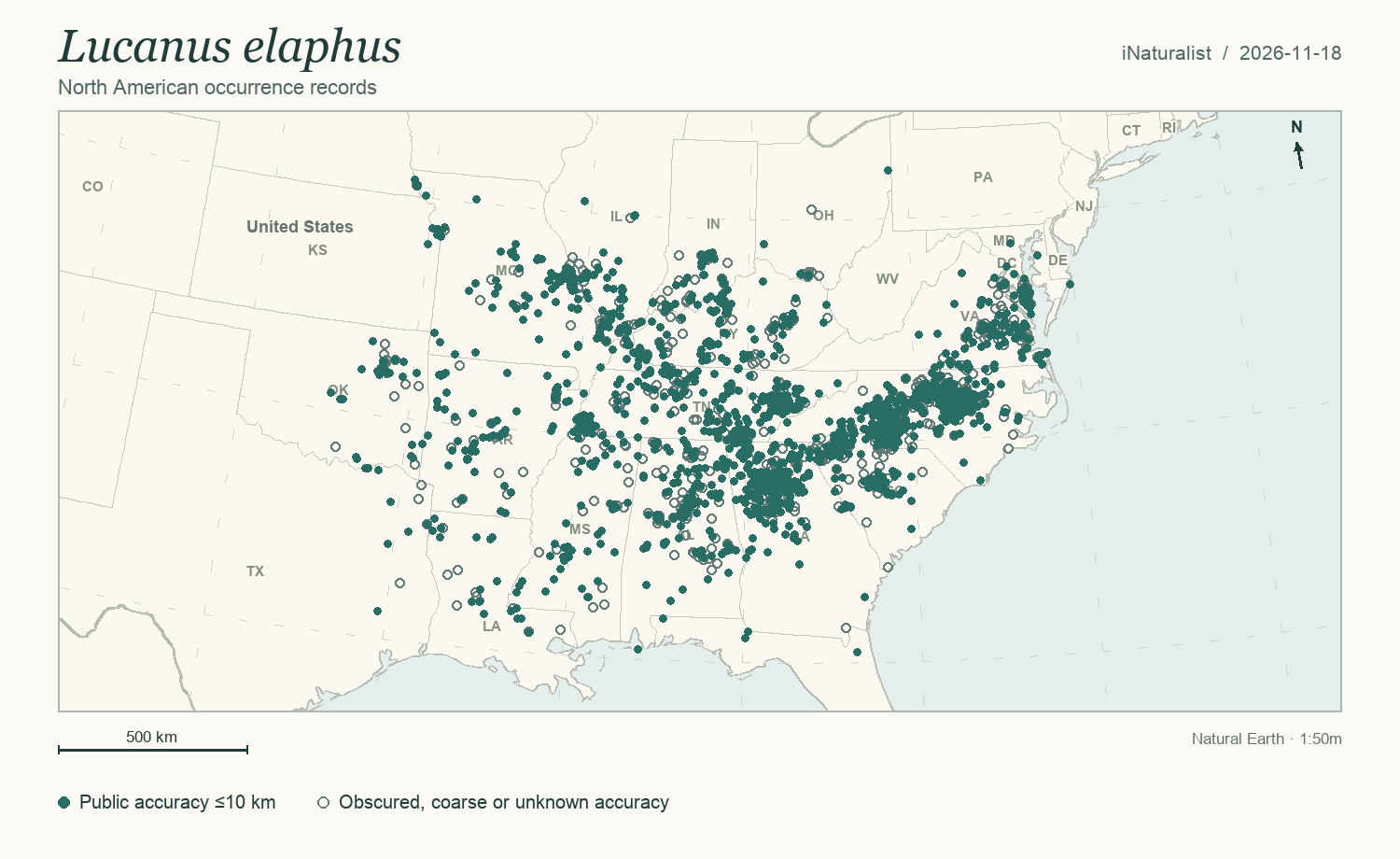
Native to eastern and central North America. Its documented range includes the eastern and central United States and southern Ontario.
Distribution records