Life-history data
- Localities
- Arizona and New Mexico
- Adult length
- 10–15 mm
- Adult lifespan
- 1–3 months
- Larval period
- Approximately 18 months
- Egg count
- 30 or more
- Adult feeding in our collection
- Offer beetle jelly every five days, or apple or banana.
Adults
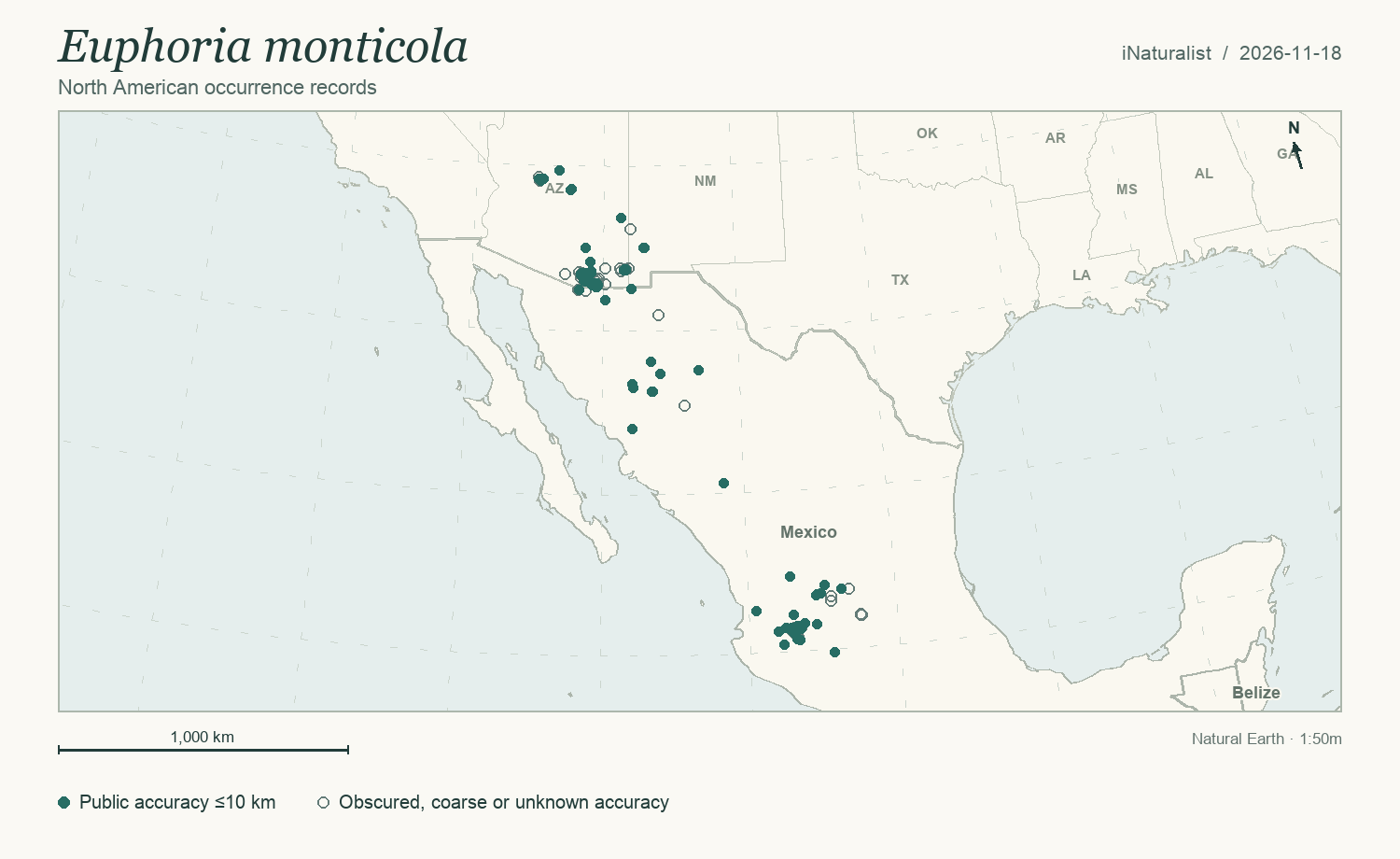
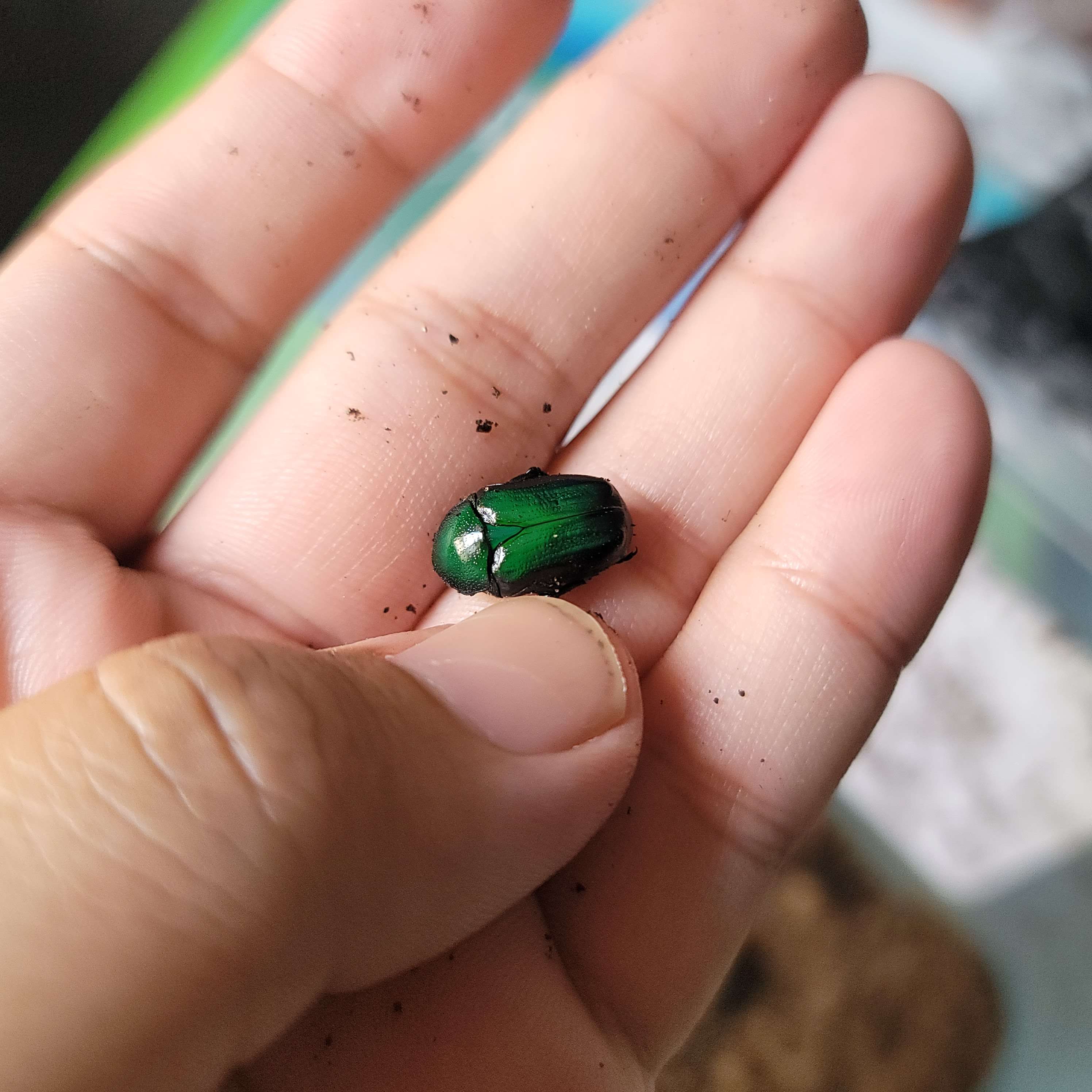
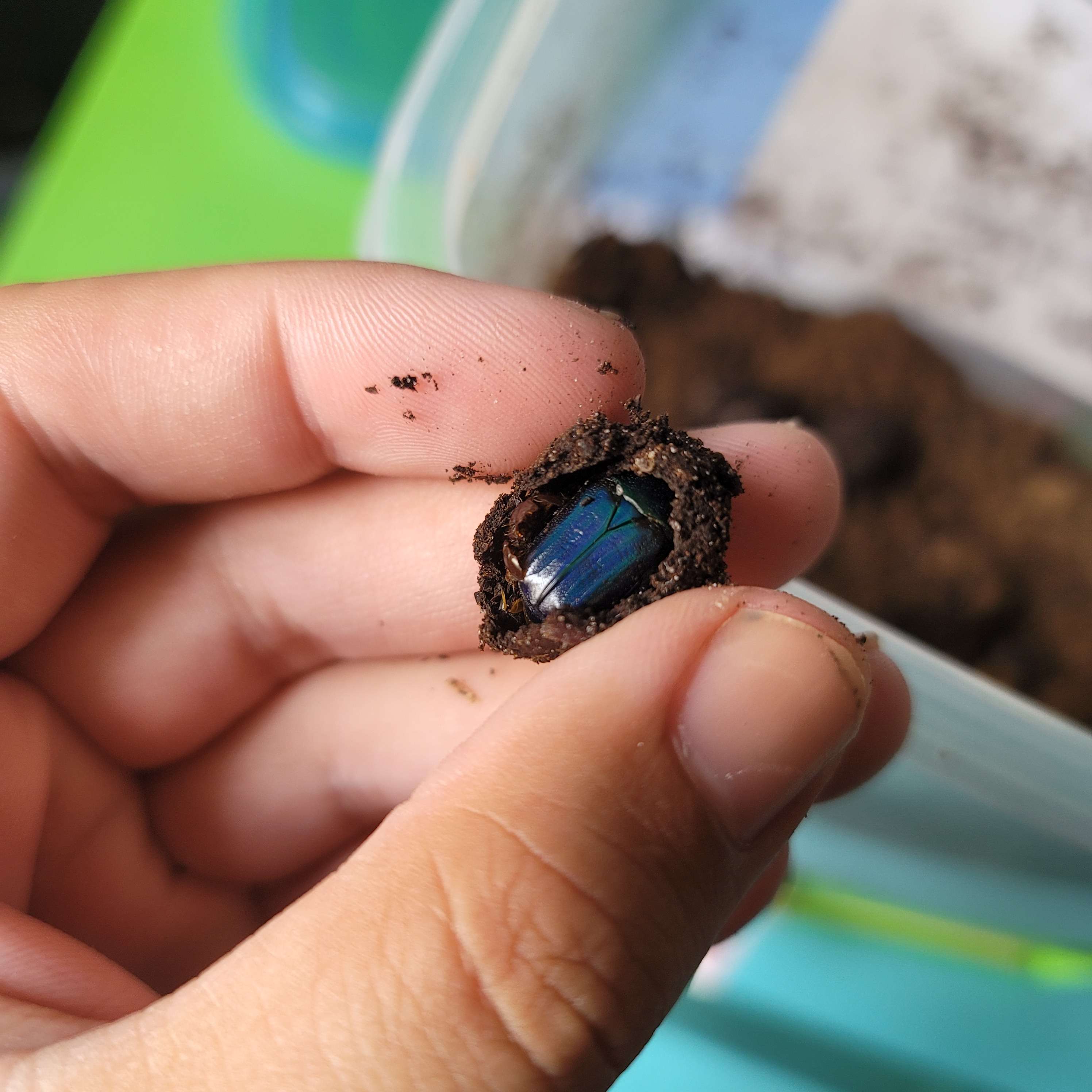
These southwestern flower chafers occur in Arizona and New Mexico and range south into Mexico. Adults measure about 10–15 mm. The two beetles pictured here give a sense of the color variation, one metallic green and the other blue-black. Mine readily accepted fruit and beetle jelly and lived about one to three months. I recommend a breeding container that holds at least 1.75 US gallons (6.6 L). Offer the adult food at the surface and give females flake soil or an organic substrate of decaying hardwood and well-decomposed leaves in which to lay. They can produce 30 or more eggs.
Larvae
The hatchlings can start feeding in the same material their mother laid in. I allow about 18 months for the larval stage, so keep enough of the same food on hand for substrate changes. I lost the next generation after moving the young grubs to potting soil. I can’t say exactly what caused the loss. For another brood I’d keep the grubs on flake soil or replenish the mixture of decayed wood and leaves that supported them earlier.
Pupation
The hardest part for me was getting the mature larvae through winter. All of them built cocoons in autumn, then spent several months inside as larvae. Only after I moved the cocoons into a cold garage for winter did the larvae become prepupae. They pupated when the weather warmed in spring, and adults appeared within about a month. I have no measured garage temperature to recommend, and the length of pupation and dormancy varies. If you are following a brood of your own, note when a cell first appears and leave it in place. The larva may spend a season inside before it actually pupates.
Photographs
Adults
Geographic status
Native to the southwestern United States and Mexico. The U.S. range includes southeastern Arizona.
Distribution records