Life-history data
- Range
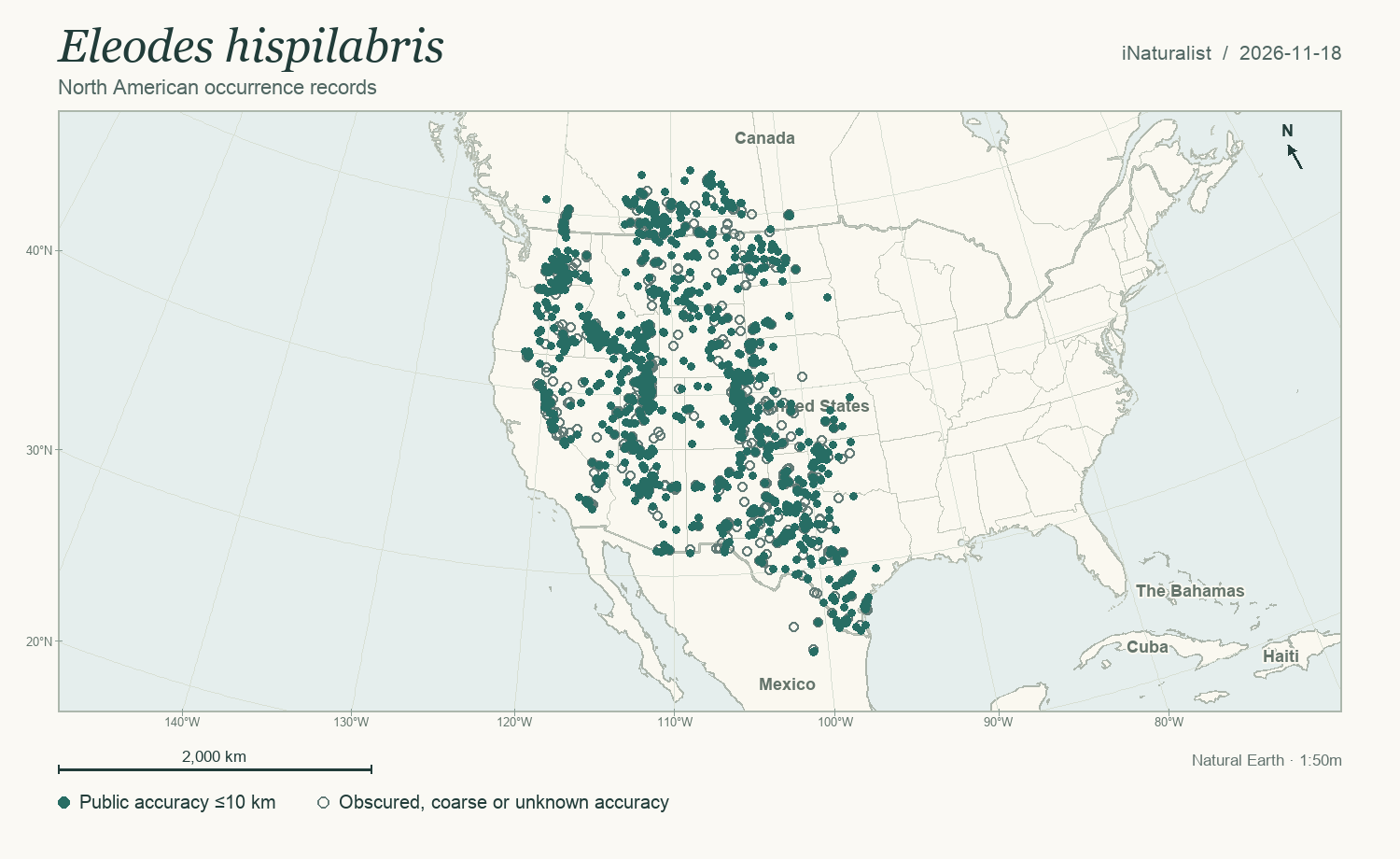
- Western North America, from western Canada south to Arizona and Texas
- Breeding record
- Two captive generations by August 2025
- Container
- 20-quart bin, half filled
- Colony foods
- Fish flakes and dog food
Colony
I used a 20-quart bin and filled it about halfway with Exo Terra desert sand. I mixed a small amount of wood into the sand, then set pieces of bark on top. The wood was a minor part of the mixture. The adults lived and laid in this same enclosure.
I left the eggs where the females laid them. The eggs hatched in the adult enclosure. Substrate moisture was the detail I watched. I kept the sand from drying out completely, while also avoiding soaking it. I did not need separate incubation cups to get the next generation.
Diet
I fed the beetles fish flakes and dog food. By August 2025 this arrangement had carried the culture through two generations. I followed the colony as a group, so I cannot attach a clutch size or a precise time from egg to adult to any one female.
Distribution records