Life-history data
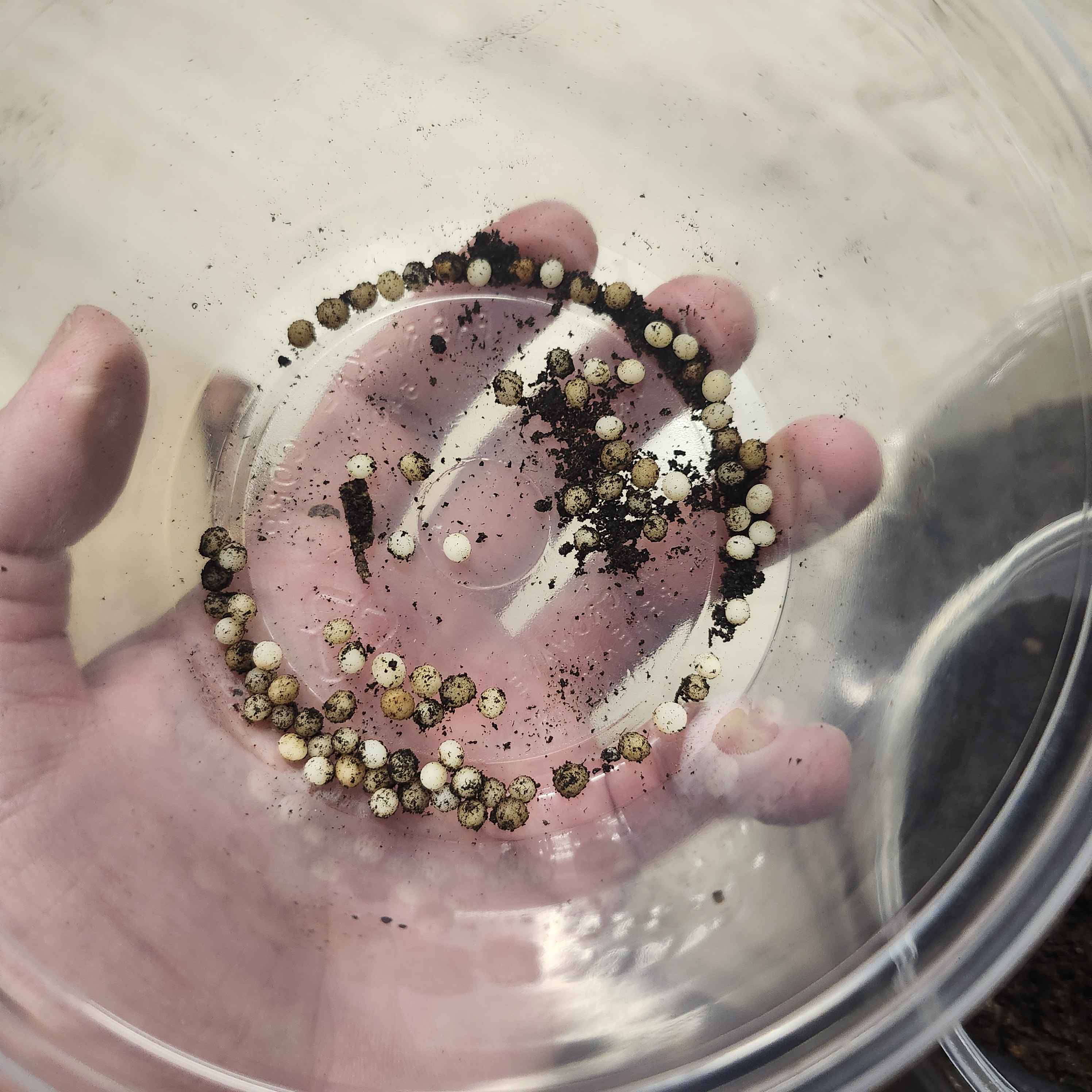
- Eggs from one female
- 87
- Larval food
- More thoroughly fermented hardwood flake soil
- Adult food
- Beetle jelly every five days, or apple or banana
- Adult survival after collection
- 9 months and 1 week for one Arizona male in a published record
Adults
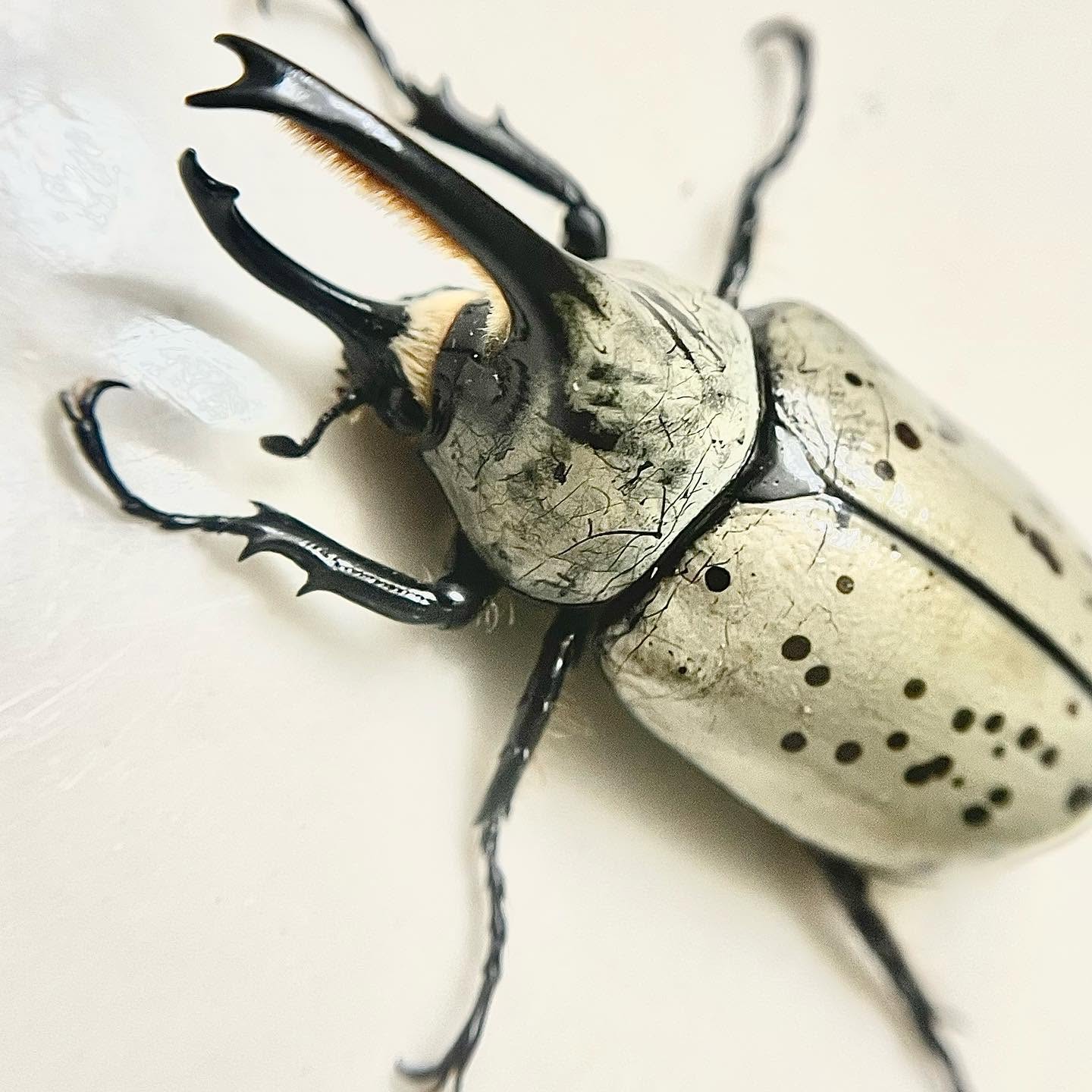
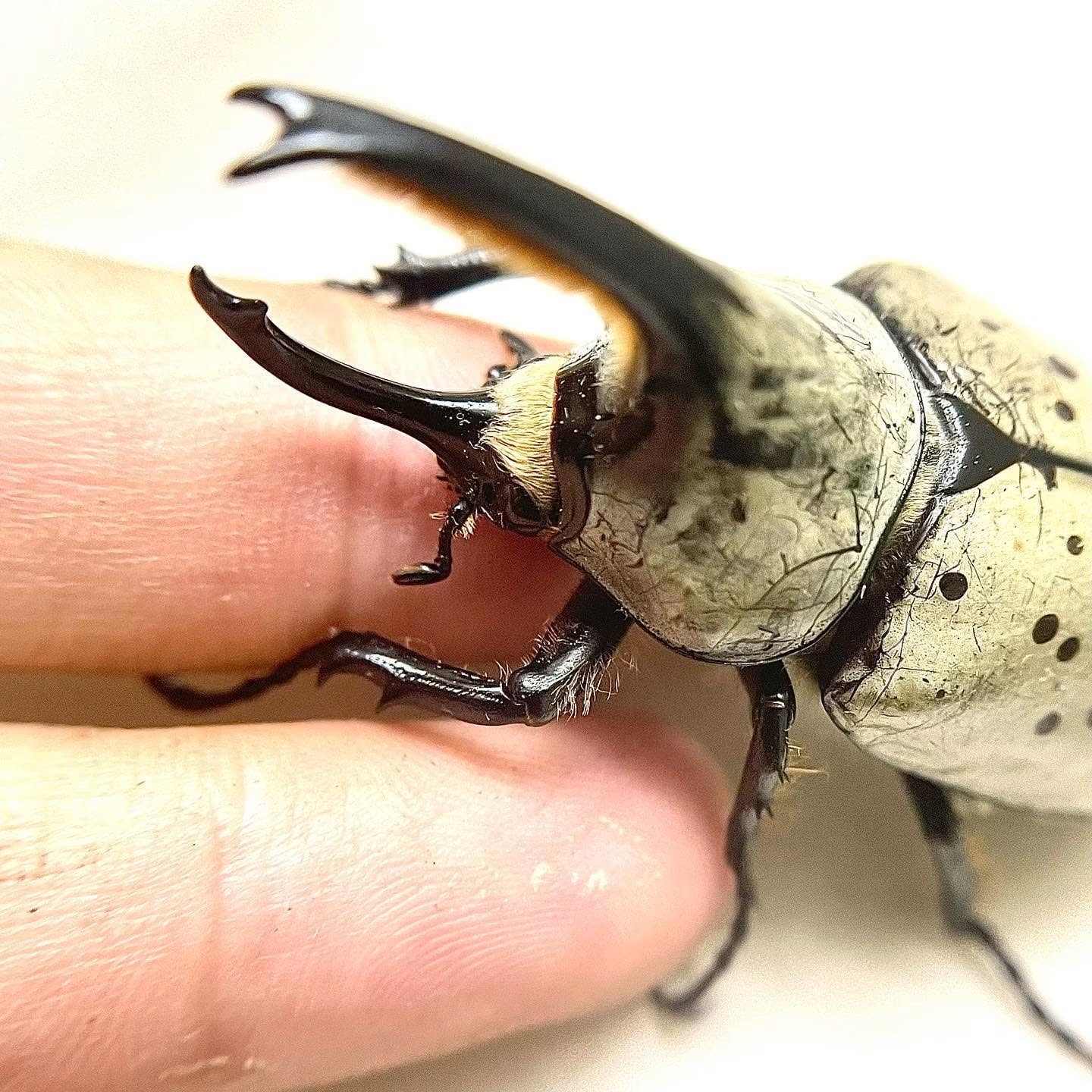
I offer active adults beetle jelly every five days, or apple or banana. I let a newly emerged beetle come up and start feeding before I introduce a mate. I keep the pair where I can see both beetles on the surface, with enough substrate below for the female to burrow. Once I have seen them pair, I can move the female to her own laying box. I like a clear-sided box because I can sometimes see eggs or a pupa without digging.
When planning for older adults, I keep in mind an unusually long-lived Arizona male documented by Krell and Krell. It survived nine months and one week after collection. That is a useful upper-end comparison when an active western Hercules beetle lives well beyond the breeding season.
Eggs and larvae
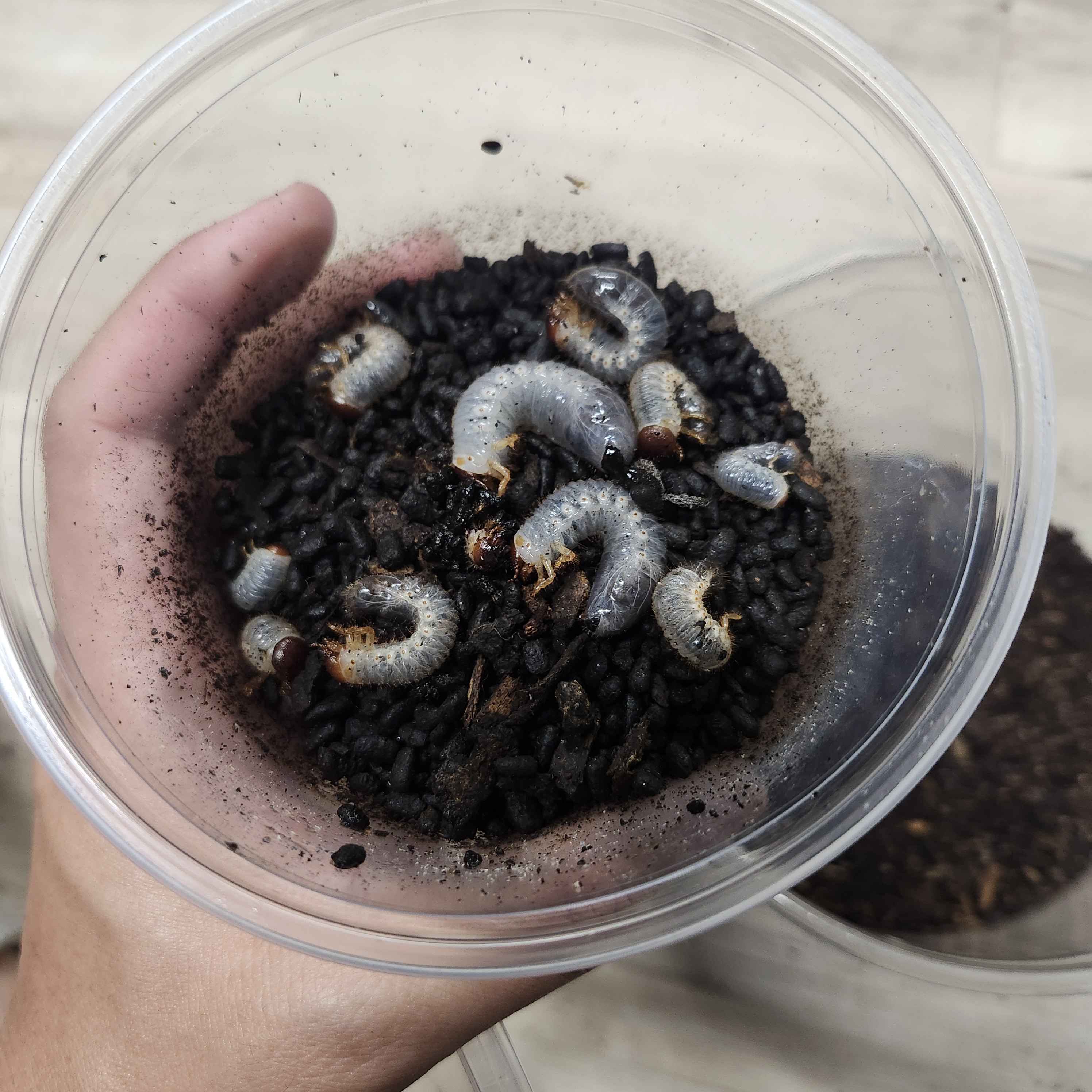
One female gave me 87 eggs. In a different box that originally held more than 80 eggs, I later found just 12 living larvae. I keep those counts separate when planning how many rearing containers I need. A large egg count tells me how much space to prepare, but the number of feeding grubs can be quite different.
For growing rhinoceros beetle larvae I recommend thoroughly fermented hardwood flake soil. I use a more fermented batch than I would for stag beetles or jewel scarabs. I check the substrate while the larva is still feeding so I can replace exhausted food before it begins making a cell.
Pupation
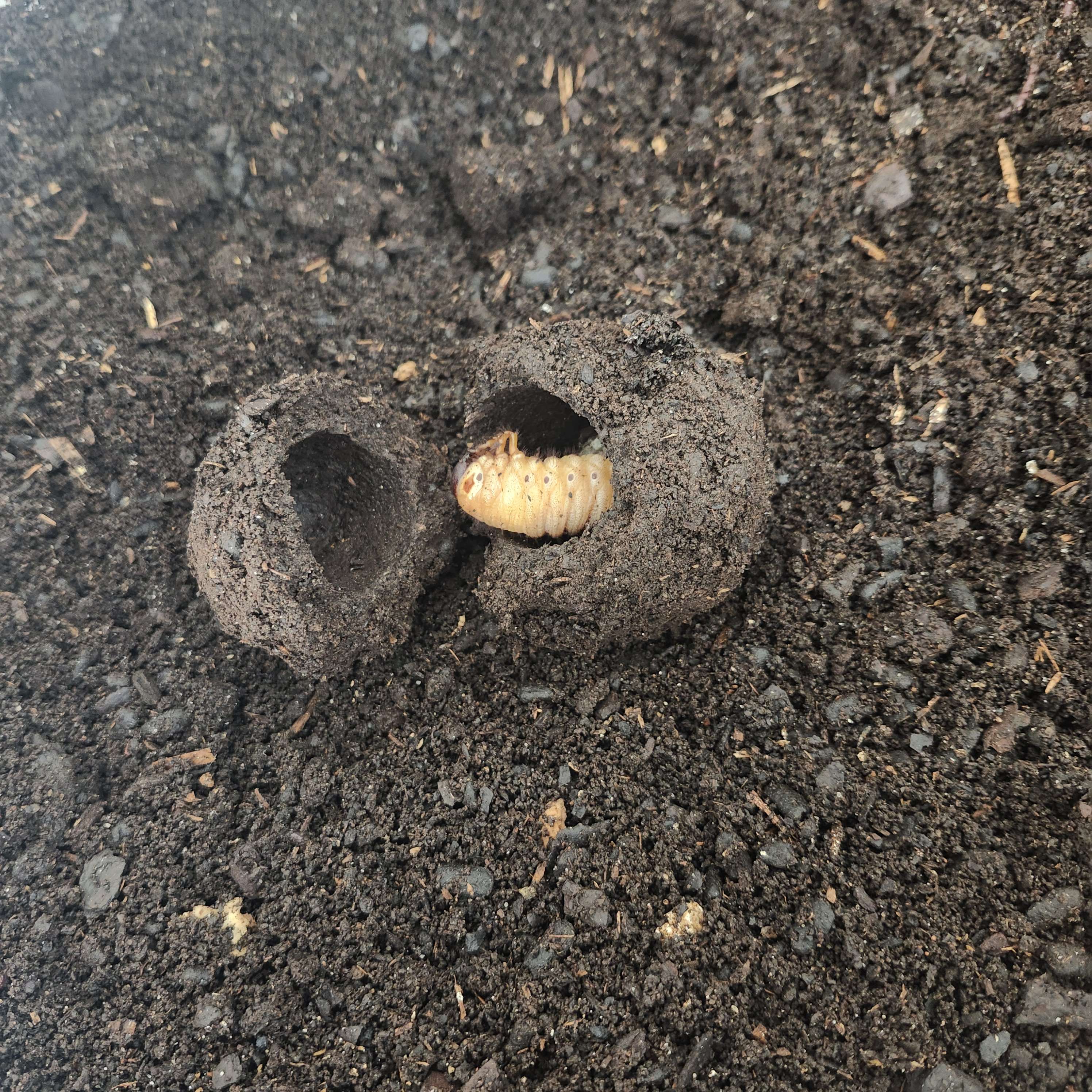
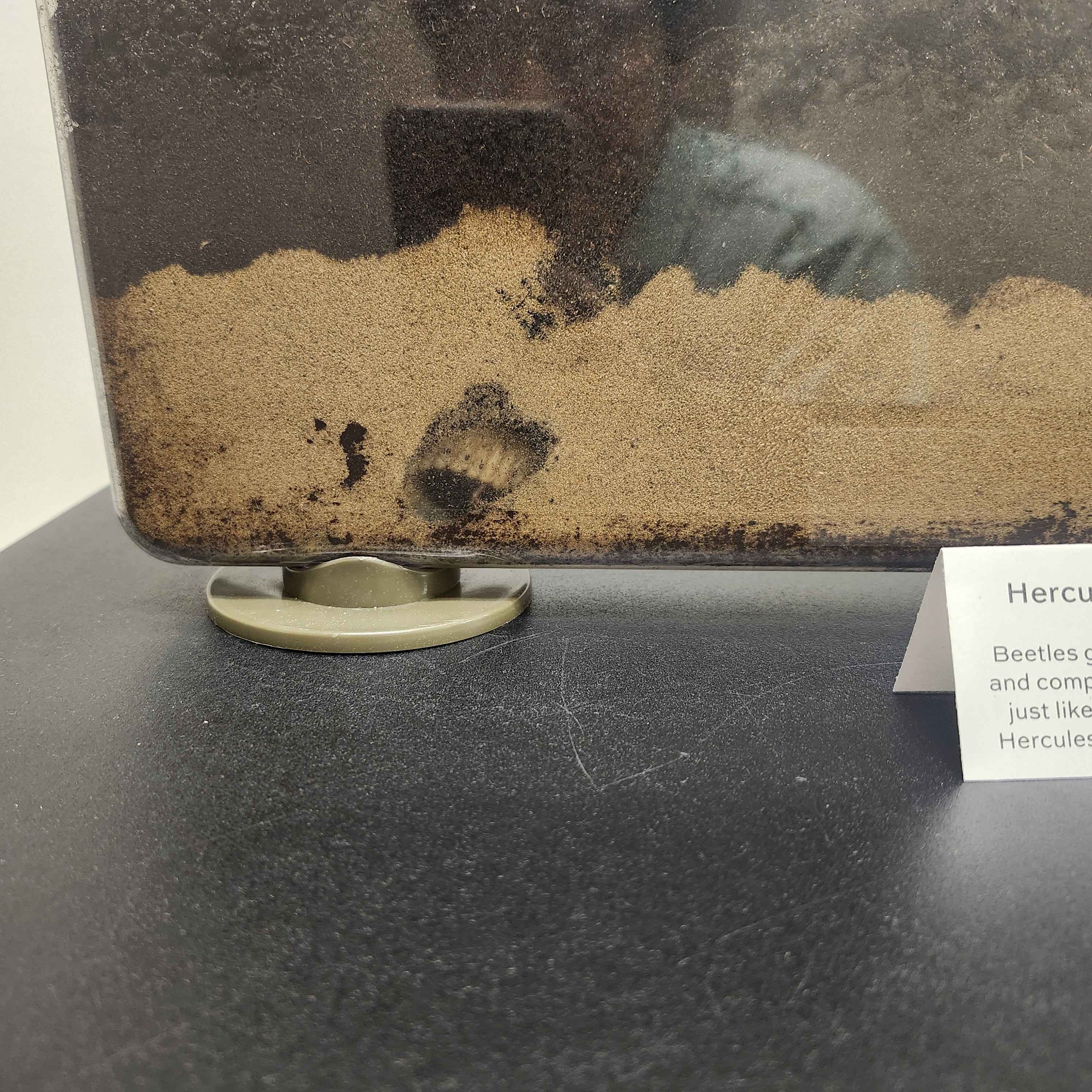
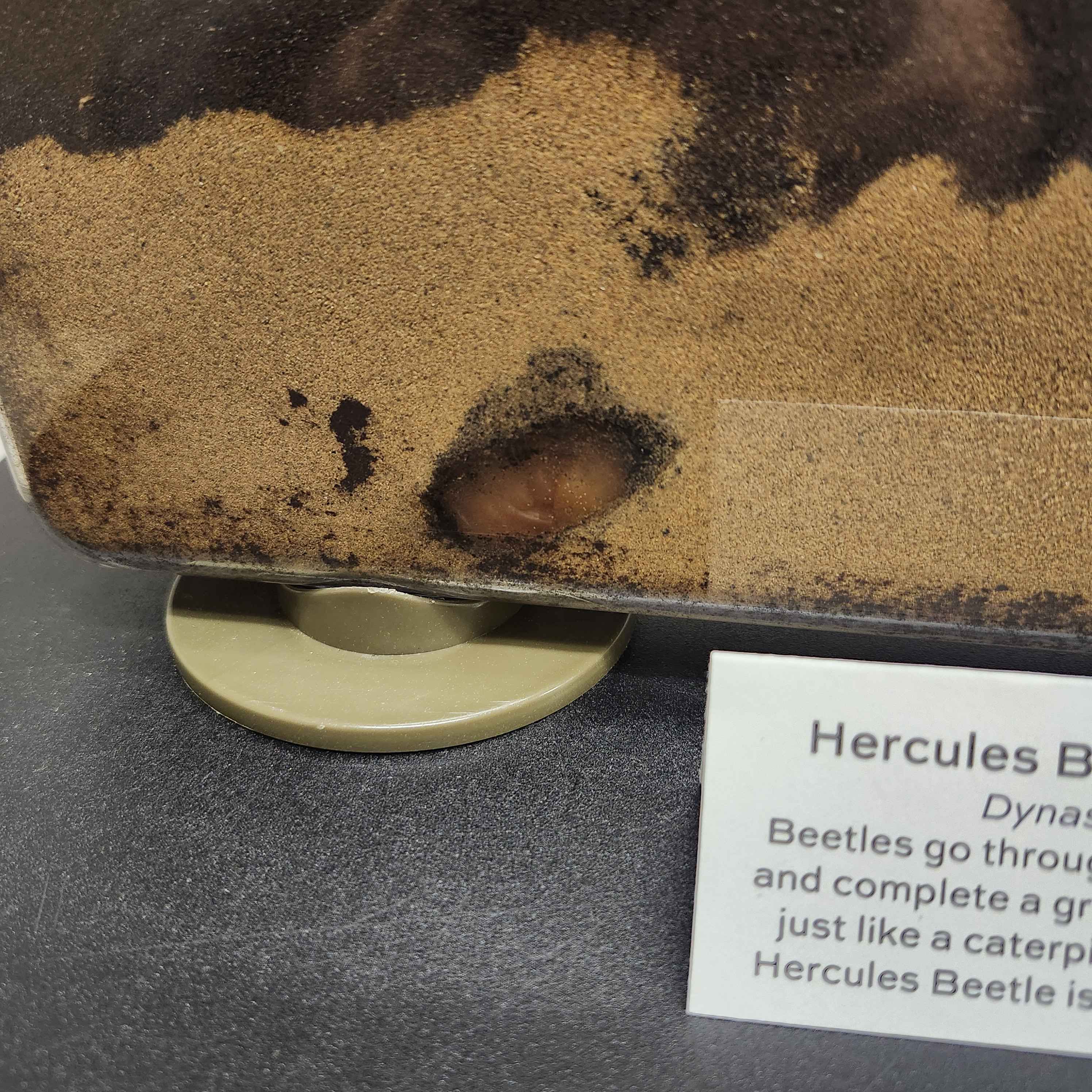
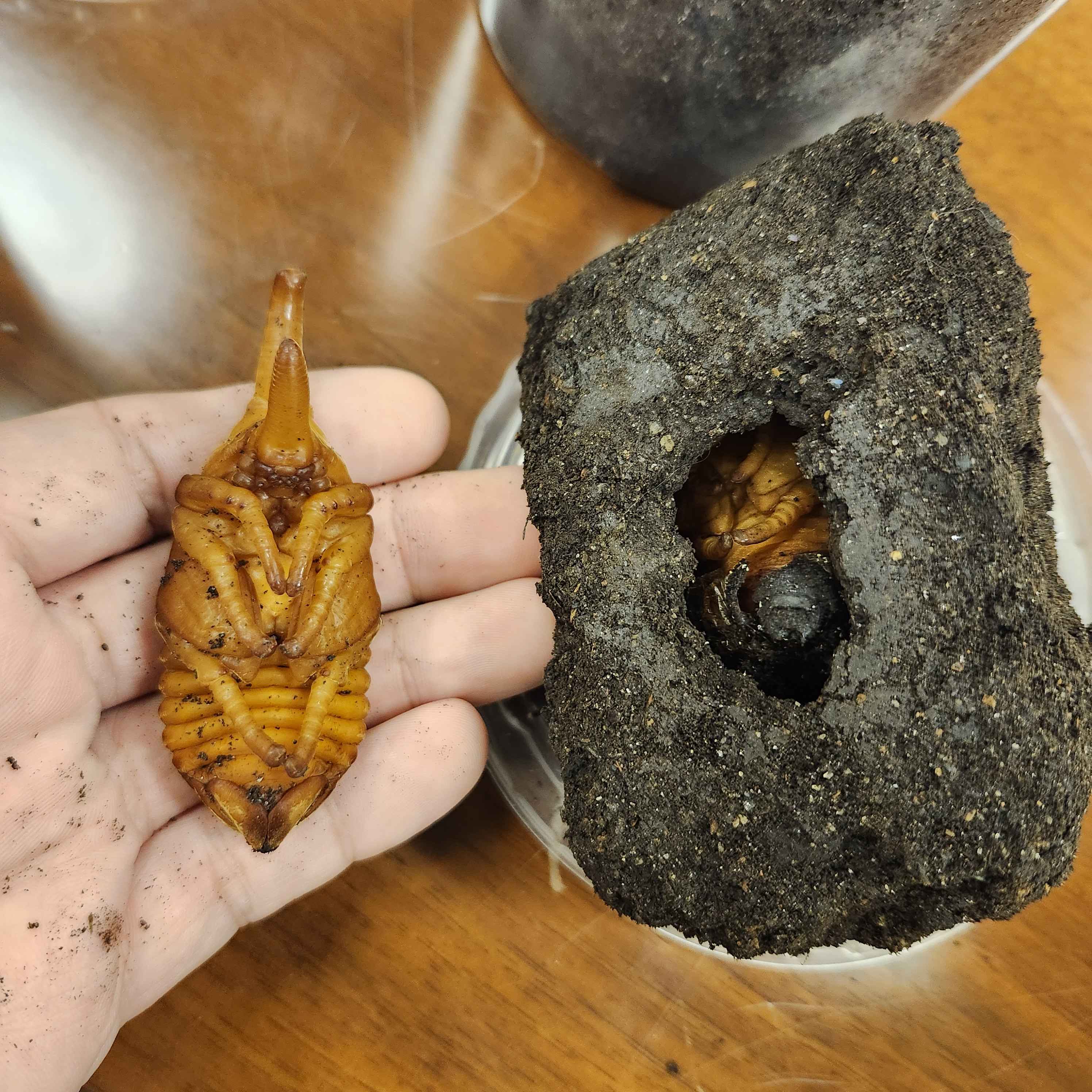
In one brood, a single grub reached the prepupal stage long before its siblings. In a display enclosure I could see a larva starting its pupal cell on September 23 and a pupa at the wall on October 17. I keep the cell intact and continue checking the slower grubs separately. When a chamber is visible through the side, I can follow the stages without lifting it out. I wait until a new adult comes out on its own and is feeding before I pair it.
In one earlier pair the male had already emerged while the female was still a pupa. She completed her adult molt the day I photographed the male. I keep each chamber intact even if its occupant appears to be behind the rest of the group.
Photographs
Eggs
Larvae
Prepupae and pupae
Adults
Geographic status
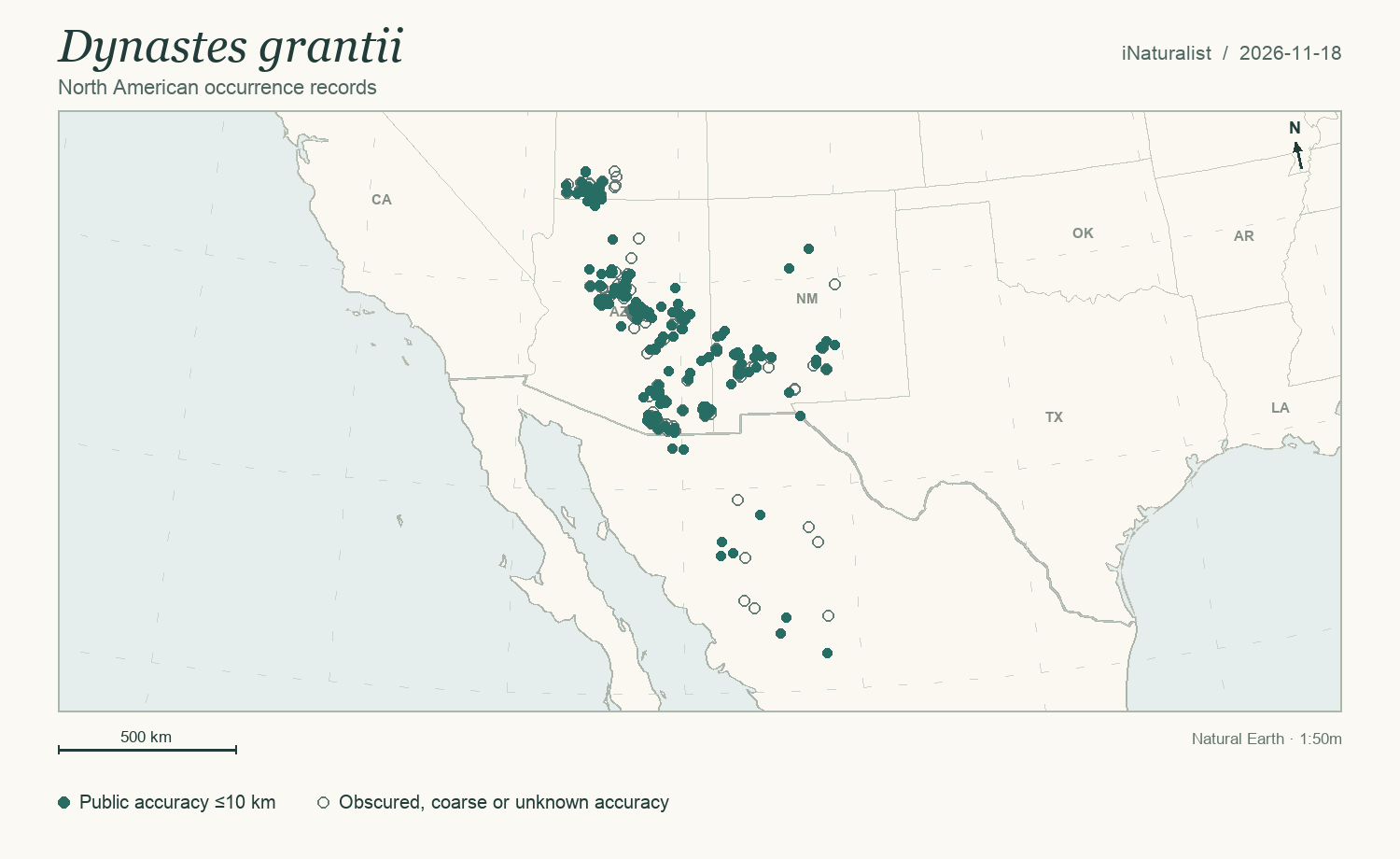
Native to the southwestern United States and northern Mexico. The documented range includes Arizona, New Mexico, Utah and Chihuahua.
Distribution records