Life-history data
- Early broods
- Larvae reached the third instar
- Successful endpoint
- Captive-bred adult documented in January 2021
Adults
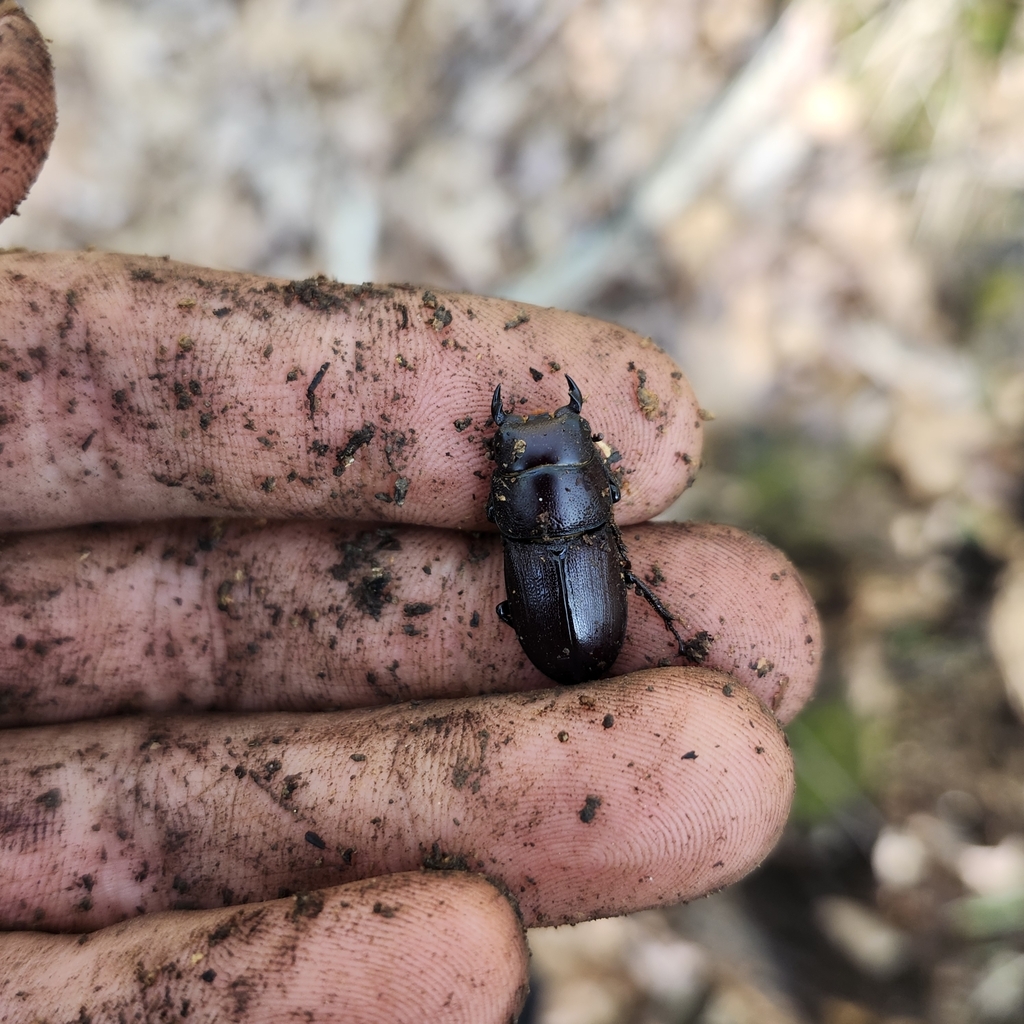
Check the adults against Dorcus parallelus before pairing them. Viewed from above, the rear corners of the pronotum lie close to the bases of the wing covers in D. brevis. A small male can have short jaws and a narrow head. The shape of the mandibles is more useful than jaw length alone for deciding whether a beetle is female. I have seen a small male mistaken for a newly emerged female on just those grounds.
Development
For a pair I recommend a piece of decaying hardwood embedded in less-fermented hardwood flake soil, the general Dorcus setup described on the Substrate page. Offer active adults beetle jelly every five days, with apple or banana as alternatives. My early attempts produced larvae repeatedly, but they died during the third instar. By the time I was setting up my third attempt in 2014, I suspected that the larvae might need a seasonal rest. I had no tested chilling temperature or duration.
For any repeat of this culture I recommend recording three dates separately, when the larva last fed, when a pupa became visible and when the adult molted. The captive-bred adult I later photographed establishes that this species can complete its development in culture. I did not establish which change allowed the successful brood to pass the stage where my earlier broods failed.
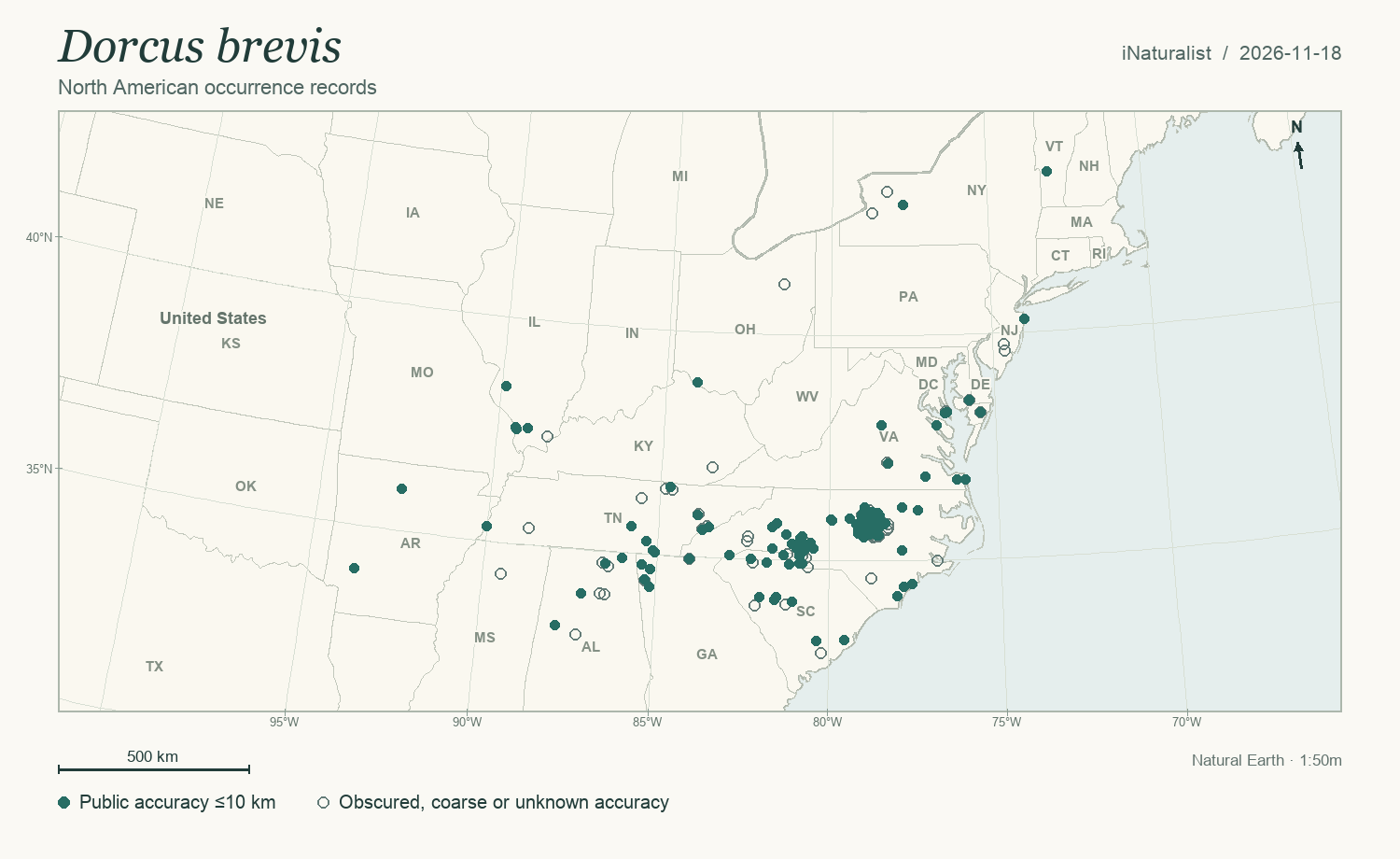
Distribution records