Life-history data
- Captive result
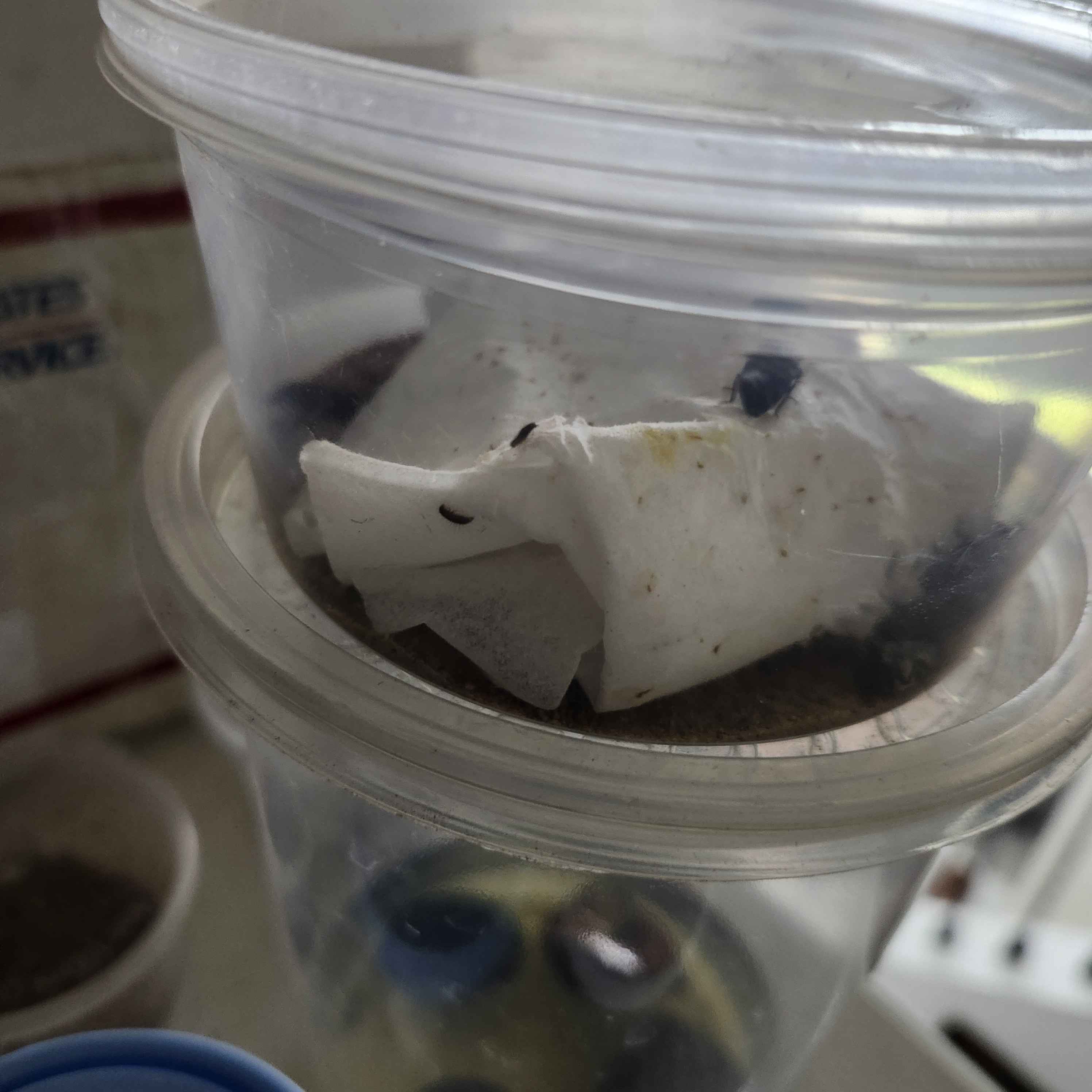
- Breeding in the holding enclosure by August 29, 2025
- Adult size
- 9–13 mm in the North American identification key
- Natural foods
- Carrion and dried animal material
Colony
I would begin with a small amount of dry animal material and leave the group together. The food history of this species gives me a better starting point than a fruit or jelly feeder. Its published records include carrion and accumulations of dead insects. I would supply a separate piece of dry material to lift when I check the box so I can find young larvae without disturbing the whole group.
My first breeding result came while the group was still in temporary housing. For that reason I check the food, loose debris and sheltered edges before moving the adults into a permanent setup. Small larvae can remain behind when the conspicuous adults have all been transferred. I keep this colony separate from the dry insects in my specimen collection.
Adults
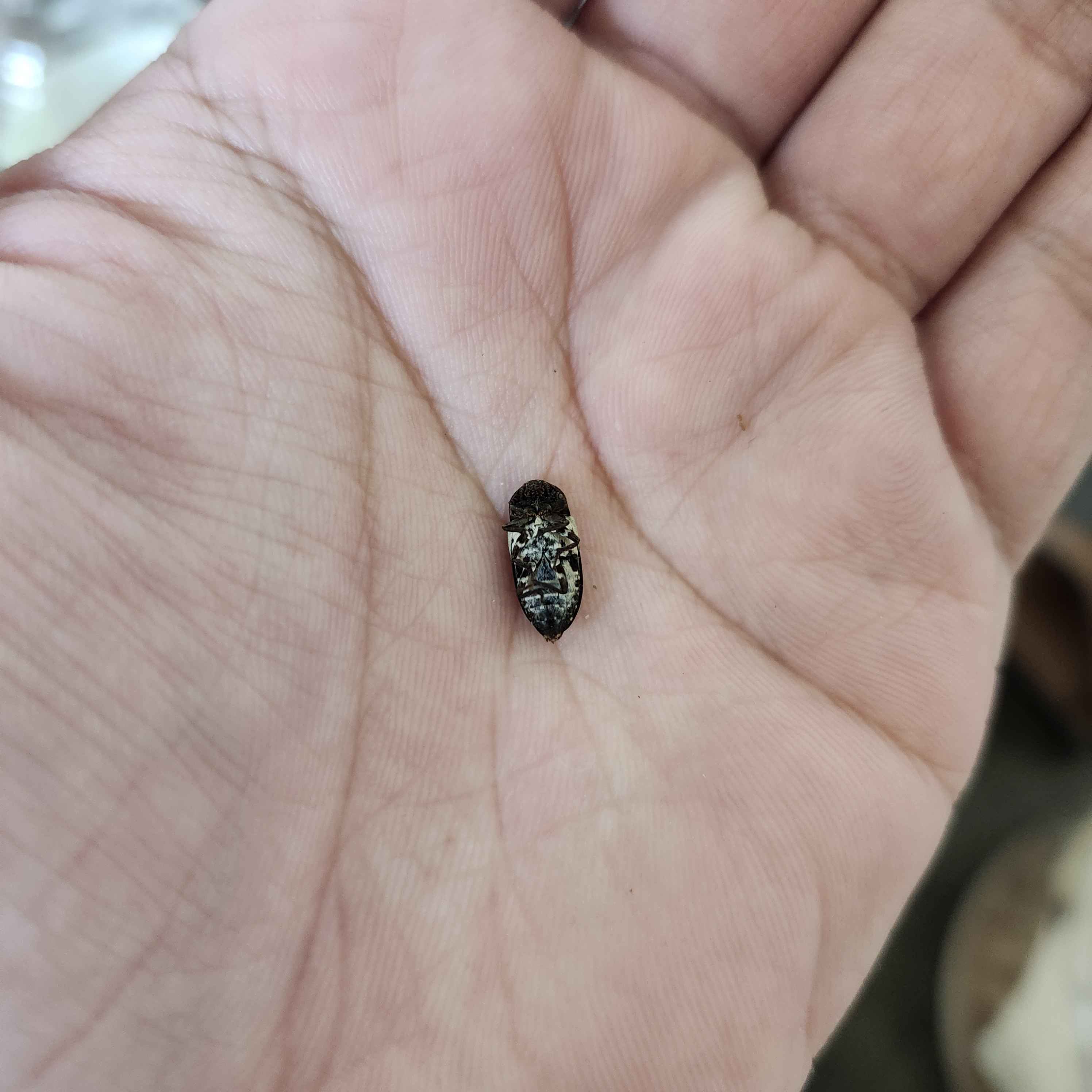
Under good light I look for a marbled pattern of dark and pale hairs on the wing covers. A paler band extends inward from behind each shoulder. Several North American Dermestes are mottled, so I use the identification key when starting with new field material. The September photograph shows the appearance of my own adult.
Photographs
Breeding setup
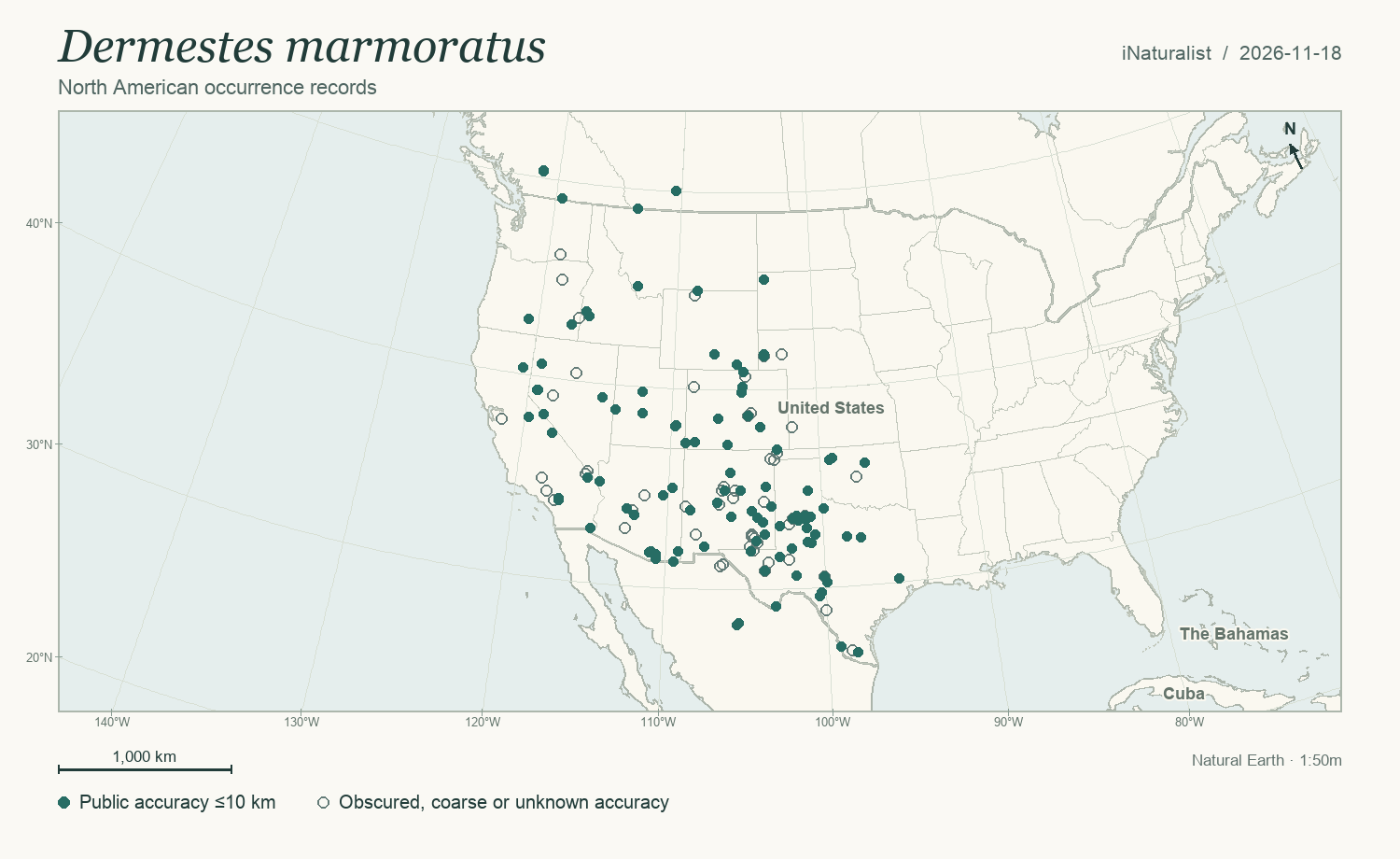
Distribution records