Life-history data
- Personal record
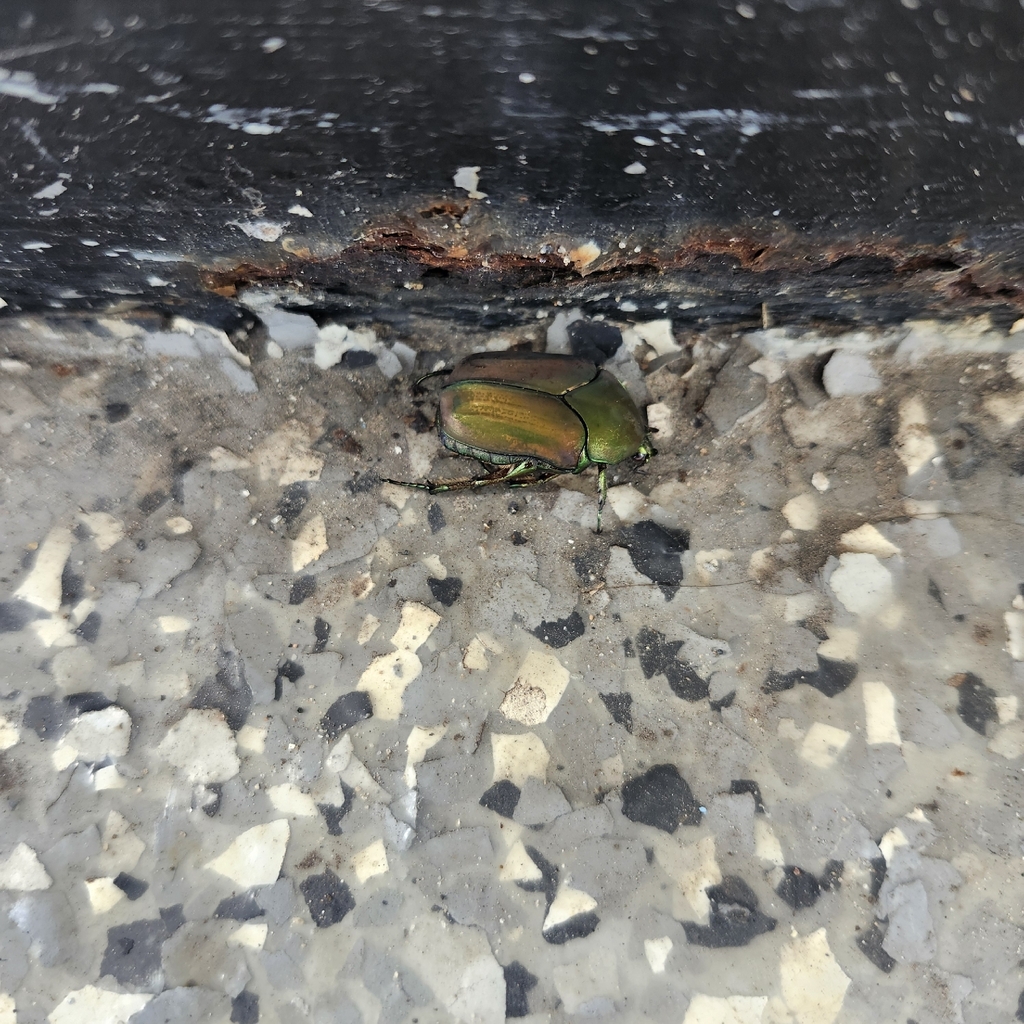
- Adult field photograph and field-collecting recommendation
- Published timing
- About two weeks to hatch and two to three weeks as a pupa in North Carolina
Adults
I recommend watching the open space just above the grass. Adult activity is easier to follow there than among the leaves of a tree. In a discussion of baits I suggested that banana mixed with wine might also attract Cotinis. My recommendation was based on how easily the beetles can be met in open flight. I did not establish a catch rate for that bait.
Development
In North Carolina, females choose soil rich in organic matter and lay clusters of about 10–30 eggs. Hatching takes roughly two weeks. Grubs feed in the soil and may surface at night. They spend winter underground as larvae. Following spring pupation, adults develop in about two to three weeks. I use those published field intervals as seasonal reference points. The adult in the photograph is a field observation.
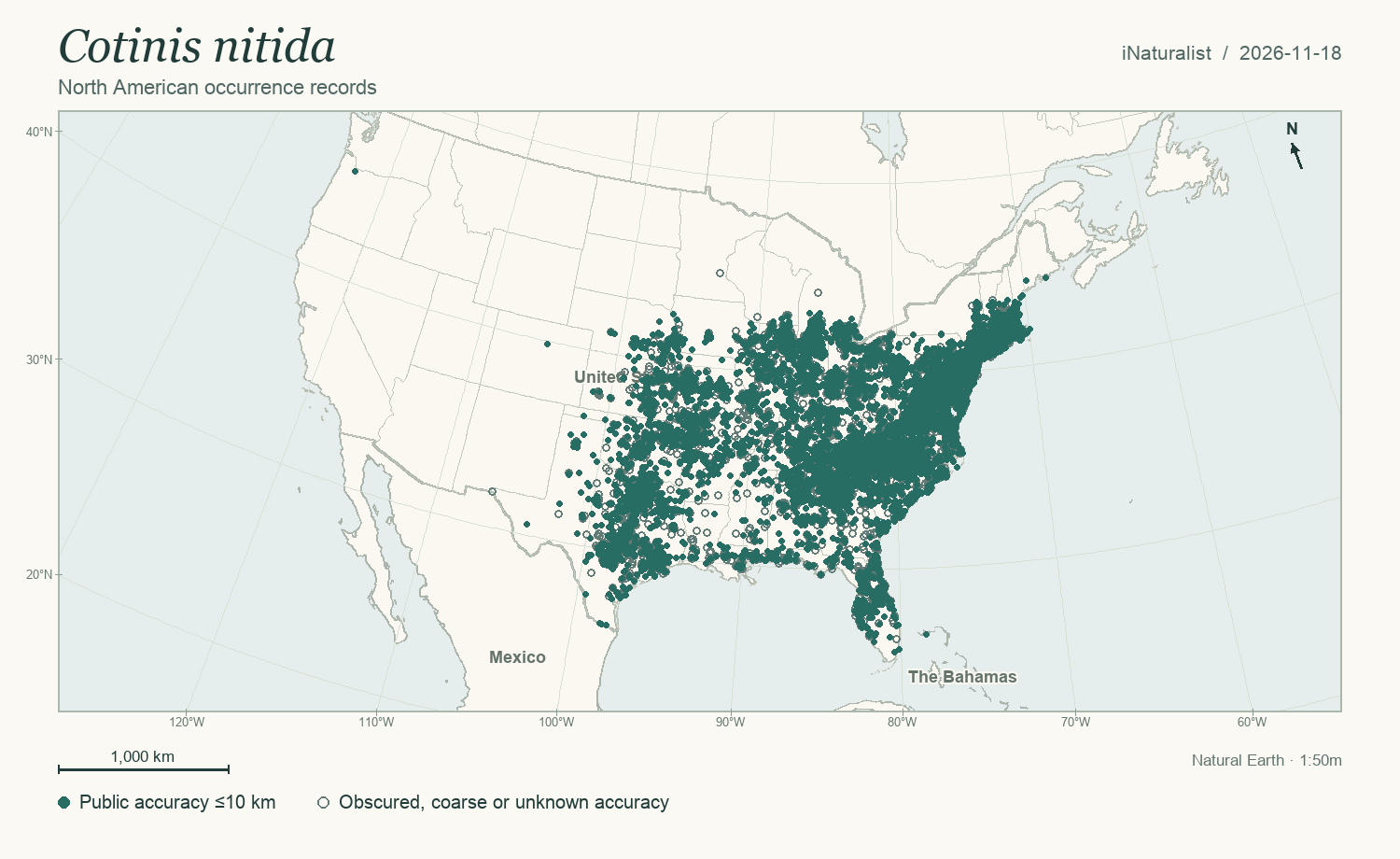
Distribution records