Life-history data
- Adult food
- Fresh oak leaves, including Mexican blue oak
- Larval food
- Lightly fermented hardwood flake soil or soft, white-rotted hardwood
Adults
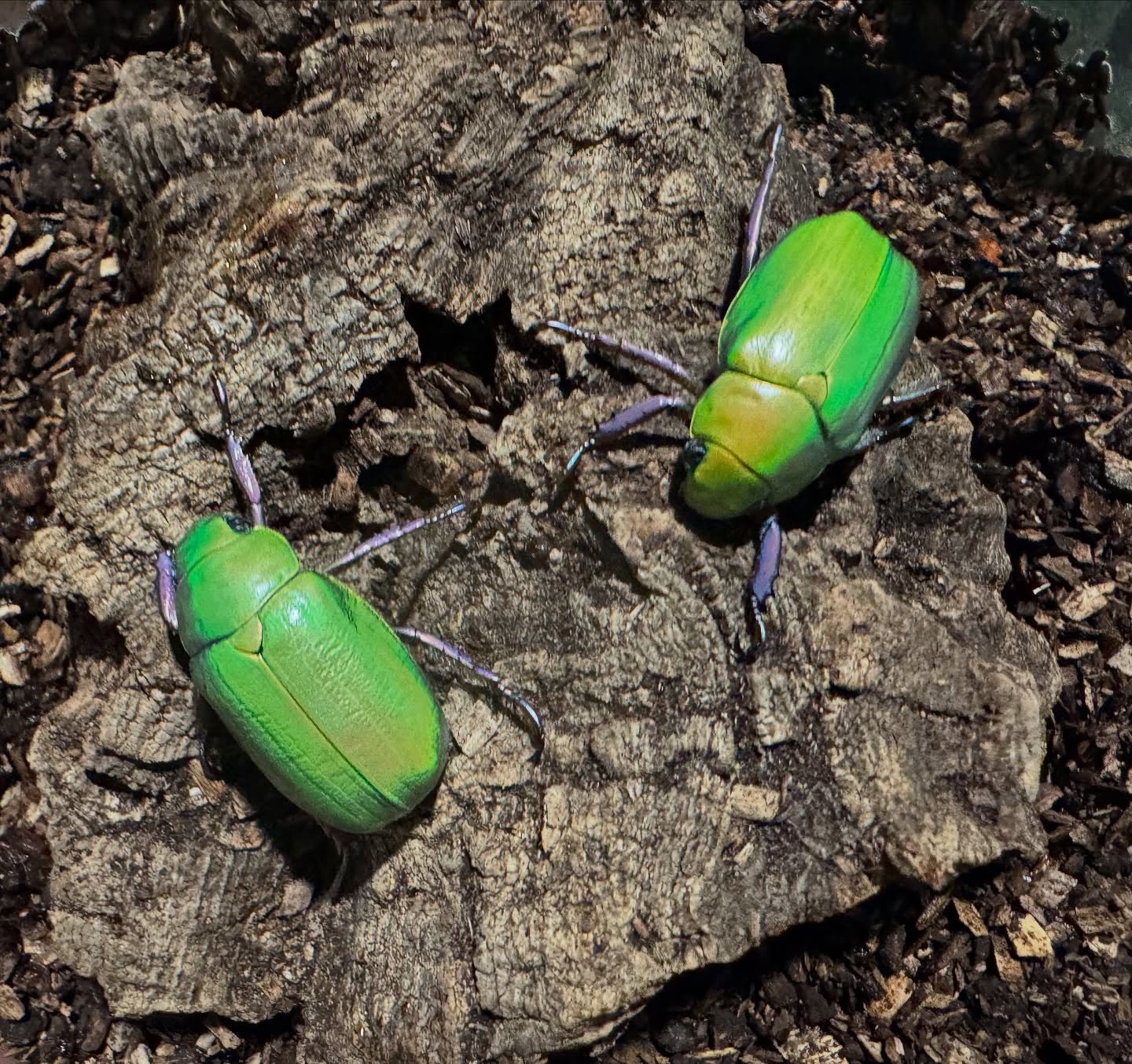
Offer fresh oak cuttings with enough branch left for the adults to grip as they feed. Mexican blue oak (Quercus oblongifolia) is a recorded host. Replace wilted or stripped foliage with fresh leafy tips. Bark at the soil surface gives fallen beetles a foothold.
Eggs
For a laying box, start with the setup described for Chrysina woodi. Use a ventilated enclosure of about 6.6 L with roughly 7.5 cm of loose, lightly fermented hardwood flake soil. Moisten the substrate until a handful holds together with a gentle squeeze. Leave the surface accessible so a female can move between the feeding branches and the soil.
Larvae and pupae
As in the Chrysina woodi setup, rear grubs individually on lightly fermented hardwood flake soil or soft, decayed hardwood. Give mature third instars about 5 cm of moist clay beneath the feeding layer for cell construction. Once a grub closes its cell, leave it intact through pupation and adult hardening. Have fresh oak ready when the adult surfaces.
Geographic status
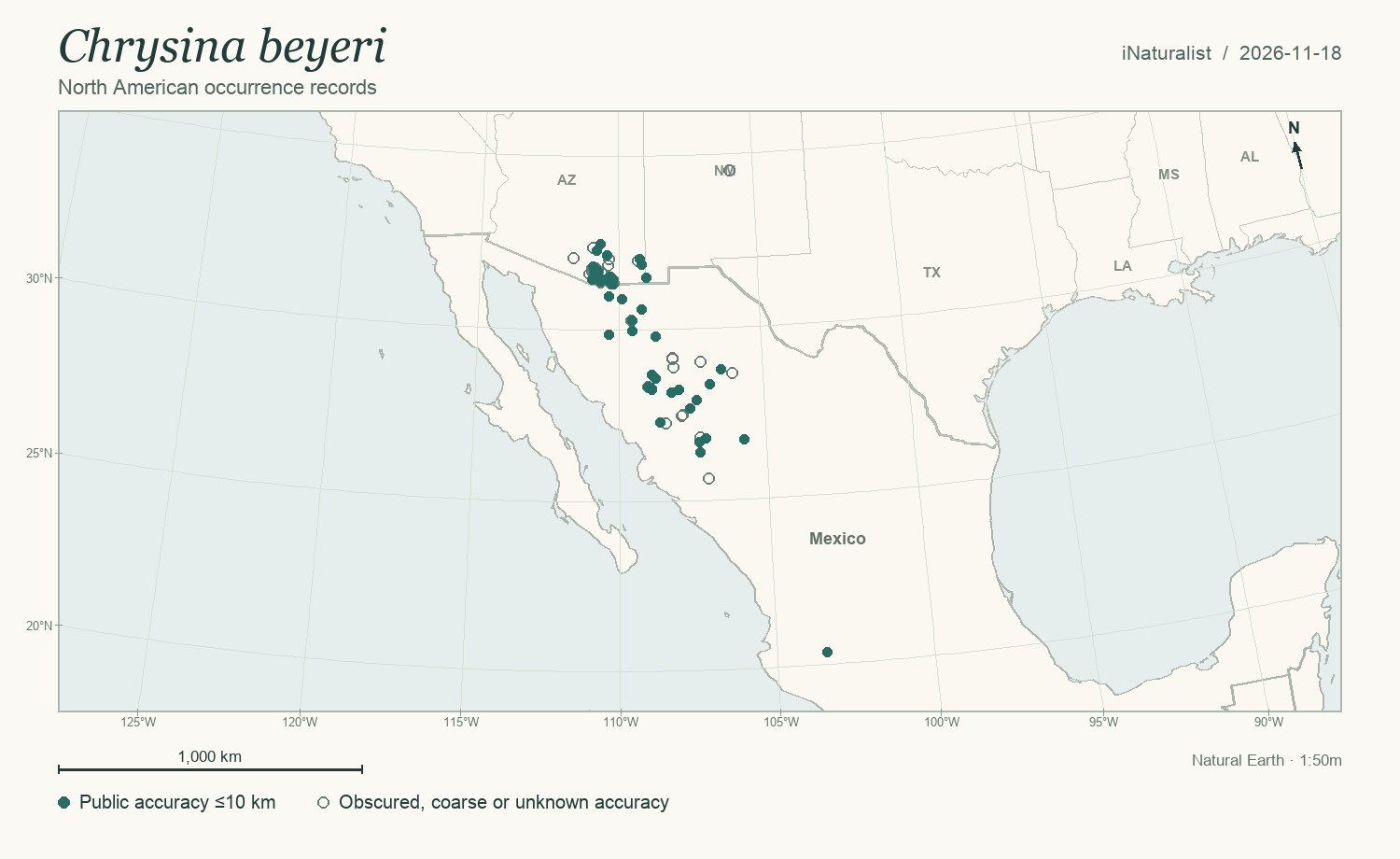
Recorded from Arizona in the United States and from Sonora, Chihuahua and Sinaloa in Mexico. In southern Arizona, adults have been photographed in Madera Canyon in the Santa Rita Mountains.
Distribution records