Life-history data
- Range
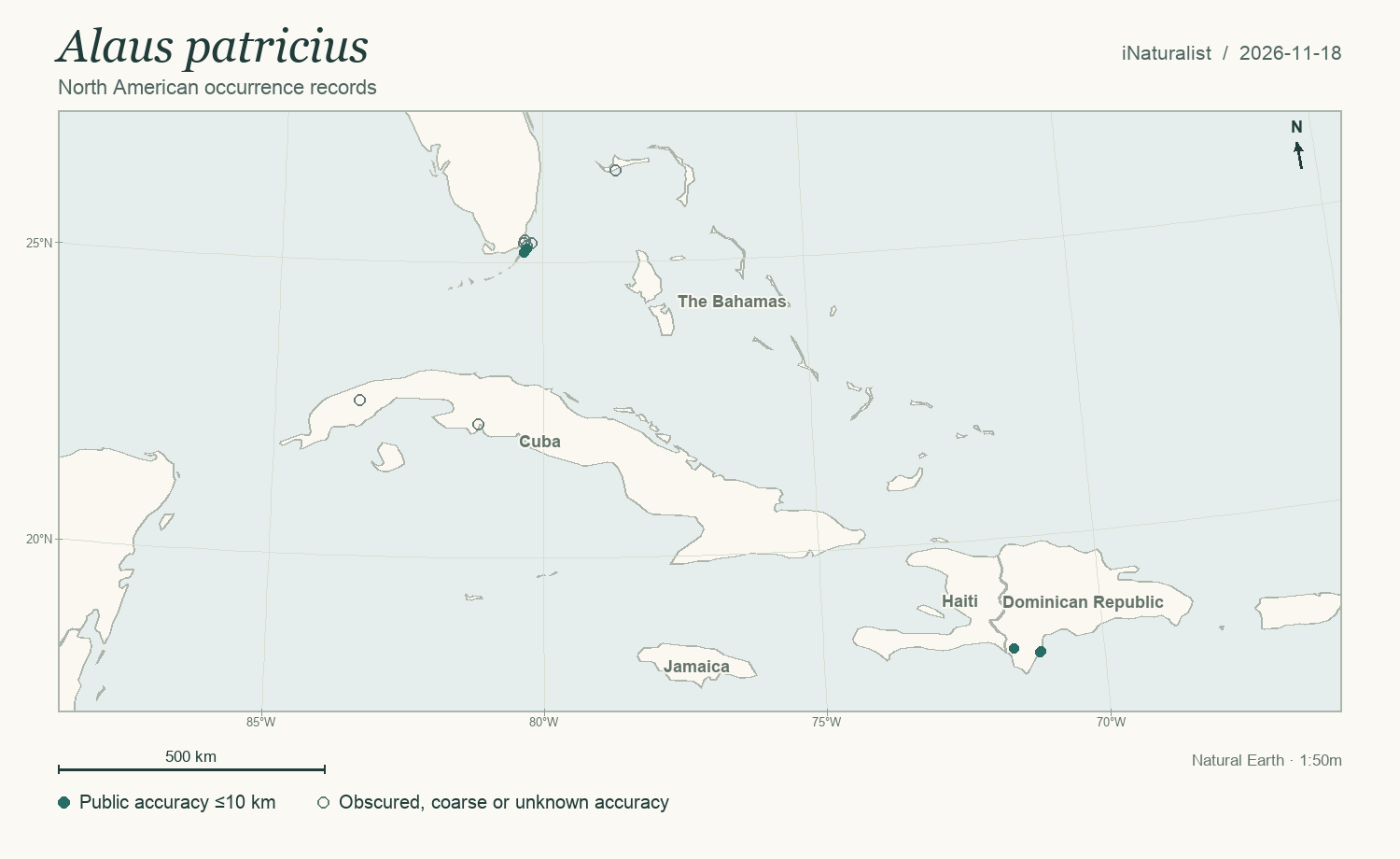
- Florida Keys and Cuba
- Reported adult length
- 30–35 mm
- Egg to adult in my culture
- About one year
- Egg laying
- Into the substrate
Adults
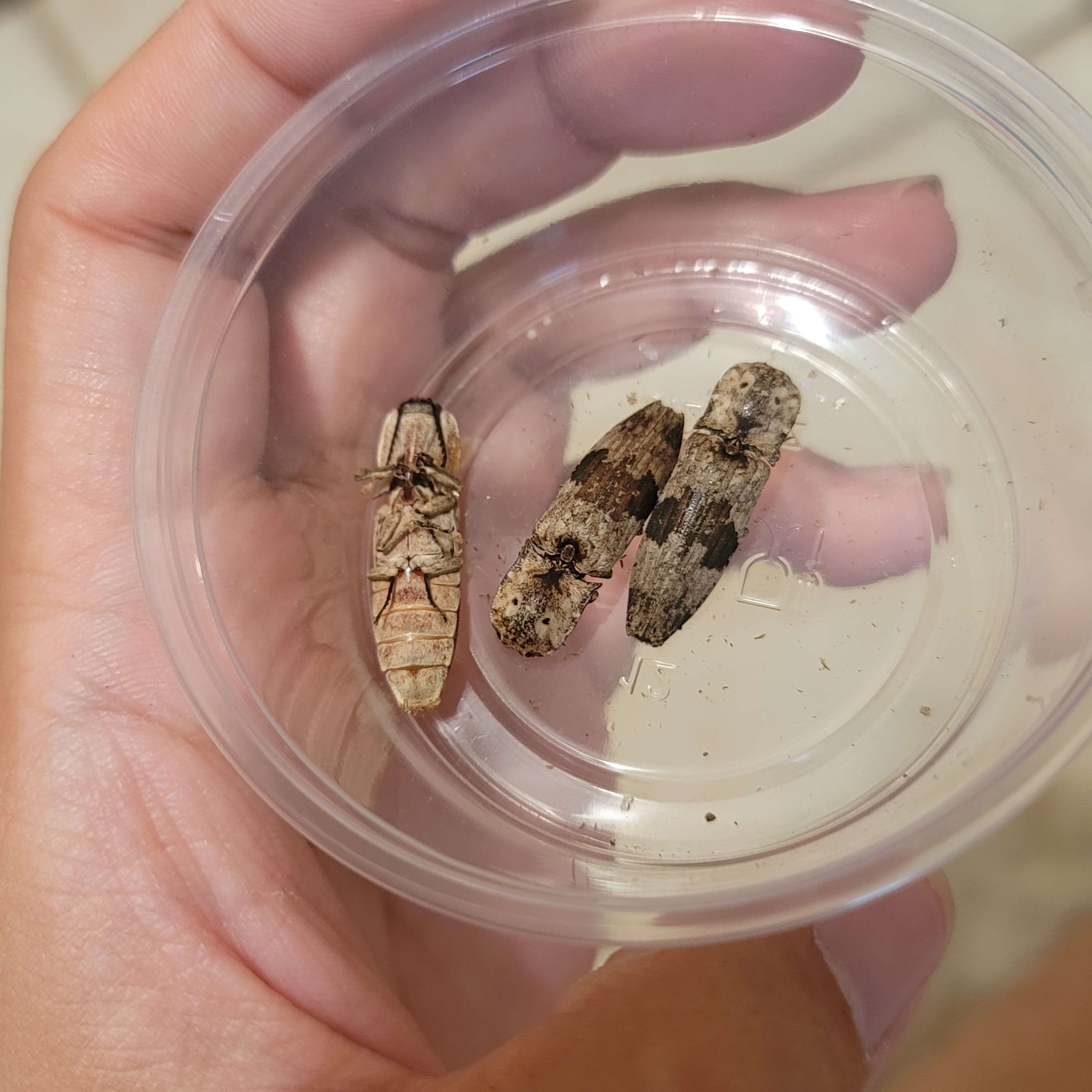
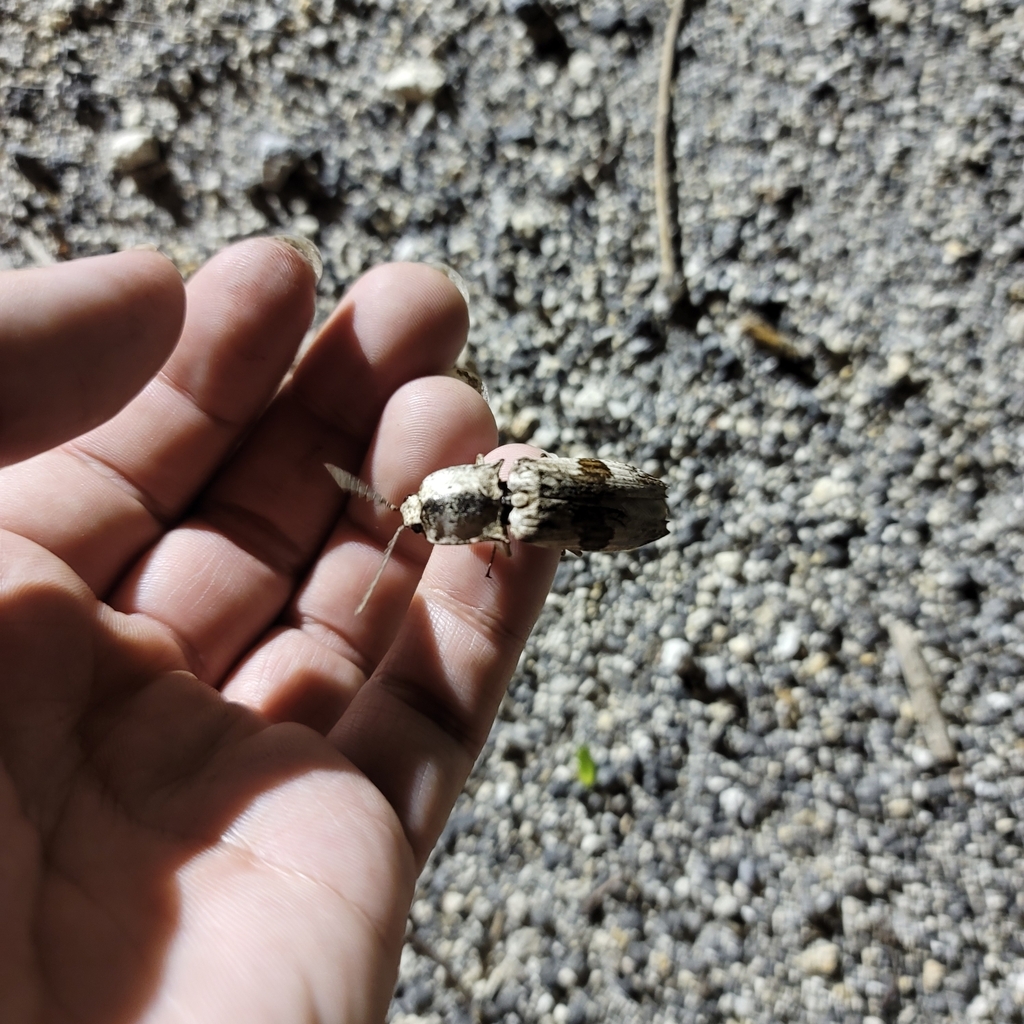
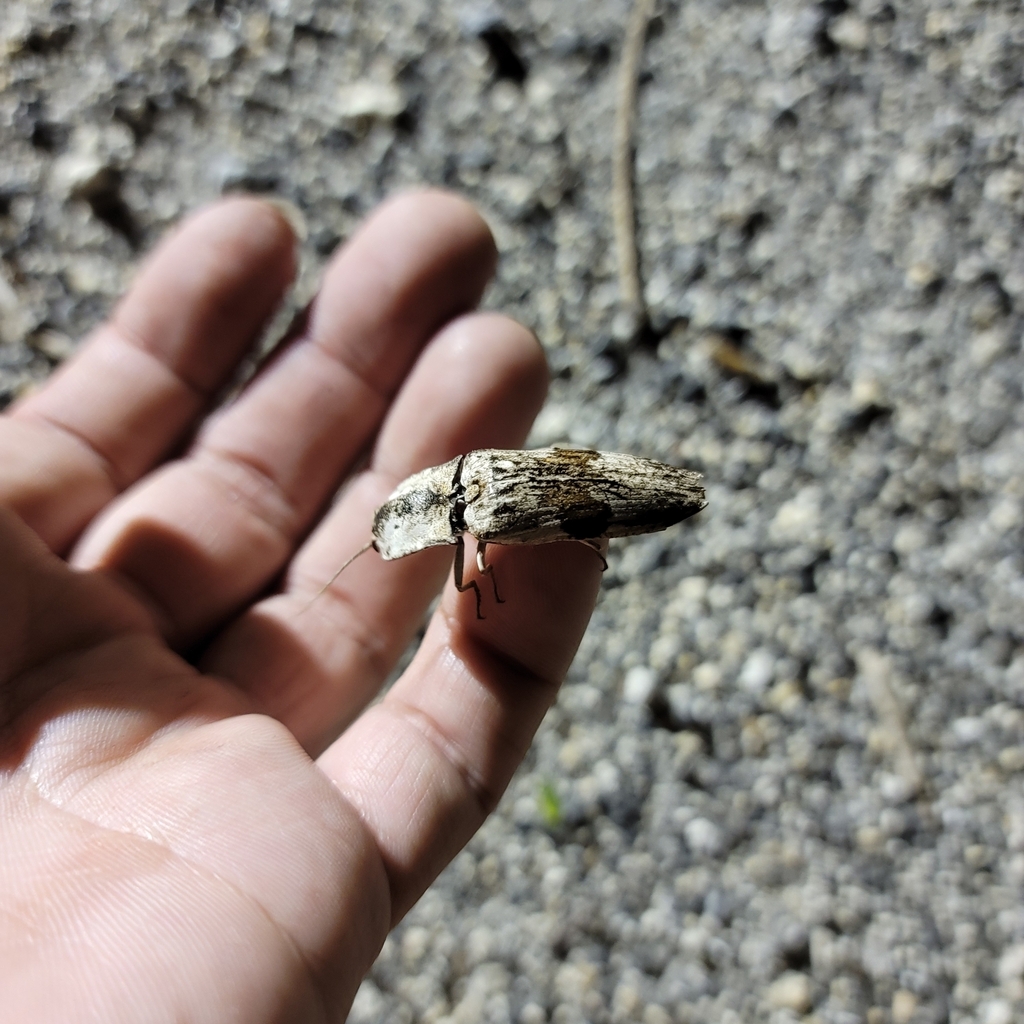
The paired spots are on the pronotum, the plate just behind the head. They are particularly small in A. patricius. The pale areas on the dark body are patches of tiny scales, and at the tip of each wing cover there are two points. The Florida specimens described by R. E. Woodruff measured 30–35 mm. Several were collected at ultraviolet light in May.
Eggs and larvae
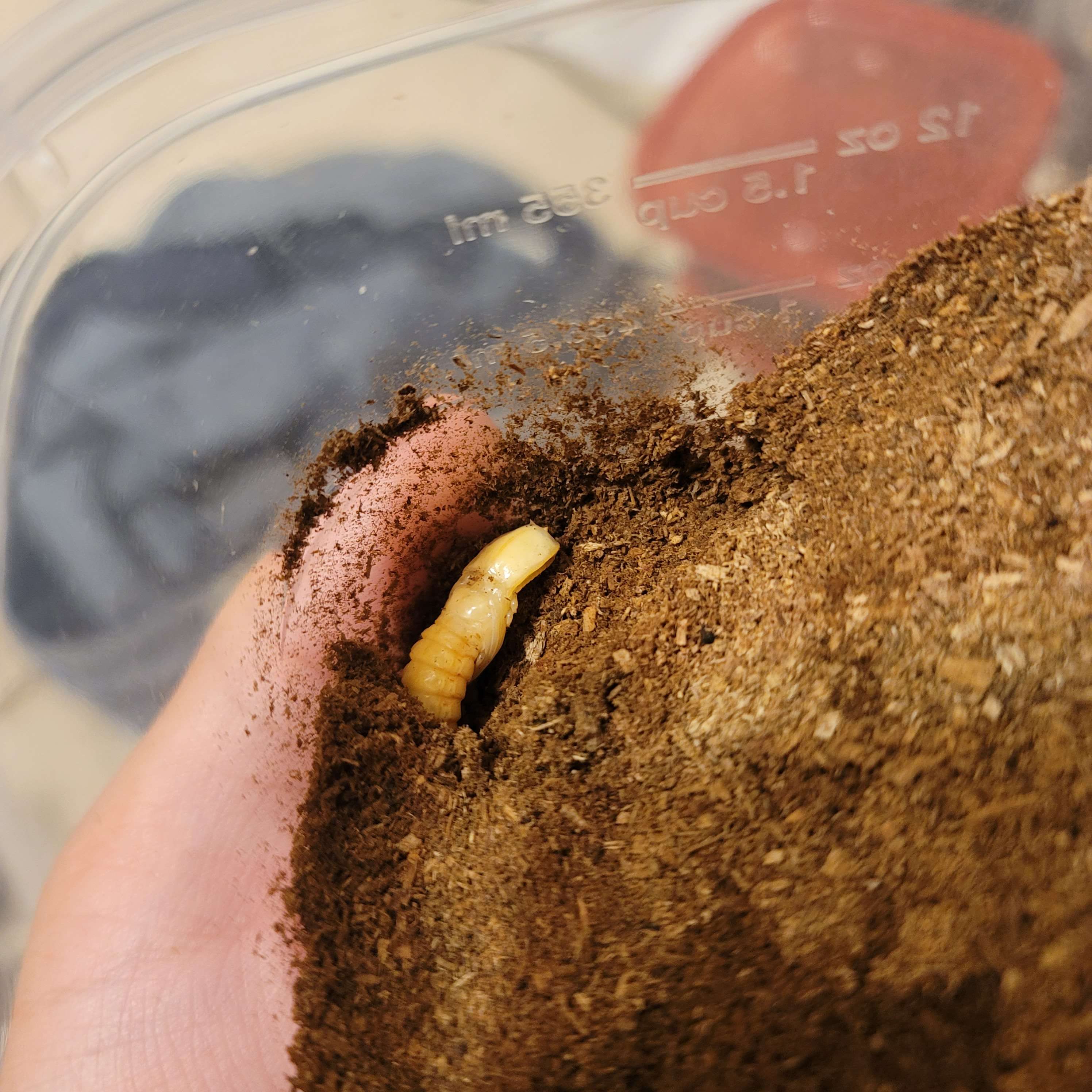
My Alaus laid directly into the substrate. Once the eggs hatched, the difficult part was locating and separating the young. The first- and second-instar click beetles I worked with were so small that I compared them to springtails. They would readily eat one another, so I separated them early. This was the most exacting part of rearing the group.
Emergence
I photographed A. patricius in March 2023, when I was hoping my remaining group would produce a pair for another generation. I recorded the beetles in their rearing cups in May and photographed the mottled adults together in June. The development time I measured from egg to adult was about one year. I do not have a separate incubation or pupal duration for this group.
Photographs
Adults
Rearing cell
Distribution records