Life-history data
- Larval habitat
- Decaying hardwood, especially stumps of oak, cherry and apple
- Documented prey
- Wood-boring beetle larvae, including longhorn grubs
- Adult identification
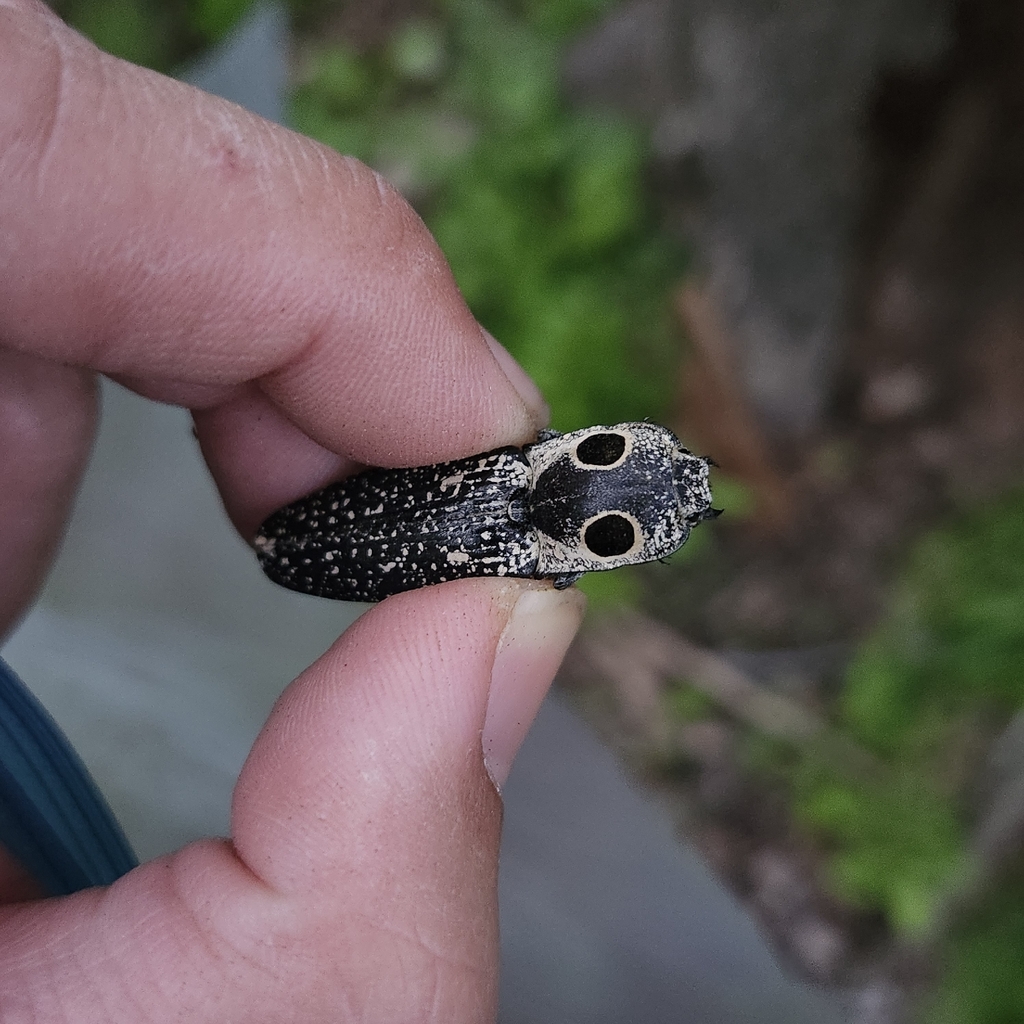
- A black background with large white-rimmed false eyespots on the thorax
Adults
I would follow my general Alaus setup and provide moist organic material with a textured surface, cover and room for a female to investigate the upper layers. In my family guide I describe eggs laid near the surface and adults accepting jelly or fruit. Those are starting points from work with click beetles. For this species I would also include a piece of softened hardwood, consistent with its recorded larval habitat. When pairing adults, check the spots on the shield behind the head. Each occupies about one-third of the shield’s length in this species. The true eyes are on the head.
Larvae
I would move each hatchling to its own container early and offer appropriately sized invertebrate prey. The wood provides shelter and a place to hunt. In records summarized by R. E. Woodruff, caged larvae each consumed more than 200 longhorn beetle larvae over the course of development. That figure gives a sense of the food needed over a larva’s lifetime. I would use whether the last prey item was taken and the appearance of the larva to decide when to feed again.
A mature larva can approach 5 cm. The body is elongate and hard, with a dark head, prominent jaws and a pair of forked terminal projections. In fallen hardwood I would keep a potential predator away from any wood-feeding longhorn grubs I intend to rear. Alan’s adult photograph and published larval illustrations give two points of comparison when an adult emerges from an individually labeled piece of wood.
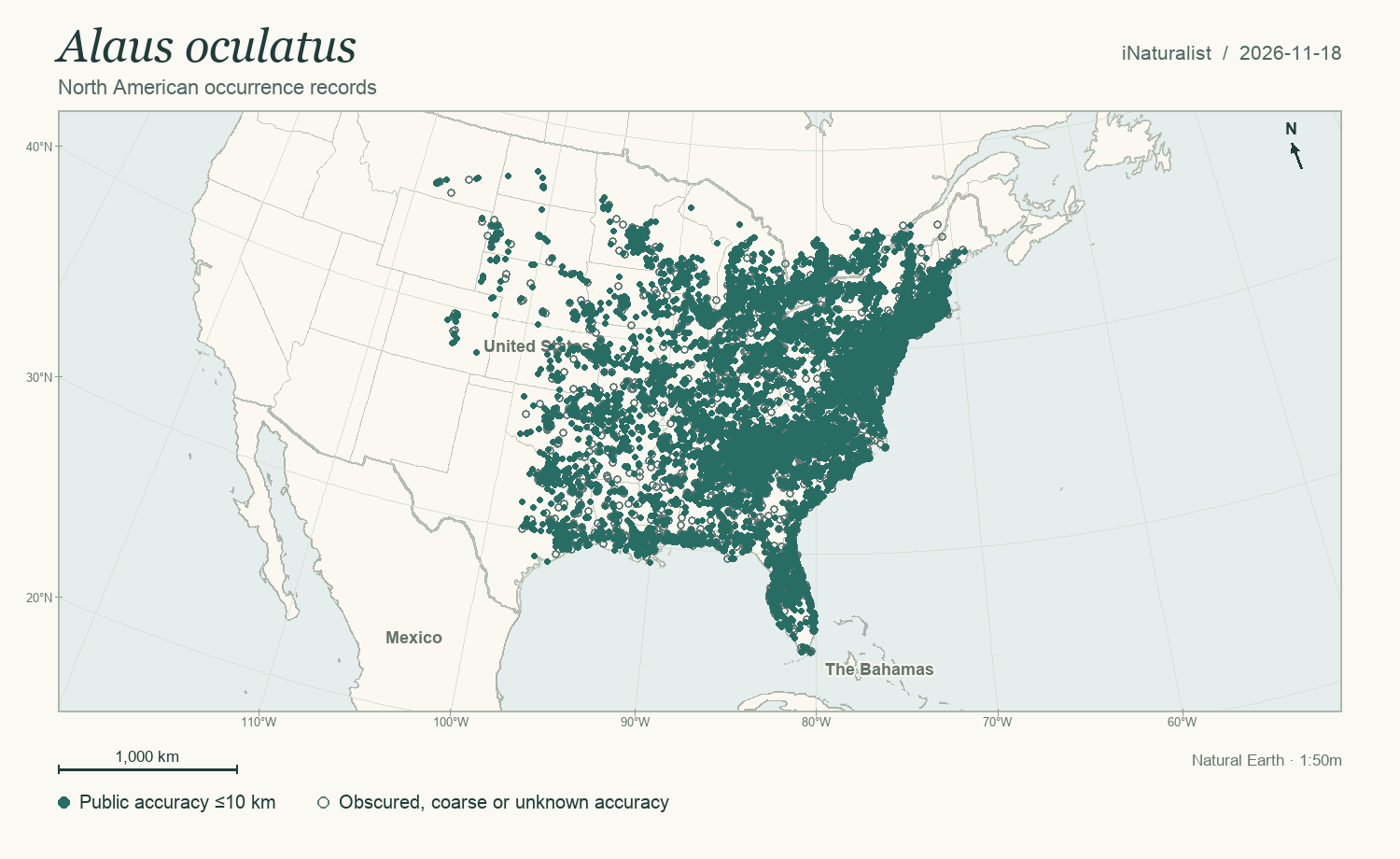
Distribution records